


What is Ardha Chakrasana (Half Wheel Pose)?
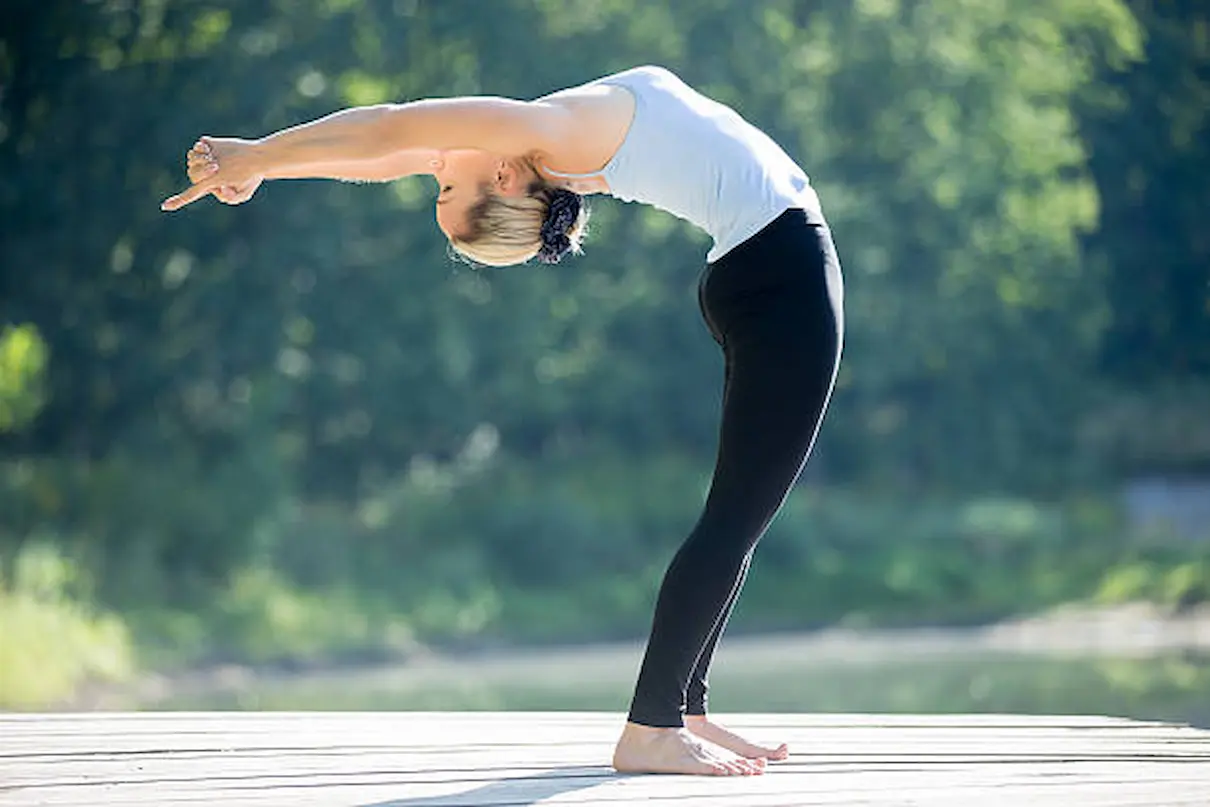
Ardha Chakrasana (Half Wheel Pose) is a gentle standing backbend where the chest lifts and the spine arches backward while the feet stay firmly grounded. This beginner-friendly yoga pose opens the chest, stretches the front body, and strengthens the back muscles that support healthy posture. Practiced with proper alignment, Ardha Chakrasana can improve spinal mobility, counter the effects of prolonged sitting, and prepare the body for deeper backbends such as Camel Pose and Wheel Pose.
Half Wheel Pose: Overview and Meaning of Ardha Chakrasana
Ardha Chakrasana comes from the Sanskrit words ardha (half), chakra (wheel), and asana (pose), meaning Half Wheel Pose. The name reflects the shape of the posture, where the spine curves into a gentle backward arc rather than the full arch of Wheel Pose. In yoga, backbends are often associated with openness and vitality because they lift the chest, expand the breath, and counter the tendency to curl inward under stress.
Ardha Chakrasana is rooted in the Hatha Yoga tradition and is commonly taught as a preparation for deeper backbends. Because it is practiced standing, it offers a safer and more accessible way to explore spinal extension than many floor-based backbends. Today, it is widely used in Hatha, Vinyasa, Sivananda, Iyengar, and therapeutic yoga to improve posture, open the chest, and counter daily habits like slouching and prolonged sitting.
Anatomically, Ardha Chakrasana creates gentle spinal extension through the neck, upper back, and lower back while strengthening the muscles that support the spine. The back muscles, glutes, hamstrings, and upper back work to stabilize the posture, while the chest, hip flexors, abdomen, and front of the neck stretch and open. This combination helps broaden the collarbones, improve breathing capacity, and create a more upright, energized posture.
At a Glance
- Sanskrit Name: अर्धचक्रासन (Ardha Chakrasana)
- Pronunciation: ARD-hah chak-RAHS-anna
- English Names: Half Wheel Pose, Standing Backward Bend, Standing Back Arch
- Pose Type: Standing backbend/heart opener
- Level: Beginner to Intermediate
- Duration: 15–30 seconds per round (repeat 3–5 rounds)
- Best Time to Practice: Morning or mid-practice after warming up
Benefits of Ardha Chakrasana (Half Wheel Pose)
Ardha Chakrasana (Half Wheel Pose) is a gentle yet powerful standing backbend that opens the front body while strengthening the muscles that support the spine. Regular practice can improve posture, increase energy, and release tension caused by long hours of sitting.
Physical Benefits
- Opens the chest and improves breathing: Ardha Chakrasana expands the rib cage, stretches the chest muscles, and creates more space for the lungs to function efficiently. This can improve breathing capacity and help counter shallow breathing linked to poor posture.
- Strengthens the back and improves posture: The erector spinae, rhomboids, trapezius, glutes, and hamstrings work actively to support the backbend. Over time, this helps strengthen the posterior chain, reduce upper-back tension, and restore more upright alignment.
- Stretches the front body: The gentle backward arch lengthens the abdominal muscles, hip flexors, chest, and throat—areas that often become tight from prolonged sitting and forward-leaning habits.
- Increases spinal flexibility: This pose encourages balanced extension through the cervical, thoracic, and lumbar spine, gradually improving overall spinal mobility.
- Supports digestion: The stretch across the abdomen may gently stimulate the digestive organs, which can support healthy digestion and metabolic function.
- Strengthens the legs and improves stability: Active engagement through the thighs, glutes, and feet helps stabilize the body, protect the lower back, and improve balance in the standing position.
- Opens the shoulders and relieves neck tension: Rolling the shoulders back and lifting the chest helps release tightness around the neck, shoulders, and collarbones.
- Prepares the body for deeper backbends: Ardha Chakrasana builds the strength, mobility, and confidence needed for more advanced backbends such as Camel Pose, Bow Pose, and Wheel Pose.
Mental and Emotional Benefits
- Energizes and uplifts mood: Backbends naturally stimulate the nervous system, helping increase alertness and energy levels.
- Reduces stress and anxiety: Opening the chest encourages deeper breathing and relaxation responses in the body, helping reduce stress.
- Boosts confidence: An open chest and upright posture are often associated with confidence and positive body language.
- Combats mental fatigue: The energizing nature of backbends can refresh the mind after long periods of sitting or intense mental activity.
- Cultivates courage and openness: Backbends are often described as “heart-opening” poses that encourage emotional openness and resilience.
- Improves focus and awareness: Maintaining balance and alignment in a standing backbend requires concentration and body awareness.
Energetic and Spiritual Benefits
- Activates the Heart Chakra (Anahata): The lifting of the chest is associated with compassion, connection, and emotional openness.
- Stimulates the Throat Chakra (Vishuddha): The gentle opening of the throat area is traditionally linked to communication and self-expression.
- Encourages energetic openness: Backbends are believed to help prana (vital life energy) flow more freely through the body.
- Creates an uplifting, energetic effect: Practitioners often report feeling lighter, more energized, and emotionally open after practicing backbends.
While Ardha Chakrasana offers many benefits, it should not replace professional medical treatment. Always consult a healthcare provider before practicing if you have existing back, neck, or cardiovascular conditions.
Experience the posture-improving benefits of Ardha Chakrasana with expert guidance. Book your free 1-on-1 session with certified Indian yoga teachers today!
How to Do Ardha Chakrasana (Half Wheel Pose): Step-by-Step Guide
This step-by-step guide will help you practice Ardha Chakrasana safely while gradually improving spinal flexibility, chest opening, and back strength.
Part 1: Preparing for the Pose
Before practicing Ardha Chakrasana, check in with your body:
- If your spine feels warm and your chest can lift comfortably without pain, you’re ready to explore the pose.
- If you feel stiffness in the back, tightness in the hip flexors, or discomfort in the neck, begin with a smaller range of motion and use wall support if needed. There is no rush—backbending improves gradually.
Props You May Need
- Open space to stand
- Yoga mat (optional)
- Wall nearby for support (optional)
- Comfortable clothing that allows a full range of motion
Warm-Up (Essential): Always warm up for at least 8–10 minutes before practicing Ardha Chakrasana:
- Cat–Cow Pose (10–15 rounds)
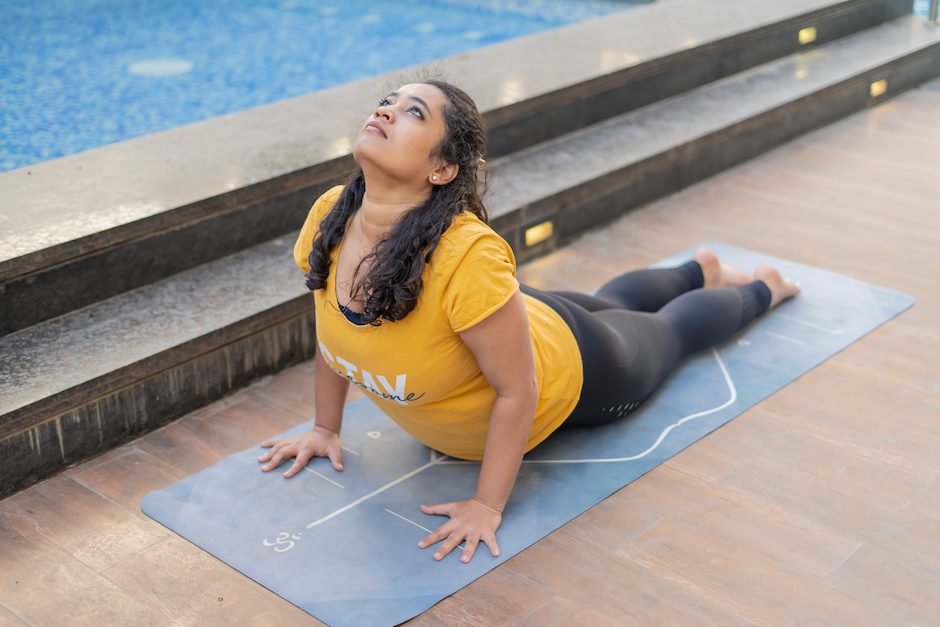
- Cobra Pose (20–30 seconds, 2–3 rounds)
- Standing Side Stretch (5–8 times each side)
- Shoulder Rolls (10 in each direction)
- Standing Chest Opener (20–30 seconds)
Warming up the spine, chest, and shoulders helps the backbend feel safer, smoother, and more supportive.
Part 2: How to Do Ardha Chakrasana (Half Wheel Pose): Step-by-Step Instructions
- Stand tall in Mountain Pose with feet hip-width apart, grounding evenly through both feet and lengthening the spine.
- Place both palms on the lower back near the sacrum, with the fingers pointing downward or slightly inward, and gently draw the elbows toward each other.
- Press firmly through the feet, engage the thighs and glutes, and lightly draw the lower belly inward to support the spine.
- Inhale and lift the sternum upward, broadening the collarbones and rolling the shoulders back.
- Begin to arch backward from the upper back rather than collapsing into the lower back, keeping the legs strong and steady.
- If comfortable, move slightly deeper into the pose by lifting the chest more and allowing the hips to shift slightly forward.
- Hold for 3–5 breaths, maintaining slow and steady breathing without straining.
- To come out, engage the core and slowly lift the torso back to upright with control, keeping the hands on the lower back for support.
- Pause in Mountain Pose for a few breaths and notice the effects of the pose before repeating.
- Hold for:
- 10–15 seconds (beginners), 2–3 rounds
- 20–30 seconds (intermediate), 3–5 rounds
- Up to 30 seconds (advanced), 5–8 rounds
During the pose, you may feel a stretch across the chest, abdomen, and hip flexors, along with engagement in the back muscles and a sense of lift through the front body. You should not feel sharp pain, dizziness, or strong pressure in the lower back.
Common Mistakes and Alignment Tips
- Arching only the lower back: This can compress the lumbar spine.
- Inactive legs: This puts too much pressure on the lower back.
- Forcing the neck back: This may cause neck strain or dizziness.
- Shoulders collapsing forward: This reduces chest opening.
- Holding the breath: This creates tension and instability.
- Going too deep too quickly: This increases injury risk.
Practiced regularly, Ardha Chakrasana can become a safe and energizing way to build confidence in backbending.
Ease into the Half Wheel Pose with these flexibility-focused group classes.


Flow into Flexibility: Beginner Vinyasa Yoga


Half Wheel Pose Variations
Ardha Chakrasana (Half Wheel Pose) can be practiced at many levels. By adjusting the depth of the backbend or using support, beginners can safely explore spinal extension while more experienced practitioners can deepen the pose and add balance challenges.
Beginner Modifications
1. Wall-Supported Ardha Chakrasana
Provides stability and confidence while learning the backbend.
- Stand about one arm’s distance from a wall, facing away from it.
- Place your hands on the wall behind you at about shoulder height.
- Gently press the palms into the wall while lifting the chest upward.
- Lean back slightly, allowing the wall to support your backbend.
This version is excellent for beginners because the wall prevents excessive arching.
2. Hands on Hips Version
Introduces backbending with minimal strain and keeps it small and controlled.
- Stand tall in Mountain Pose (Tadasana).
- Place both hands on your hips instead of your lower back.
- Lift the chest upward and lean back slightly.
- Hold briefly, then return to standing.
This modification keeps the backbend small and controlled.
3. Chair-Supported Backbend
Adds balance support for seniors or beginners.
- Stand behind a chair and hold the backrest.
- Press the feet firmly into the floor.
- Lift the chest upward and gently arch backward.
- Use the chair to maintain balance.
This variation reduces balance challenges while allowing a safe backbend.
Intermediate Variations
4. Arms Overhead Backbend
Deepens chest and shoulder opening.
- Stand in Mountain Pose with feet hip-width apart.
- Raise both arms overhead with palms facing each other.
- Lift the chest and begin a gentle backbend.
- Reach the arms slightly back while maintaining steady balance.
This version increases the intensity because the hands no longer support the lower back.
5. Ardha Kati Chakrasana (Half Lateral Wheel)
Stretches the sides of the torso while gently arching the spine.
- Stand upright with feet hip-width apart.
- Raise the right arm overhead while placing the left hand on the hip.
- Lean the torso toward the left side while slightly opening the chest.
- Hold for a few breaths and repeat on the opposite side.
This pose combines a side stretch with a mild backbend.
6. Pulsing Backbend
Builds mobility and flexibility through dynamic movement.
- Stand with hands on the lower back.
- Inhale and gently arch backward.
- Exhale and return to upright.
- Repeat 8–10 controlled pulses.
This variation warms the spine and improves back flexibility.
Advanced Variations
7. Deep Backbend with Head Release
Intensifies the chest opening and spinal extension.
- Stand tall and place your hands on your lower back.
- Arch backward deeply while lifting the chest.
- Allow the head to release back gently.
- Maintain strong engagement through legs and core.
Only practice this variation if your neck and spine are healthy.
8. One-Legged Half Wheel
Adds a balance challenge and deepens the hip stretch.
- Enter a gentle Ardha Chakrasana backbend.
- Slowly lift one leg slightly behind you.
- Maintain a steady balance through the standing leg.
- Hold briefly, then switch sides.
Props & Accessibility
- Use a wall or chair for support if balance, mobility, or confidence in backbending feels limited.
- Keep the hands supported throughout to make the pose feel steadier and safer.
- Work with a very small range of motion rather than trying to create a deep backbend.
- Focus on lifting the chest more than bending deeply, especially if the back feels tight.
- Try gentle chest-opening stretches lying down first to prepare the upper back and shoulders.
- Place a rolled blanket or bolster under the upper back during preparatory stretches to create support and ease.
- Repeat smaller movements more often instead of forcing one deep hold.
- During the first trimester of pregnancy, use wall support and keep the backbend very gentle, avoiding deep spinal extension.
- For seniors, prioritize strength, posture improvement, and stability over flexibility or depth.
Half Wheel Pose: Precautions & Contraindications in Ardha Chakrasana
Ardha Chakrasana (Half Wheel Pose) is generally safe and beginner-friendly, but it still places the spine into extension. Practicing with awareness and proper alignment is essential to protect the lower back, neck, and balance. If you have existing health conditions, consult a healthcare professional before attempting the pose.
Avoid Ardha Chakrasana If You Have:
The following conditions are considered absolute contraindications:
- Recent back surgery or serious spinal injury — Backbending may interfere with healing tissues.
- Herniated or bulging discs — Spinal extension may increase pressure and worsen symptoms.
- Severe osteoporosis — Deep backbends may increase the risk of spinal compression fractures.
- Acute neck injury — Dropping the head backward can strain already sensitive cervical muscles.
- Uncontrolled high blood pressure — Backbends may affect circulation and increase pressure.
- Recent abdominal surgery — Stretching the abdominal region may interfere with healing.
- Severe migraine or active headache — Backbending may intensify symptoms.
- Vertigo or balance disorders — Standing backbends may increase the risk of dizziness or falls.
- Late pregnancy (second and third trimester) — Deep backbends can strain the abdomen and lower back. Read more about prenatal yoga in this detailed guide.
- Severe spinal deformities or scoliosis — The pose may require specialized therapeutic guidance.
Practice With Caution & Modifications If You Have:
- Mild Lower Back Sensitivity: Use wall support and perform only a small backbend. Engage the core muscles and glutes to stabilize the spine and avoid compressing the lumbar region.
- Neck Sensitivity: Keep the head in a neutral position instead of dropping it back. Focus on lifting the chest rather than bending deeply through the neck.
- Controlled High Blood Pressure: Practice a very gentle version with the head neutral and avoid holding the pose for long durations. Maintain steady breathing and come out slowly.
- Pregnancy (First Trimester): Practice only with wall support and minimal backbend. Avoid deep spinal extension and discontinue the pose if any discomfort arises.
- Tight Hip Flexors: You may feel a strong stretch across the front of the hips. Move gradually and keep the legs active to support the lower back.
- Dizziness or Lightheadedness: Keep the gaze forward rather than upward and exit the pose slowly. Sudden movement can worsen dizziness.
General Safety Guidelines
DO’s
- Warm up properly: Prepare the spine with gentle movements before attempting backbends.
- Engage legs and glutes: Strong legs help stabilize and protect the lower back.
- Lift through the chest first: Avoid collapsing into the lumbar spine.
- Maintain steady breathing: Breath control helps maintain stability and relaxation.
- Start small: Gradually deepen the pose over time rather than forcing the stretch.
DONT’s
- Practicing without warming up
- Forcing the backbend beyond a comfortable range
- Holding your breath
- Ignoring pain signals from the body
- Practicing immediately after meals (wait at least 2–3 hours)
When to Consult a Healthcare Provider
Consult a doctor, physiotherapist, or qualified yoga therapist before practicing Ardha Chakrasana if you have:
- Chronic back or neck pain
- Spinal conditions such as disc problems or scoliosis
- Osteoporosis or bone density concerns
- High blood pressure or cardiovascular issues
- Pregnancy
- Recent surgeries or injuries
Professional guidance ensures the pose is adapted safely for your body.
Practice backbends safely with personalized guidance and expert instruction. Book your free 1-on-1 session with certified yoga teachers today!
Half Wheel Pose: Related Yoga Poses
1. Camel Pose (Ustrasana)
Deepens chest opening and spinal extension, making it a natural progression from Half Wheel Pose.
- Kneel with knees hip-width apart and place your hands on the lower back or heels.
- Lift the chest upward and begin arching back from the upper spine.
- Keep the hips stacked over the knees and the legs active.
- Hold for a few breaths, then return upright slowly.
2. Upward-Facing Dog (Urdhva Mukha Svanasana)
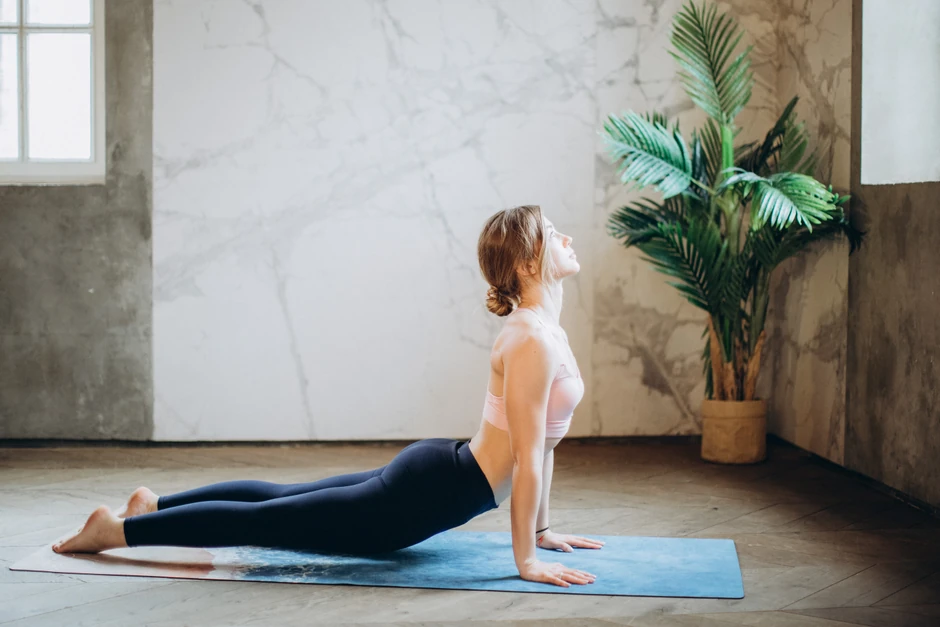
Strengthens the arms and back while creating a strong opening through the chest and front body.
- Lie on your stomach with palms beside the lower ribs.
- Press into the hands and tops of the feet to lift the chest and thighs off the floor.
- Broaden the collarbones and keep the shoulders away from the ears.
- Hold for 3–5 breaths, then lower down with control.
3. Bow Pose (Dhanurasana)
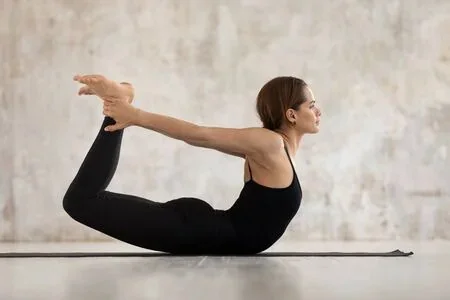
Combines back strengthening with a deeper stretch through the chest, abdomen, and thighs.
- Lie on your stomach and bend both knees.
- Reach back to hold the ankles or feet.
- Inhale and lift the chest and thighs away from the floor.
- Hold for a few breaths, then release slowly.
4. Bridge Pose (Setu Bandhasana)
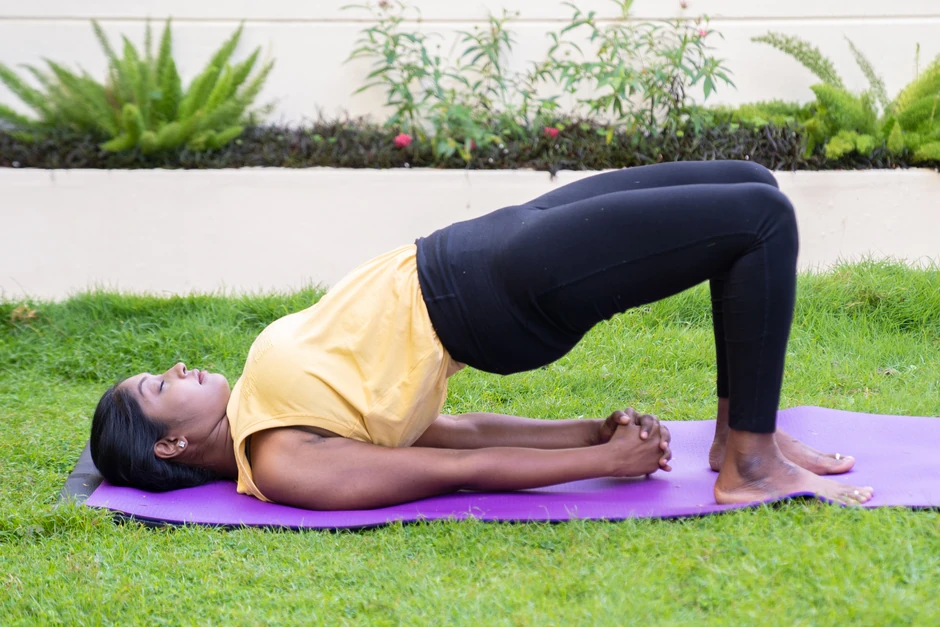
Builds back strength and chest opening in a supported, beginner-friendly backbend.
- Lie on your back with knees bent and feet hip-width apart.
- Press into the feet and lift the hips upward.
- Roll the shoulders slightly under the chest and keep the knees steady.
- Hold for 5–10 breaths, then lower the spine down slowly.
Enjoy a Free 1-on-1 Session with a Coach!
Receive personalized guidance tailored to your unique fitness goals, live with a dedicated coach—no credit card required.
Frequently Asked Questions

Ardha Chakrasana (Half Wheel Pose) helps open the chest, strengthen the back muscles, and improve posture. It is especially beneficial for people who spend long hours sitting or working at a desk because it counteracts slouching and rounded shoulders. The pose also energizes the body and prepares the spine for deeper backbends.
Beginners can hold the pose for 10–15 seconds and repeat it 2–3 rounds. Intermediate practitioners may hold it for 20–30 seconds for 3–5 rounds, while advanced practitioners can repeat the pose up to 8 rounds. Focus on smooth breathing and good alignment rather than holding the pose for too long.
Ardha Chakrasana is a standing backbend with the hands placed on the lower back for support, making it beginner-friendly. Full Wheel Pose (Urdhva Dhanurasana) is practiced lying on the floor with hands and feet supporting the entire body. It is a deeper and more advanced backbend that requires significant strength and flexibility.
To practice both the poses safely and effectively, book a free 1-on-1 session with an expert Indian yoga coach!
When practiced gently and with proper alignment, Ardha Chakrasana may help relieve mild back discomfort by strengthening back muscles and improving posture. However, people with herniated discs, severe back pain, or acute injuries should avoid the pose or practice only under professional guidance.
Ardha Chakrasana strengthens the erector spinae, rhomboids, trapezius, glutes, and hamstrings. It also stretches the chest (pectorals), abdominal muscles, hip flexors, and throat area, creating balanced strength and flexibility along the front and back of the body.
After practicing a backbend, it is helpful to perform a counter pose to balance the spine. Good options include:
These poses gently stretch the back body and help the spine return to a neutral position.
Related Articles on Padmasana
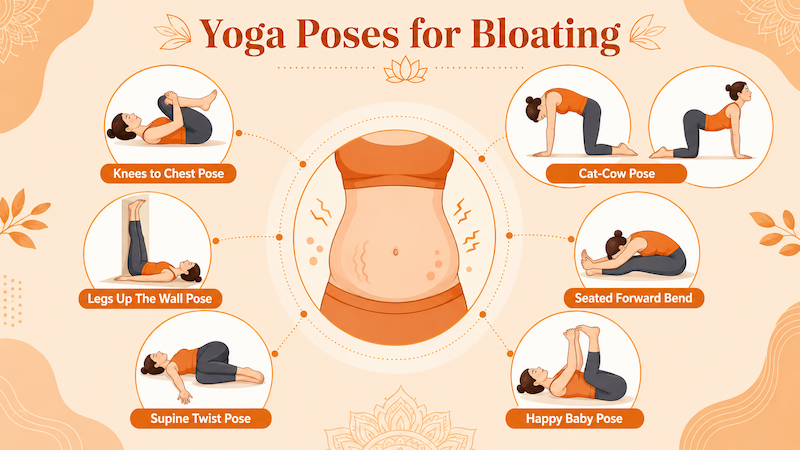
Yoga for Bloating: 8 Gentle Poses to Relieve Gas
Yoga for bloating relief: try 8 gentle poses to ease trapped gas and stomach discomfort. Beginner-friendly guidance from expert Indian yoga teachers.


Yin vs Restorative Yoga: What’s the Difference?
Yin vs Restorative Yoga explained. Compare intensity, hold times, props, and benefits. Learn the key differences and choose the right slow yoga style for you.
.webp)
Detox Yoga Sequence: Refresh and Renew After Holiday Indulgence
Refresh and renew after holiday indulgence with this 12-pose detox yoga sequence. Gentle twists and mindful stretches for digestion, circulation, and energy.


