Detox Yoga Sequence: Refresh and Renew After Holiday Indulgence

Will Allen
Posted On
Updated On
December 11, 2025
facebook shareX share

With the festive season right around the corner, it’s completely normal to break away from your usual routine. But extra desserts, late nights, rich meals, and holiday travel can all add up—leaving you feeling heavier, sluggish, or slightly off-balance by the time January approaches. 

That’s where detox yoga comes in. While yoga doesn’t “flush toxins” in the literal sense, certain poses that involve twisting, gentle abdominal compression, and mindful stretching can support digestion, boost circulation, ease tension, and help reset your energy after a period of indulgence. These movements gently bring you back to your breath and body, helping you feel lighter, clearer, and more grounded for the year ahead.

This 12-pose detox sequence is designed to help you refresh and renew from the inside out.

How Does Detox Yoga Help After Holiday Indulgence?

Along with joy, laughter, and connection, the holiday season also brings a bit more food, sugar, alcohol, and late-night socializing than usual. Add in travel, long periods of sitting, and disrupted routines, and it’s no surprise the body can feel out of sync by January.

Common post-holiday effects include:

  • Sluggish digestion from heavier, irregular meals
  • Bloating from salt, sugar, and alcohol
  • Low energy due to sleep loss and overstimulation
  • Stiff hips and lower back tension from travel or inactivity
  • Brain fog when regular routines temporarily disappear

All this combined can leave you feeling weighed down as the new year begins.

How Detox Yoga Supports the Body’s Natural Processes

Your body already has an extraordinary built-in detox system—your liver, kidneys, lungs, lymphatic system, and digestive tract all work continuously to keep you balanced. Detox yoga doesn’t replace these systems; it supports them.

Here’s how:

  • Yoga Twists, such as Triangle Pose, Revolved Lunge, and Spinal Twist, gently compress and release the abdominal organs, stimulating digestion and encouraging fresh blood flow.
  • Forward folds (Seated and Standing) and gentle core engagement poses (Boat Pose, Chair Pose) help massage the intestines and support elimination.
  • Deep breathing (Alternate Nostril and Belly Breathing) activates the parasympathetic nervous system, helping your body shift out of stress mode and back into its optimal “rest and digest” state.
  • Movements that open the hips (Pigeon Pose), ribs, and spine (Cobra Pose) release tension that can restrict breathing and digestion.
  • Full-body circulation improves, helping you feel lighter, clearer, and more energized.

Together, these effects create a natural sense of “renewal” without harsh cleanses or strict detox rules.

12-Pose Post-Holiday Detox Yoga Sequence 

These 12 poses, when done correctly, can effectively create a natural sense of “renewal” without harsh cleanses or strict detox rules.

Move slowly, breathe deeply, and stay aware of how your body feels. 

  1. Easy Pose
  2. Cat-Cow Pose
  3. Revolved Chair Pose
  4. Low Lunge Twist
  5. Revolved Triangle
  6. Twisted High Lunge
  7. Thread the Needle
  8. Supine Twist 
  9. Wind-Relieving Pose
  10. Happy Baby Pose 
  11. Supported Reclined Bound Angle Pose 
  12. Legs Up The Wall Pose

1. Easy Seated Twist (Parivrtta Sukhasana)

A gentle twist to warm the spine and activate digestion.

  1. Sit cross-legged or with legs extended, spine tall.
  2. Place your right hand behind you, left hand on your right knee.
  3. Inhale to lengthen your spine.
  4. Exhale to gently twist to the right from your waist.
  5. Keep your shoulders soft and your belly relaxed.
  6. Hold 5–8 breaths, then repeat on the other side.

Modification: Sit on a folded blanket to make the twist more comfortable.
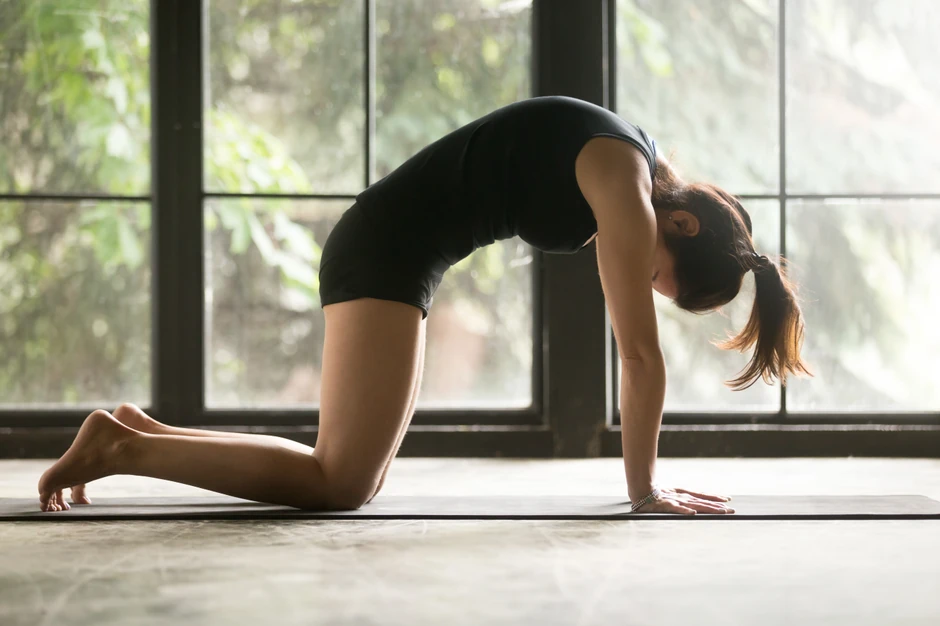
2. Cat–Cow Flow (Marjaryasana–Bitilasana)

Cat-Cow Pose

A gentle spinal flow that improves circulation and supports belly breathing.

  1. Start on hands and knees in the tabletop.
  2. Inhale (Cow): Drop your belly, lift your chest, and tailbone.
  3. Exhale (Cat): Round your spine, tuck your chin and tailbone.
  4. Continue flowing for 8–10 rounds, matching breath to movement.

Modification: If wrists are sensitive, come onto fists or forearms.

3. Revolved Chair Pose (Parivrtta Utkatasana)

A heat-building twist that supports digestion and core activation.

  1. Stand with feet hip-width apart.
  2. Bend your knees into Chair Pose.
  3. Bring your palms together at your heart.
  4. Inhale to lift and lengthen your spine.
  5. Exhale to twist to the right, hooking your left elbow outside your thigh.
  6. Keep your knees level and chest open.
  7. Hold 5–8 breaths, then switch sides.

Modification: Keep hands on thighs instead of hooking the elbow.

4. Low Lunge Twist (Parivrtta Anjaneyasana)

Opens tight hip flexors and stimulates the abdominal organs.

  1. Step your right foot forward into a low lunge; lower your left knee.
  2. Place your left hand on the floor or a block inside your right foot.
  3. Inhale to lengthen your spine.
  4. Exhale to twist to the right, lifting your right arm up.
  5. Keep your chest broad and your breath steady.
  6. Hold 5–8 breaths, then switch sides.

Modification: Place a blanket under your back knee for comfort.
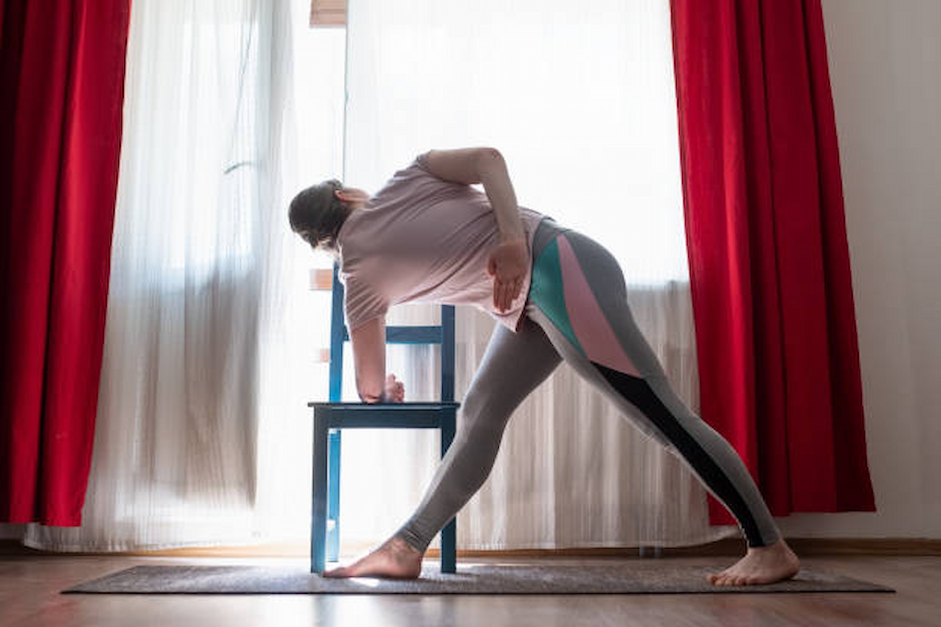
5. Revolved Triangle (Parivrtta Trikonasana)

Revolved Triangle Pose

A deeper twist that strengthens the legs and encourages detoxification.

  1. Step your feet into a wide stance.
  2. Turn your right toes forward and your left toes slightly in.
  3. Square your hips toward your right foot.
  4. Place your left hand on your shin, a block, or the floor.
  5. Inhale to lengthen your spine.
  6. Exhale to twist your chest toward the right, lifting your right arm up.
  7. Press into both feet for stability.
  8. Hold 5–8 breaths, then switch sides.

Modification: Use a block to avoid rounding your spine.

6. Twisted High Lunge (Parivrtta Alanasana)

A strength-building, energizing twist that focuses on the core and waist.

  1. Step your right foot forward into a high lunge (back heel lifted).
  2. Bring your palms together at your chest.
  3. Inhale to lengthen.
  4. Exhale to twist to the right from mid-spine.
  5. Option: hook your left elbow outside your right thigh.
  6. Keep your hips steady and breathe smoothly.
  7. Hold 5–8 breaths, then repeat on the other side.

Modification: Lower your back knee to reduce intensity.
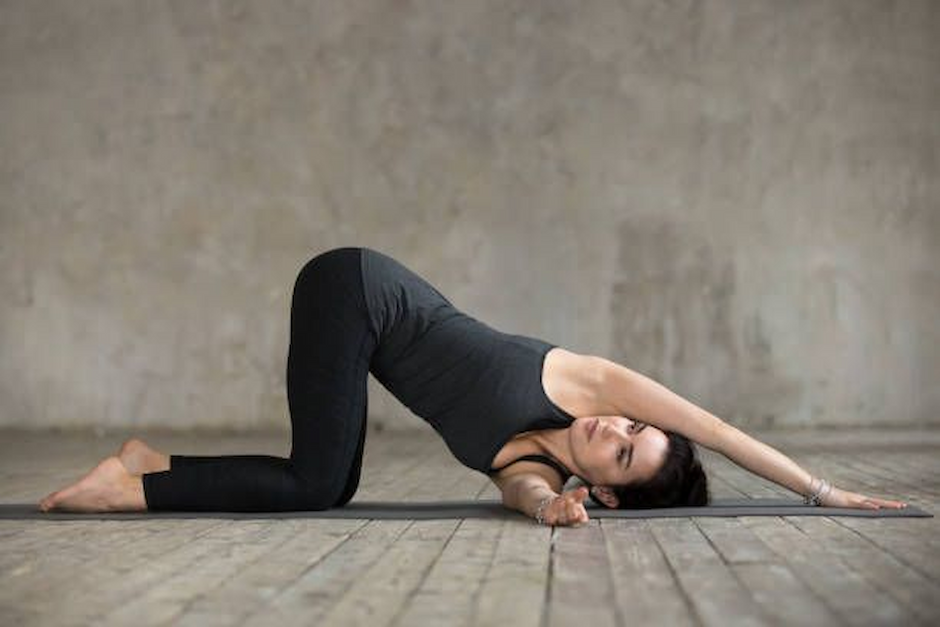
7. Thread the Needle (Parsva Balasana)

Thread the Needle Pose

A soothing upper-back twist that supports deeper breathing.

  1. From the tabletop, inhale and reach your right arm up.
  2. Exhale and slide your right arm under your left arm, palm facing up.
  3. Rest your right shoulder and cheek on the mat.
  4. Keep hips stacked over knees.
  5. Option: extend your left arm forward or wrap it behind your back.
  6. Breathe here for 5–8 breaths, then switch sides.

Modification: Place a blanket under your head for more support.
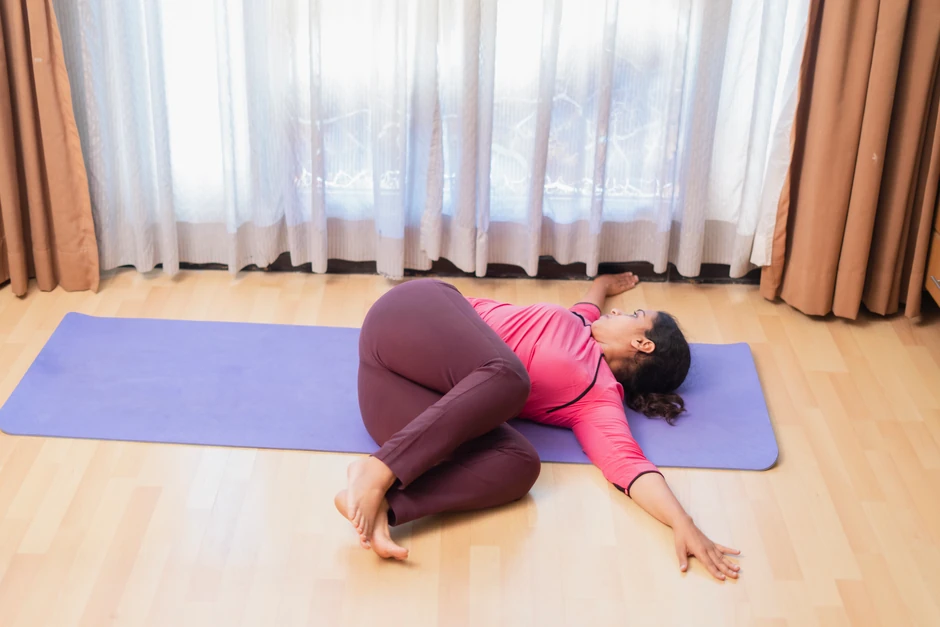
8. Supine Twist (Supta Matsyendrasana)

Supine Twist

Releases tension along the spine, supports digestion, and relaxes the body.

  1. Lie on your back; draw your right knee into your chest.
  2. Extend your right arm out to the side.
  3. Use your left hand to guide your knee across your body.
  4. Keep both shoulders grounded.
  5. Breathe slowly for 8–10 breaths, then switch sides.

Modification: Rest your knee on a pillow or block if it doesn’t reach the floor.
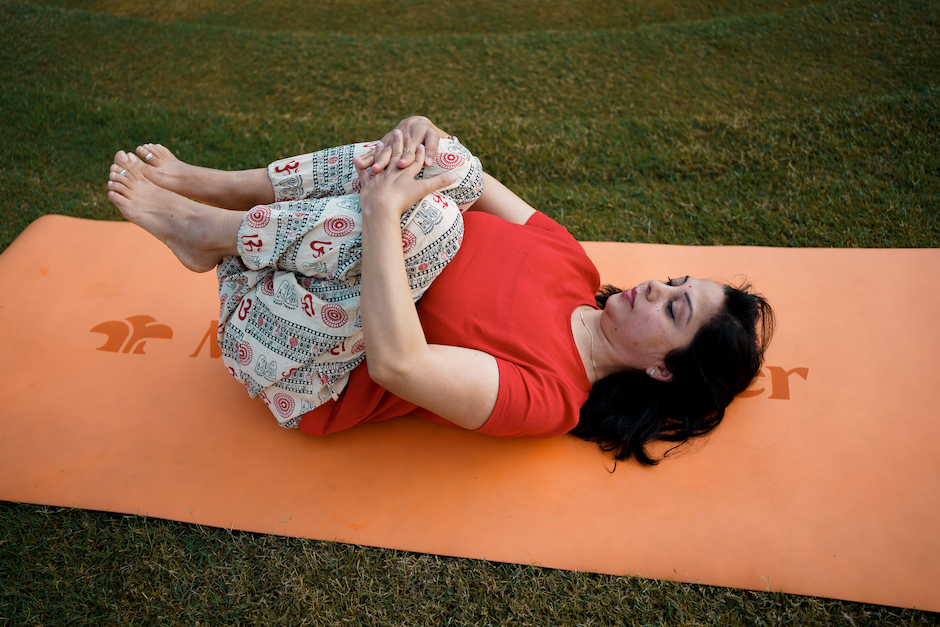
9. Wind-Relieving Pose (Apanasana)

Wind Relieving Pose

A classic pose for relieving bloating, gas, and digestive discomfort.

  1. Lie on your back with legs extended.
  2. Draw your right knee into your chest and hug it softly.
  3. Hold for 5–8 breaths, then switch legs.
  4. Draw both knees into your chest.
  5. Rock gently side to side to massage your lower back.
  6. Stay for another 5–8 breaths.

Modification: Hold behind your thighs if gripping your shins is uncomfortable.
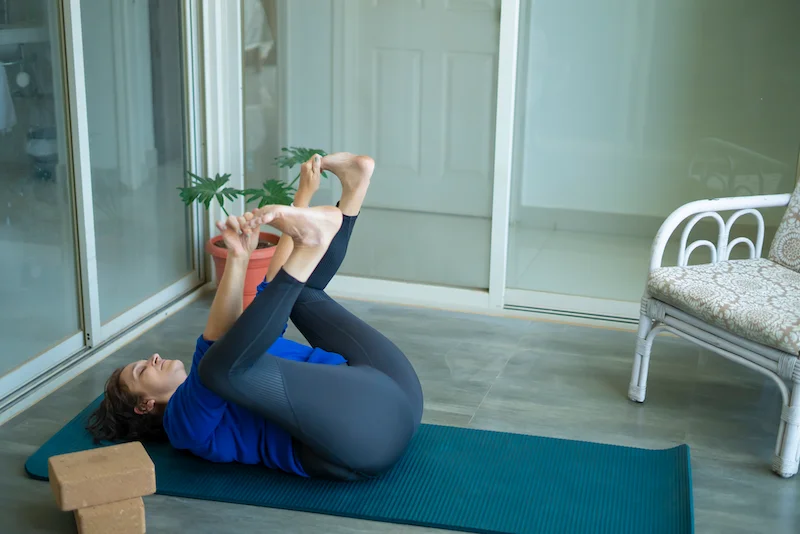
10. Happy Baby (Ananda Balasana)

Happy Baby Pose

A grounding hip opener that helps release lower-back and sacral tension.

  1. Lie on your back and bend your knees toward your chest.
  2. Hold the outsides of your feet, ankles, or shins.
  3. Stack ankles over knees so shins are vertical.
  4. Gently draw knees toward your armpits.
  5. Relax your shoulders and jaw.
  6. Stay for 5–8 breaths, rocking side to side if it feels good.

Modification: Use straps around your feet or hold your thighs if reaching is hard.
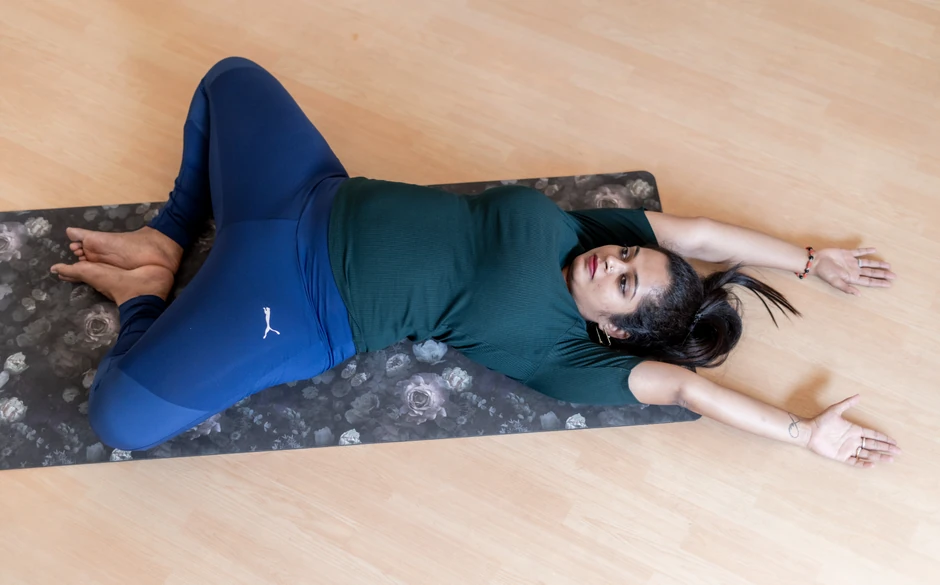
11. Supported Reclined Bound Angle (Supta Baddha Konasana)

Reclined Bound Angle Pose

A restorative hip and heart opener that activates the parasympathetic nervous system.

  1. Lie on your back.
  2. Bring the soles of your feet together.
  3. Let your knees drop open to the sides.
  4. Support thighs with blocks or cushions if needed.
  5. Rest your hands on your belly or at your sides.
  6. Close your eyes and breathe for 1–3 minutes.

Modification: Place a folded blanket under your lower back for support.
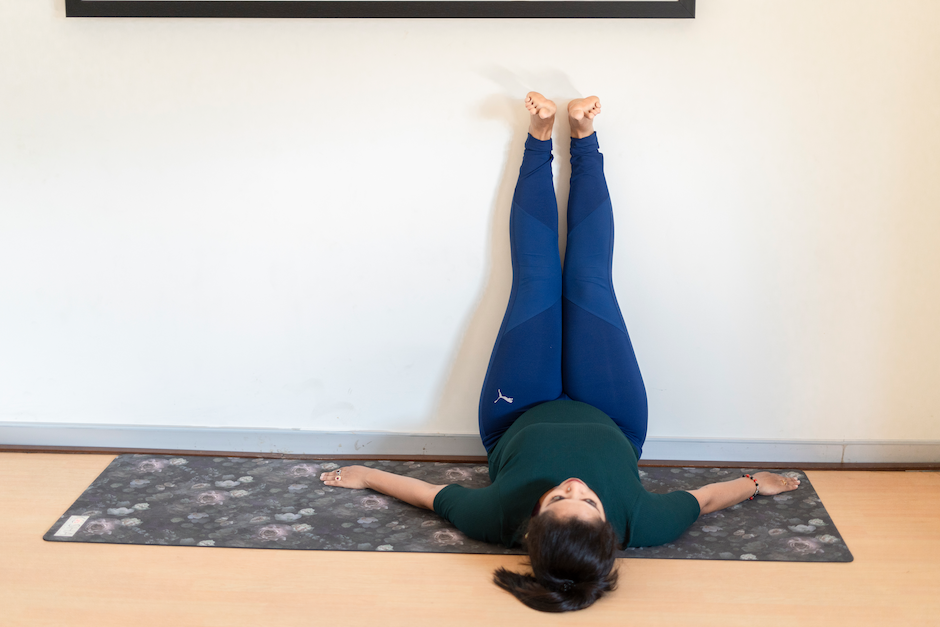
12. Legs Up the Wall (Viparita Karani)

Legs Up The Wall Pose

A gentle inversion that reduces swelling, restores circulation, and calms the mind.

  1. Sit with one hip close to a wall.
  2. Swing your legs up as you lower your back to the floor.
  3. Adjust your hips for comfort—closer for a deeper stretch, farther for ease.
  4. Let your arms rest by your sides.
  5. Close your eyes and breathe naturally.
  6. Stay 3–5 minutes.

Modification: Place a pillow under your hips for extra support.

Finishing: Cleansing Exhale (Pranayama)

Breathwork is one of the most powerful ways to support the body’s natural cleansing processes. Slow, intentional breathing helps regulate the nervous system, deepen your relaxation response, and improve circulation—all essential after the holidays.

The Cleansing Exhale is simple but deeply effective. It lengthens your exhale to release physical tension, mental clutter, and any lingering heaviness.

  1. Sit or lie down with your spine long and your shoulders relaxed.
  2. Inhale slowly through your nose for 4 counts. Feel your ribs expand gently to the sides.
  3. Exhale through your mouth for 6–8 counts. Imagine fogging a mirror—soft, steady, intentional.
  4. Repeat for 6–10 rounds. Let each breath feel like a small release.
  5. End with 2–3 quiet, natural breaths. Notice the shift in your energy and mood.

This final breathing practice helps integrate the physical benefits of your detox sequence and leaves you feeling grounded, centered, and clear.

[inline-CTA-1]

When to Practice for Best Results

For the biggest benefits, try practicing this detox sequence:

  • In the morning, when digestion and energy levels are naturally primed for a reset
  • On an empty or lightly filled stomach, so twists and compressions feel more comfortable
  • 2–4 times a week during January (or anytime you need a refresh)
  • At a slow, mindful pace, focusing more on breath than depth

Even a single session can help you feel lighter and more balanced, but consistency will deepen the effects.

Detox Yoga Sequence: Understanding The Basics

Here’s everything you need to begin with this sequence.

What You Need

One of the best parts of detox yoga is its simplicity. You don’t need a fully stocked studio or special equipment—just a quiet space and a willingness to move intentionally.

You may use:

  • A yoga mat, or simply a carpeted floor
  • A block or cushion (optional, for stability or comfort in twists)
  • A folded blanket for knee or back support
  • A wall for the final inversion

But even without props, every pose in this sequence is fully accessible.

Breathwork Principles to Remember

Your breath is a powerful cleansing tool—more important than the depth of any twist. Keep these simple principles in mind:

  • Inhale to lengthen and create space in the spine and ribs.
  • Exhale to twist, fold, or release—this is where the “detox effect” happens.
  • Keep your breath slow and smooth, especially during compressions.
  • If your breathing tightens or becomes strained, ease out of the pose.

Let your breath lead your movement, not the other way around.

Safety Notes Before You Begin

Detox yoga should feel refreshing—not forceful.

Keep these guidelines in mind:

  • Move slowly and never push into pain.
  • Avoid deep twists if you have spinal injuries, abdominal surgeries, or active digestive conditions.
  • Pregnant practitioners should stick to open, gentle twists, not closed abdominal compressions.
  • Support yourself with props anytime you need more comfort.
  • If a pose feels pinchy, sharp, or dizzying, come out and rest.

This practice is about supporting your body—not testing its limits.

Pairing Detox Yoga with Lifestyle Habits

To enhance the benefits of your detox yoga routine, try pairing it with small lifestyle choices:

  • Drink warm water in the morning to stimulate digestion
  • Stay hydrated throughout the day
  • Add a gentle evening walk to support circulation
  • Prioritize consistent sleep to help your body recover
  • Choose lighter, whole-food meals when possible to complement your practice

You don’t need a strict detox plan—just supportive habits that help your system reset.

If you want personalized guidance, expert Indian instructors at MyYogaTeacher can create custom detox-friendly flows that match your energy level, digestion needs, and schedule. A personalized sequence can also gently transition you from twisting and cleansing poses into strength-building, energizing practices as you move through January and into the year ahead.

[inline-CTA-2]

Takeway

You don’t need harsh cleanses or strict detox plans to feel refreshed after the holidays. A gentle, intentional yoga practice can help you reconnect with your body, support your digestion, and rebuild your energy—one breath at a time.

This 12-pose sequence offers a simple, sustainable way to reset in January and create space for healthier routines in the weeks ahead. Whenever you feel heavy, sluggish, or off balance, return to your mat. A few mindful twists and deep breaths may be all you need to feel grounded again.

And if you want support creating a personalized plan, MyYogaTeacher’s 1-on-1 live coaching can guide you toward a routine that helps you stay consistent, energized, and renewed.

Frequently Asked Questions

Does detox yoga actually remove toxins?

Your liver, kidneys, lungs, and digestive system already detoxify your body naturally. Detox yoga simply supports these processes by improving circulation, stimulating digestion, and reducing stress—helping you feel lighter and more balanced.

Is detox yoga good for beginners?

Absolutely. Detox yoga poses are beginner-friendly and offer modifications. Move slowly, breathe deeply, and stay within a comfortable range of motion. Yoga should never feel forced or painful.

To learn with proper technique, book a free session today!

When is the best time to practice detox yoga?

Morning is ideal because your body is naturally in “reset mode,” but you can practice anytime as long as your stomach is light. Try this flow 2–4 times a week during January for the best results.

Does detox yoga help with bloating?

Yes. Twists and gentle abdominal compressions can stimulate digestion, reduce gas, and help relieve bloating. Poses like Apanasana, Supine Twist, and Revolved Chair are especially helpful.

Should I avoid certain foods before practicing?

Avoid heavy meals for at least 1–2 hours before practicing. Twists feel best when your stomach is light. If you’re hungry, opt for something small like fruit or yogurt.

When will I feel results from detox yoga?

Many people feel relief—lighter, clearer, less bloated—after just one session. More lasting benefits build gradually with consistent practice over several weeks.

No items found.

Enjoy a Free 1-on-1 Session with a Coach!

Receive personalized guidance tailored to your unique fitness goals, live with a dedicated coach—no credit card required.

Claim your free session now
Text Link