


What is Urdhva Hastasana (Upward Salute)?
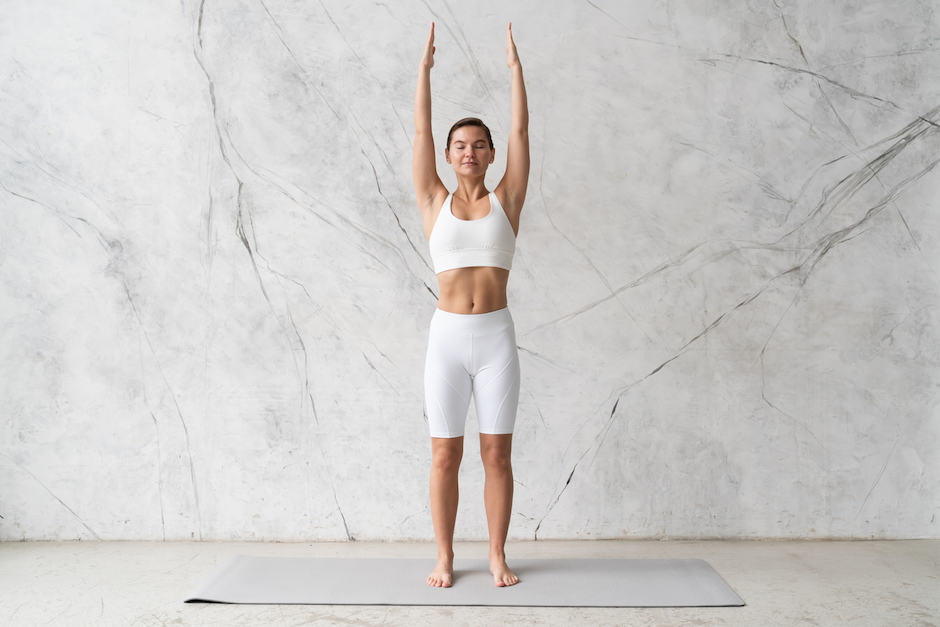
Urdhva Hastasana, also known as Upward Salute, is a simple standing yoga pose where the arms reach overhead while the feet stay firmly grounded. Commonly practiced in Sun Salutations and standing sequences, this pose lengthens the spine, opens the chest and shoulders, and encourages steady, full-body alignment.
Although it looks straightforward, Upward Salute teaches an important balance between grounding and lift. Rooting through the feet while reaching upward through the fingertips helps build body awareness, improve posture, and create a sense of stability and expansion at the same time.
Urdhva Hastasana: Overview and Meaning of Upward Salute Pose
Urdhva Hastasana comes from the Sanskrit words urdhva (upward), hasta (hand), and asana (pose), meaning Upward Salute or Raised Hands Pose. The name reflects the main action of the posture: the arms extend overhead while the body stays grounded through the feet. In yoga, the pose represents lift and stability: reaching upward without losing connection to the earth below.
Urdhva Hastasana is most strongly recognized today through its role in Surya Namaskar (Sun Salutation) and modern standing sequences. It is widely practiced in Hatha, Vinyasa, and Ashtanga Yoga, where it often appears early in the flow on an inhale. Its modern relevance is especially strong because it helps counter collapsed posture, limited shoulder mobility, and the compressed upper body that often develops from prolonged sitting and screen time.
Anatomically, Urdhva Hastasana is a standing lengthening posture that combines grounding through the legs with lift through the spine and arms. The feet root into the floor, the legs stay active, and the core supports the spine so the arms can reach overhead without collapsing into the lower back. At the same time, the pose opens the chest, lengthens the side body, and improves shoulder mobility.
At a Glance
- Sanskrit Name: ऊर्ध्वहस्तासन (Urdhva Hastasana)
- Pronunciation: OORD-vah hahs-TAHS-uh-nuh
- English Names: Upward Salute, Raised Hands Pose
- Pose Type: Standing pose, upward stretch, foundational posture
- Level: Beginner-friendly
- Duration: 1 breath in flow, or 3–5 breaths in a static hold
- Best Time: During Sun Salutations, standing sequences, or as a posture reset
- Main Benefits: Improves posture, lengthens the spine, opens the chest and shoulders, builds body awareness
Benefits of Urdhva Hastasana
Urdhva Hastasana may look simple, but it offers a useful combination of length, lift, and postural awareness. Because the pose connects grounded legs with an upward reach through the arms, it helps organize the whole body in a clear and accessible way.
Physical Benefits
Upward Salute is especially helpful for creating more space through the spine and upper body while improving standing alignment.
- Lengthens the spine and side body: Reaching the arms overhead helps create lift through the waist, rib cage, and spine, which can feel especially relieving after long hours of sitting or slouching.
- Improves posture and body awareness: The pose teaches you how to stand upright with more attention to rib position, shoulder placement, and spinal alignment.
- Opens the chest and shoulders: Lifting the arms with control encourages gentle chest expansion and healthy shoulder mobility.
- Builds light strength through the legs and core: Although the pose looks upper-body focused, the legs and abdominal muscles stay active to support balance and keep the spine steady.
- Supports fuller breathing: With the chest broad and the spine lengthened, the breath can move more freely and feel more expansive.
Mental and Emotional Benefits
Upward Salute often feels bright, alert, and uplifting without being overwhelming.
- Improves focus and presence: Coordinating the upward reach with breath helps bring attention into the body and the present moment.
- Boosts energy at the start of practice: The shape of the pose feels open and awakening, which is one reason it appears so often in Sun Salutations.
- Creates a balance of effort and ease: The pose teaches how to stay grounded through the feet while reaching upward without unnecessary tension.
- Strengthens breath-body connection: Practicing the pose mindfully helps refine the relationship between movement, posture, and breath.
Energetic and Holistic Benefits
In traditional yoga, Urdhva Hastasana is often experienced as a pose of lift, openness, and upward-moving energy.
- Activates the Root Chakra (Muladhara): The strong connection through the feet supports grounding, stability, and steadiness.
- Opens the Heart Chakra (Anahata): The lift through the chest is associated with openness, receptivity, and emotional ease.
- Encourages upward energy flow: Reaching through the arms while staying rooted below creates a clear sense of expansion through the whole body.
- Supports meditative awareness in motion: Because the pose links breath, posture, and attention so clearly, it can help bring a more mindful quality to standing practice and Sun Salutations.
Upward Salute should feel spacious rather than strained. If raising the arms overhead creates discomfort in the shoulders, neck, or lower back, it is better to use a modified version than to force the full shape.
Practice with certified Indian yoga teachers and build a stronger, safer yoga practice from the ground up. Book a free 1-on-1 session today!
How to Do Urdhva Hastasana (Upward Salute): Step-by-Step Guide
This step-by-step guide will help you practice Urdhva Hastasana with better alignment, steadier breath, and more full-body awareness.
Part 1: Preparing for the Pose
Before practicing Urdhva Hastasana, check in with your body:
- If you can stand comfortably in Tadasana with steady balance and relaxed breathing, you are ready to practice the pose.
- If lifting the arms overhead creates strain in the shoulders, neck, or lower back, use a gentler arm position and focus on length rather than height.
Props You May Need
- Yoga mat (optional)
- Wall for alignment support (optional)
- Chair nearby for balance support (optional)
Warm-Up
A few simple movements can prepare the body for Upward Salute:
- Shoulder rolls (10 each direction)
- Cat–Cow Pose (8–10 rounds)
- Standing Side Stretch (3–5 breaths each side)
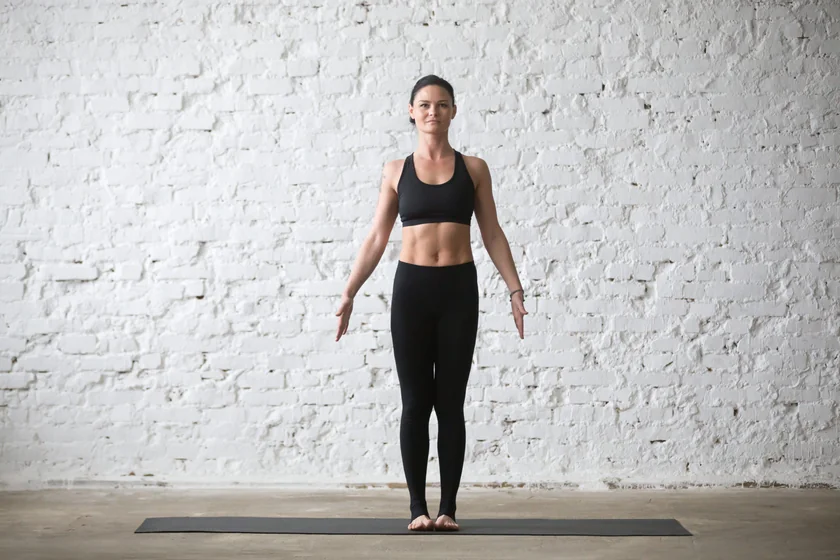
- Tadasana (5 breaths)
- Gentle arm raises with breath (5 repetitions)
This preparation helps open the shoulders, lengthen the spine, and build awareness before lifting the arms overhead.
Part 2: How to Do Urdhva Hastasana: Step-by-Step Instructions for Upward Salute Pose
- Start in Tadasana (Mountain Pose) with the feet together or hip-width apart, depending on what feels most stable. Ground evenly through both feet and let the arms rest by your sides.
- Activate the legs gently by lifting through the kneecaps without locking the knees.
- Lightly engage the thighs and draw the lower belly in just enough to support the spine. Keep the pelvis neutral rather than tipping forward.
- On an inhale, sweep the arms out to the sides and overhead, or lift them forward if that feels better for the shoulders. Bring the arms up only as far as you can without strain. The palms can face each other or touch if comfortable.
- Once the arms are overhead, keep reaching upward through the fingertips while staying grounded through the feet. Let the chest open naturally, but keep the front ribs softly contained so the lower back does not overarch.
- Relax the shoulders away from the ears and keep the neck long. If the biceps come near the ears without tension, that is fine. If not, keep the arms slightly wider.
- Hold the pose for 1 breath in a flow or 3–5 breaths in a static hold. With each inhale, create more length through the sides of the body. With each exhale, root more firmly through the feet.
- To come out, exhale and lower the arms back to the sides with control, or move into the next pose if practicing Sun Salutations.
Common Mistakes and Alignment Tips
- Shoulders creeping up toward the ears: This can create neck tension.
Alignment tip: Keep space between the shoulders and ears as you reach upward. - Overarching the lower back: This often happens when the ribs push forward.
Alignment tip: Lightly engage the core and keep the front ribs gently contained. - Forcing the arms overhead: This can strain the shoulders and neck.
Alignment tip: Lift the arms only as high as you can while keeping the shoulders relaxed. - Locking the body with tension: The pose can become stiff instead of spacious.
Alignment tip: Keep the legs active and the arms engaged, but soften the face, jaw, and breath.
Practiced with proper alignment, Urdhva Hastasana becomes more than just an overhead stretch. It becomes a foundational pose for learning to stay grounded, lengthened, and connected to the breath simultaneously.
Build better balance for Upward Salute Pose with these free and guided group classes.
Upward Salute Variations
Urdhva Hastasana can be adapted to suit different levels of shoulder mobility, balance, and comfort. Some variations make the pose more accessible for beginners, while others add side bending or a gentle backbend for more experienced practitioners.
Beginner-Friendly Modifications
1. Bent Elbows Variation
Reduces strain in the shoulders and makes the pose more accessible when overhead mobility is limited.
- Begin in Tadasana with steady grounding through both feet.
- Lift the arms overhead on an inhale.
- Keep a soft bend in the elbows instead of fully straightening the arms.
- Stay tall through the spine and breathe steadily.
2. Feet Hip-Width Apart
Creates a more stable base, especially for beginners or anyone who feels unsteady standing with the feet together.
- Stand with the feet about hip-width apart.
- Ground evenly through both feet.
- Raise the arms overhead with steady breath.
- Hold for a few breaths while keeping the legs active.
Variations for Tight Shoulders or Neck Sensitivity
3. Arms Slightly Forward
Reduces compression in the shoulders and neck while still allowing length through the spine.
- Stand in Tadasana with the spine upright and the shoulders relaxed.
- Inhale and raise the arms overhead, keeping them slightly forward instead of beside the ears.
- Keep the gaze forward and the neck easy.
- Hold for several breaths without strain.
Intermediate Variations
4. Parsva Urdhva Hastasana (Side-Bending Upward Salute)

Increases the stretch through the side body and brings more awareness to the waist, ribs, and shoulders.
- Come into Urdhva Hastasana with both feet rooted evenly.
- Inhale to lengthen upward through the fingertips.
- Exhale and gently bend to one side without collapsing forward.
- Stay for a few breaths, return to center, and repeat on the other side.
5. Prayer Hands Overhead
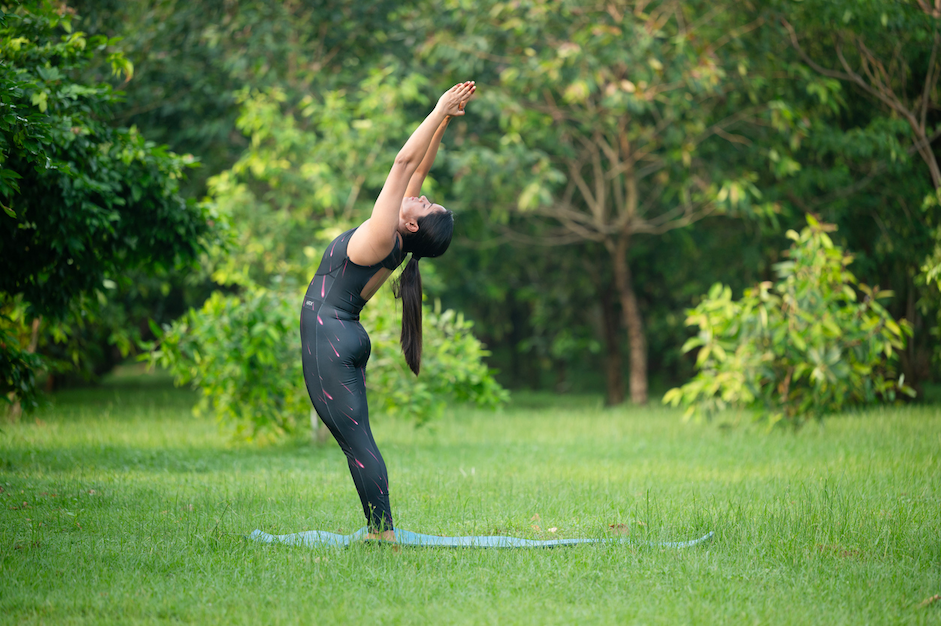
Creates a more focused overhead position and increases the challenge through the shoulders and upper arms.
- Stand tall in Urdhva Hastasana.
- Bring the palms together overhead if the shoulders allow.
- Keep the arms active and the shoulders away from the ears.
- Hold with smooth, steady breathing.
Gentle Backbend Variation
7. Upward Salute with Mild Backbend
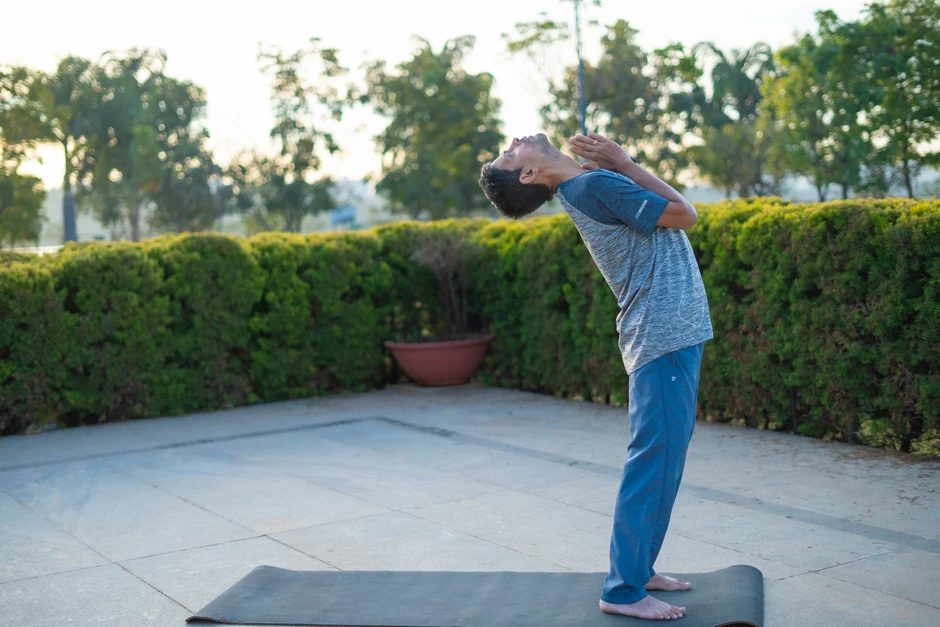
Adds a subtle chest-opening action and prepares the body for gentle standing backbends in Sun Salutations.
- Begin in Urdhva Hastasana with the legs active and the spine long.
- Lift upward first through the fingertips and chest.
- Add a slight backbend through the upper spine without dropping into the lower back.
- Keep the lower belly supportive and return to neutral if any compression appears.
Props and Accessibility
- Keep the arms shoulder-width apart if bringing the palms together feels restrictive.
- Bend the elbows slightly if straight arms overhead create tension.
- Raise the arms only partway overhead if a full lift strains the shoulders or neck.
- Stand with your feet hip-width apart for more balance and stability.
- Practice with the back or hands near a wall for support and alignment awareness.
- Keep the gaze forward if looking up creates neck tension.
- If adding a backbend, think of lifting first before leaning back at all.
Urdhva Hastasana: Precautions and Contraindications
Urdhva Hastasana is a beginner-friendly pose, but it should still feel spacious, steady, and comfortable in your body. If lifting the arms overhead causes strain, it is better to use a modified version than to force the full expression.
Practice With Caution and Modifications
- Shoulder pain or limited shoulder mobility: Keep the arms wider, lift them only partway, or keep the palms facing each other instead of bringing them together.
- Neck tension or a history of neck discomfort: Keep the gaze forward, relax the shoulders away from the ears, and avoid taking the arms too far back beside the ears.
- Lower back sensitivity: Lightly engage the core, keep the ribs gently contained, and focus on lengthening upward rather than leaning back.
- Recent injury or surgery affecting the shoulders, arms, or upper spine: Practice only with professional guidance and use a smaller range of motion as needed.
When to Modify
Choose a gentler version of the pose if you notice:
- Pinching in the shoulders
- The neck tightening as the arms lift
- The ribs pushing sharply forward
- Compression in the lower back
- Difficulty breathing smoothly in the shape
These are signs that the pose needs better support, a smaller range of motion, or a different arm position.
General Safety Guidelines
- Start from a stable standing position
- Lift the arms with control rather than momentum
- Keep the shoulders relaxed
- Lightly engage the core to support the spine
- Breathe steadily throughout the pose
- Come out of the shape slowly and mindfully
When to Consult a Healthcare Provider
Speak with a healthcare professional before practicing if you have:
- Chronic shoulder pain or injury
- Acute or recurring neck pain
- Recent upper-body surgery
- Persistent lower back discomfort when reaching overhead
- Any condition that limits safe overhead arm movement
To practice foundational poses with better safety and alignment, book a free 1-on-1 session with a certified Indian yoga teacher.
Urdhva Hastasana: Related Poses
Explore these related poses to build the strength, stability, and overhead arm awareness needed for Urdhva Hastasana.
1. Utkatasana (Chair Pose)
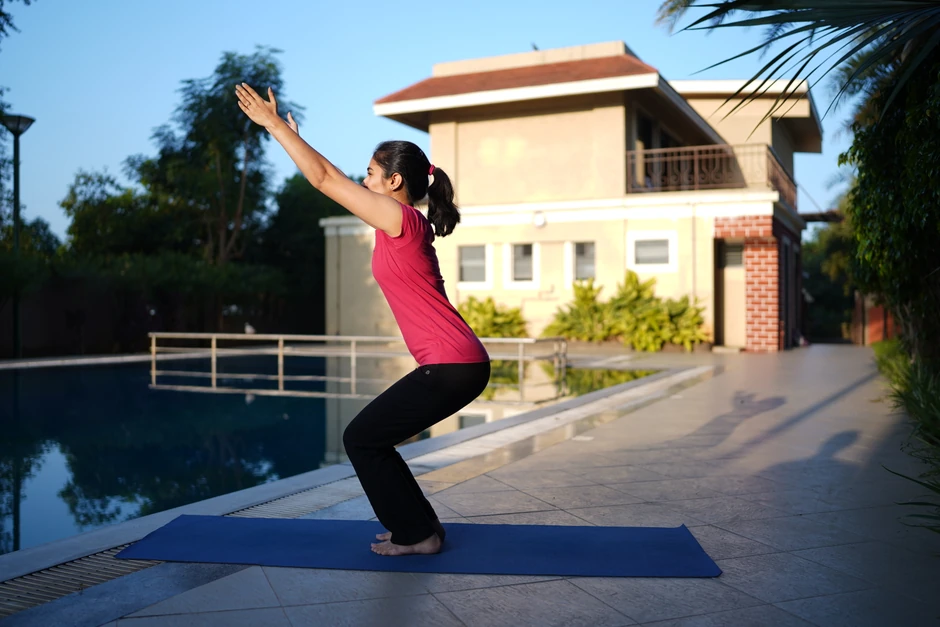
Strengthens the legs and core while teaching you to lift the arms overhead without losing spinal support.
- Stand with the feet hip-width apart or together.
- Bend the knees and send the hips back as if sitting into a chair.
- Raise the arms overhead while keeping the chest lifted.
- Hold for a few breaths, then return to standing.
2. Virabhadrasana I (Warrior I)
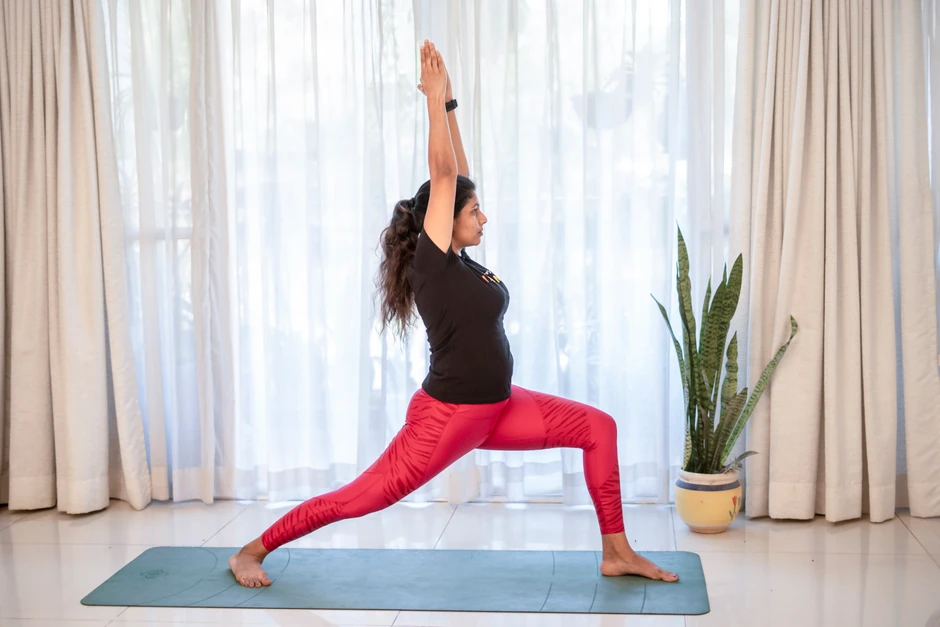
Builds on Upward Salute by adding leg strength, hip opening, and a lifted overhead reach.
Steps:
- Step one foot back from standing and turn it slightly outward.
- Bend the front knee and square the chest forward.
- Raise both arms overhead with the spine long.
- Hold for a few breaths, then switch sides.
3. Vrksasana (Tree Pose) with arms overhead
.webp)
Improves balance and focus while reinforcing the grounded legs and upward lift of Urdhva Hastasana.
- Stand tall and shift weight into one foot.
- Place the other foot on the ankle, calf, or inner thigh.
- Bring the arms overhead with the shoulders relaxed.
- Hold steadily, then switch sides.
4. Crescent Lunge with arms raised
Strengthens the legs and opens the hip flexors while maintaining the lifted arm position of Upward Salute.
- Step one foot back into a high lunge from standing.
- Bend the front knee and keep the back leg strong.
- Raise both arms overhead and lift through the chest.
- Hold for several breaths, then switch sides.
Enjoy a Free 1-on-1 Session with a Coach!
Receive personalized guidance tailored to your unique fitness goals, live with a dedicated coach—no credit card required.
Frequently Asked Questions

Tadasana (Mountain Pose) is the neutral standing foundation, with the arms resting by the sides and the focus on grounding, alignment, and posture. Urdhva Hastasana (Upward Salute) builds on that same base by lifting the arms overhead, adding more length through the spine, more shoulder mobility, and a stronger sense of upward reach. In simple terms, Tadasana is the foundation, and Urdhva Hastasana is that foundation with the arms raised.
Urdhva Hastasana is the second position in both Surya Namaskar A and B (Sun Salutations). You move into it from Tadasana (Mountain Pose) on an inhale, raising your arms overhead. From here, you exhale into Uttanasana (Forward Fold). It's repeated multiple times during Sun Salutation practice.
This pose can help improve posture awareness, create a full-body stretch, open the chest, and build better coordination between breath and movement. It can also feel energizing, especially when practiced at the beginning of a sequence.
Parsva Urdhva Hastasana is a side-bending variation of the pose. From the upward-reaching position, you gently bend to one side while keeping both feet grounded. This variation emphasizes length through the sides of the body.
Shoulder discomfort often happens when the arms are forced overhead, the shoulders bunch up toward the ears, or mobility is limited. Widening the arms, softening the neck, and reducing the range of motion can make the pose more comfortable.3
Related Articles on Padmasana
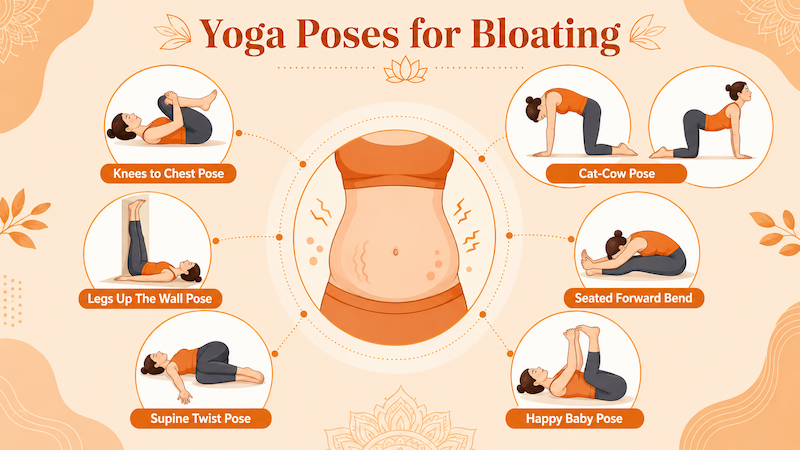
Yoga for Bloating: 8 Gentle Poses to Relieve Gas
Yoga for bloating relief: try 8 gentle poses to ease trapped gas and stomach discomfort. Beginner-friendly guidance from expert Indian yoga teachers.


Yin vs Restorative Yoga: What’s the Difference?
Yin vs Restorative Yoga explained. Compare intensity, hold times, props, and benefits. Learn the key differences and choose the right slow yoga style for you.
.webp)
Detox Yoga Sequence: Refresh and Renew After Holiday Indulgence
Refresh and renew after holiday indulgence with this 12-pose detox yoga sequence. Gentle twists and mindful stretches for digestion, circulation, and energy.


