



What is Dolphin Pose (Ardha Pincha Mayurasana)?
.webp)
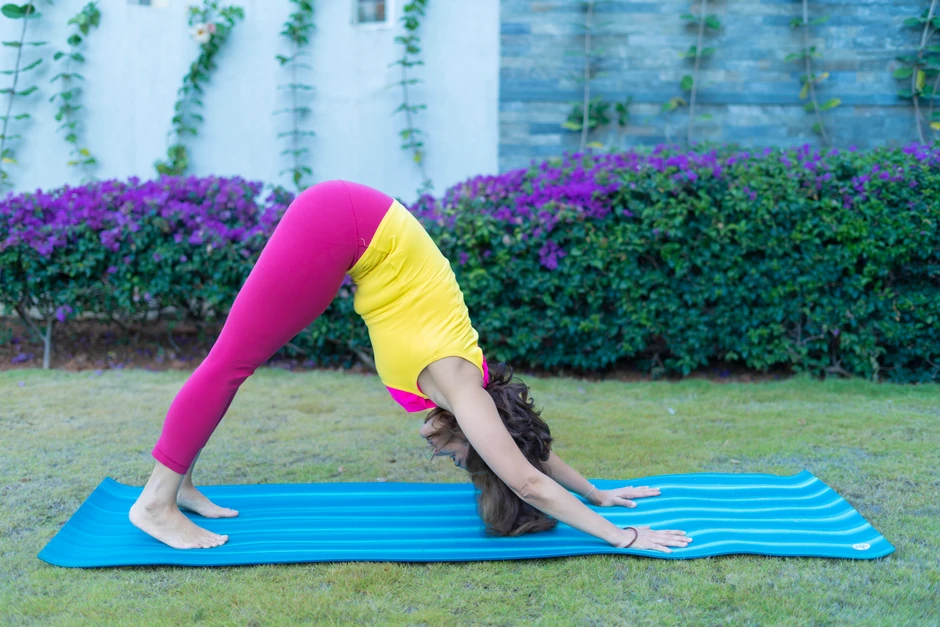
Dolphin Pose (Ardha Pincha Mayurasana) is a strengthening yoga posture where the body forms an inverted V-shape while supported on the forearms instead of the hands. With regular practice, this pose strengthens the upper body while stretching the hamstrings, calves, and spine, creating both strength and mobility throughout the body.
Dolphin Pose: Overview and Meaning of Ardha Pincha Mayurasana
Dolphin Pose, known in Sanskrit as Ardha Pincha Mayurasana (अर्धपिंचमयूरासन), translates to “Half Feathered Peacock Pose.” The name comes from four Sanskrit words: ardha, meaning “half,” pincha, meaning “feather” or “feathered,” mayura, meaning “peacock,” and asana, meaning “posture.” The pose is called “half” because it is traditionally practiced as a preparatory stage for Pincha Mayurasana (Forearm Stand), where the body lifts fully upside down while balancing on the forearms. The English name Dolphin Pose comes from the posture’s shape—when the hips lift, and the body forms an inverted V, it resembles a dolphin diving smoothly through water.
Traditionally, Dolphin Pose emerged as a preparatory inversion designed to build the strength and alignment needed for more advanced arm balances. Today, it is widely practiced across Hatha, Vinyasa, Ashtanga, and Power Yoga styles. It commonly appears mid-sequence after the shoulders have warmed up, helping practitioners develop the stability required for poses like Forearm Stand (Pincha Mayurasana) and Headstand (Sirsasana).
From an anatomical perspective, Dolphin Pose is a full-body strengthening and stretching posture with a strong emphasis on the upper body. The forearms press firmly into the mat while the shoulders stabilize the body, activating key muscles including the deltoids, triceps, serratus anterior, trapezius, and rhomboids. Although the pose strongly develops shoulder and core strength, the lower body remains active as well. The legs lengthen through the hamstrings and calves, while the quadriceps engage to support the knees and stabilize the posture.
At a Glance
- Sanskrit Name: अर्धपिंचमयूरासन (Ardha Pincha Mayurasana)
- Pronunciation: ARD-hah PINCH-ah my-yer-AHS-anna
- English Names: Dolphin Pose, Half Feathered Peacock Pose
- Pose Type: Arm balance preparation, mild inversion, strengthening pose
- Difficulty Level: Intermediate (beginner-friendly with modifications)
- Duration: 30 seconds – 2 minutes
- Primary Benefits: Shoulder strength, core stability, hamstring stretch, inversion preparation
- Preparatory For: Forearm Stand (Pincha Mayurasana), Headstand (Sirsasana)
Benefits of Dolphin Pose (Ardha Pincha Mayurasana)
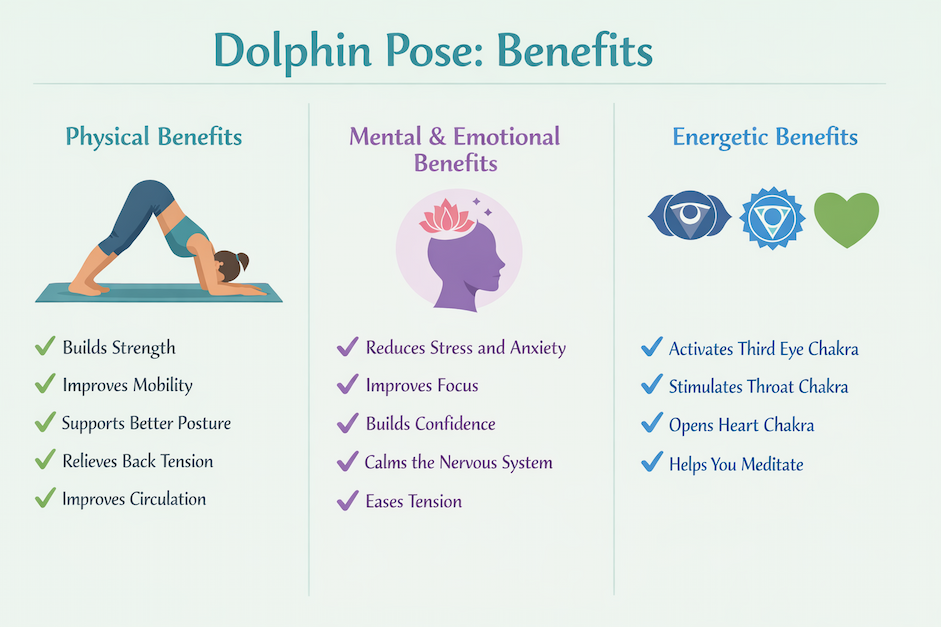
Dolphin Pose offers a strong combination of upper-body strengthening, shoulder opening, and mild inversion benefits. Although it is often taught as a preparation for forearm-based inversions, it is also a valuable pose on its own for building stability, focus, and body awareness.
Physical Benefits of Dolphin Pose
Dolphin Pose is especially effective for strengthening the upper body. Because the forearms stay grounded, the pose places emphasis on the shoulders, arms, and core.
- Strengthens shoulders, arms, and upper back: Builds stability in the deltoids, triceps, trapezius, and rhomboids, which are essential for healthy posture and inversion practice.
- Develops deep core strength: The abdominal muscles work continuously to support the spine and prevent the lower back from collapsing.
- Improves shoulder mobility: Pressing the forearms down while lifting the hips creates a deep opening through the shoulders and upper back.
- Stretches hamstrings and calves: Lengthens the back of the legs and helps release tightness caused by prolonged sitting.
- Supports better posture: Strengthens the muscles that hold the chest open and the shoulders stable.
- Builds strength for inversions: Prepares the body for Forearm Stand and Headstand by developing shoulder endurance and alignment.
- Relieves mild back tension: The inverted V-shape lengthens the spine and can reduce stiffness along the back.
- Improves circulation: As a mild inversion, the pose encourages blood flow toward the upper body and head.
- Enhances balance and coordination: Requires steady engagement through the arms, core, and legs, improving overall body awareness.
- Stretches the arches of the feet: Pressing through the balls of the feet gently lengthens the soles and arches.
Mental and Emotional Benefits
Dolphin Pose is physically demanding, but it can also be mentally steadying. The mild inversion and strong focus often help quiet the mind.
- Calms the nervous system: The inverted position may activate the parasympathetic response, promoting relaxation.
- Reduces stress and anxiety: Deep breathing in the pose can help settle mental agitation.
- Improves concentration and focus: Holding the posture requires attention to alignment and breath.
- Builds confidence: Regular practice develops the strength and control needed for more challenging inversions.
- Enhances mental clarity: The head-down position may leave the mind feeling refreshed and alert.
- Cultivates patience and discipline: Progress in Dolphin Pose happens gradually and rewards steady practice.
- May ease mild tension headaches: Gentle inversion and improved circulation may help when tension is posture-related.
Energetic and Holistic Benefits
In traditional yoga, the Dolphin Pose is often seen as both grounding and uplifting.
- Activates the Third Eye Chakra (Ajna): Supports focus, awareness, and inward attention.
- Stimulates the Throat Chakra (Vishuddha): The shape of the neck and chest is linked with communication and expression.
- Opens the Heart Chakra (Anahata): Chest expansion may encourage emotional openness.
- Balances grounding and lift: The forearms and feet root down while the hips rise, creating energetic steadiness.
- Supports meditation readiness: The calming effect of the pose may help settle the mind before seated practice.
If you have shoulder injuries, neck pain, or uncontrolled high blood pressure, practice only with medical guidance.
Build shoulder strength safely with personalized guidance. Book your free 1-on-1 session with certified Indian yoga teachers today.
How to Do Dolphin Pose (Ardha Pincha Mayurasana): Step-by-Step Guide
This step-by-step guide will help you practice Dolphin Pose safely while building shoulder strength, core stability, and flexibility over time.
Part 1: Preparing for the Pose
Before practicing Dolphin Pose, check in with your body:
- If your shoulders feel warm and stable in weight-bearing positions, you’re ready to explore the pose.
- If you feel shoulder strain, neck discomfort, or strong pulling in the hamstrings, begin with shorter holds and supportive modifications. Strength and flexibility build gradually.
Props You May Need
- Yoga mat with good grip
- Yoga blocks (optional, for alignment support)
- Folded blanket (optional, for forearm cushioning)
- Wall nearby (optional, for extra stability)
Warm-Up (Essential)
Always warm up for at least 8–10 minutes before practicing the Dolphin Pose:
- Cat–Cow Pose (10–15 rounds)
- Downward-Facing Dog (5–10 breaths)
- Forearm Plank (20–30 seconds)
- Puppy Pose (5–10 breaths)
Warming up the shoulders, spine, and hamstrings helps you feel stronger, safer, and more stable in the posture.
Part 2: How to Do Dolphin Pose: Step-by-Step Instructions
- Come onto your hands and knees in Tabletop Position, with wrists under shoulders and knees under hips.
- Lower both forearms to the mat, keeping the elbows shoulder-width apart and pressing evenly through the forearms.
- Keep the forearms parallel with palms flat, or interlace the fingers if that feels more supportive.
- Tuck the toes under and prepare to lift the hips.
- On an inhale, raise the hips upward to create an inverted V-shape.
- Take small steps forward if your hamstrings allow, stopping when you feel a steady stretch without strain.
- Press the forearms firmly into the mat and lift the shoulders away from the ears.
- Draw the navel gently toward the spine and keep the ribs from flaring.
- Press the thighs back and reach the heels toward the floor, without forcing them to touch.
- Keep the head relaxed between the arms, with the gaze toward the feet or navel.
- Hold for:
- 30–45 seconds (beginners)
- 1–2 minutes (intermediate)
- Up to 3 minutes (advanced)
- With each inhale, lengthen the spine. With each exhale, press the forearms down and lift the hips.
- To come out, bend the knees and lower the hips back into Child’s Pose. Rest for 5–10 breaths before continuing.
Alignment Checkpoints
- Keep the elbows shoulder-width apart
- Forearms should be pressing down evenly
- Shoulders must be lifted away from the ears
- Core should be gently engaged
- Hips must be lifted up and back
- Knees can be bent if needed
- The head and neck must be relaxed
- Breath should be steady and smooth
Practiced regularly, the Dolphin Pose builds the shoulder strength, control, and confidence needed for more advanced inversions.
Practice Dolphin Pose with 1-on-1 guidance in these strength-building group classes.
Dolphin Pose Variations
Dolphin Pose can be adapted for different levels of strength and flexibility. Beginners may use supportive variations to build shoulder stability, while more experienced practitioners can explore dynamic or advanced progressions.
Beginner Modifications
1. Dolphin Pose at the Wall
Reduces strain on the hamstrings while helping build shoulder strength and stability.
- Place your forearms on the floor about one foot away from a wall.
- Step one foot onto the wall at hip height, then place the other foot beside it.
- Press the forearms firmly into the mat and lift the hips upward.
- Hold for 5–10 breaths while keeping the shoulders active.
2. Bent-Knee Dolphin Pose
Makes the pose more accessible by reducing hamstring tension.
- Start in Dolphin Pose with forearms grounded.
- Bend the knees generously and focus on lifting the hips upward.
- Press the forearms into the mat and keep shoulders stable.
- Hold for 5–10 breaths while maintaining core engagement.
3. Elevated Dolphin Pose (Forearms on Blocks)
Reduces shoulder intensity and helps beginners maintain proper alignment.
- Place two yoga blocks under the forearms at a comfortable height.
- Position elbows directly under shoulders.
- Lift the hips and extend the legs into the inverted V-shape.
- Hold the pose while maintaining steady breathing.
Intermediate Variations
4. One-Legged Dolphin Pose
Challenges balance and increases core stability.
- Start in Dolphin Pose.
- Lift one leg toward the ceiling while keeping your hips level.
- Press firmly through both forearms.
- Hold for 5–10 breaths before switching sides.
5. Dolphin Push-Ups
Strengthens shoulders, triceps, and upper back.
- Begin in Dolphin Pose.
- Shift forward into Forearm Plank.
- Press back into Dolphin Pose.
- Repeat 5–10 controlled repetitions.
Advanced Variations
6. Dolphin to Forearm Stand
Builds strength and control for advanced inversions.
- Start in Dolphin Pose with shoulders strongly engaged.
- Walk the feet closer toward the elbows.
- Lightly hop or press one leg upward.
- Balance both legs overhead in Forearm Stand.
7. Dolphin Walks
Improves shoulder strength and hamstring flexibility.
- Begin in Dolphin Pose.
- Slowly walk the feet closer toward the elbows.
- Pause and breathe for several breaths.
- Walk the feet back to the starting position.
Props & Accessibility
Dolphin Pose can be more adaptable with simple prop adjustments.
- Use yoga blocks under the forearms to reduce intensity and create more space in the shoulders.
- Place a strap around the upper arms to keep the elbows shoulder-width apart and prevent them from splaying outward.
- Keep the knees bent if the hamstrings feel tight, so the spine can stay long and the shoulders can work properly.
- Walk the feet farther away from the elbows to make the pose more manageable and reduce strain.
- Focus on shoulder engagement over leg flexibility, especially in the beginning.
- Clasp the hands together instead of keeping the palms flat if that feels more stable or comfortable.
- Dolphin Pose may feel better than Downward Dog for wrist sensitivity, since the weight is placed on the forearms rather than the hands.
- During pregnancy, the Dolphin Pose is generally avoided in the second and third trimesters because of the inversion element. Always practice prenatal modifications under the guidance of a qualified specialist. Learn more about prenatal yoga in this detailed guide.
To practice these variations under expert guidance, book a free 1-on-1 session today!
Dolphin Pose Precautions & Contraindications
Dolphin Pose is a strengthening inversion that places significant load on the shoulders, arms, and core. Practicing with proper alignment and preparation is essential to avoid strain—especially in the shoulders, neck, and hamstrings.
Avoid Dolphin Pose If You Have
- Shoulder injury or recent shoulder surgery: The pose requires strong shoulder stability and weight-bearing through the arms.
- Neck injury or chronic neck pain: Incorrect head placement may increase pressure on the cervical spine.
- Severe wrist injury: Although less demanding than Downward Dog, the forearms and wrists still stabilize the pose.
- Uncontrolled high blood pressure: The mild inversion can temporarily increase pressure in the head.
- Detached retina or serious eye conditions: Inversions may increase intraocular pressure.
- Recent concussion or head injury: The inverted position can aggravate symptoms.
- Pregnancy (second or third trimester): The inverted position and abdominal engagement are generally avoided.
- Severe osteoporosis: Weight-bearing through the upper body may increase fracture risk.
Practice with Caution & Modifications
- Mild High Blood Pressure: Keep the head higher than usual, avoid walking the feet too close, and hold for shorter durations. Exit immediately if you feel pressure in the head.
- Shoulder Tightness or Weakness: Use blocks under the forearms, clasp the hands instead of keeping palms flat, and gradually build strength rather than forcing the position.
- Tight Hamstrings: Keep the knees generously bent and avoid walking the feet too close to the elbows. Focus on shoulder engagement rather than leg flexibility.
- Headaches or Migraines: Practice gently and for shorter durations. Skip the pose if a headache is already present.
- Menstruation: Some practitioners prefer avoiding inversions during heavy-flow days. Listen to your body and modify or skip the pose if discomfort arises.
- Recent Shoulder Injury (Healed): Resume practice only with medical clearance and begin with wall-supported or modified versions.
General Safety Guidelines
Always:
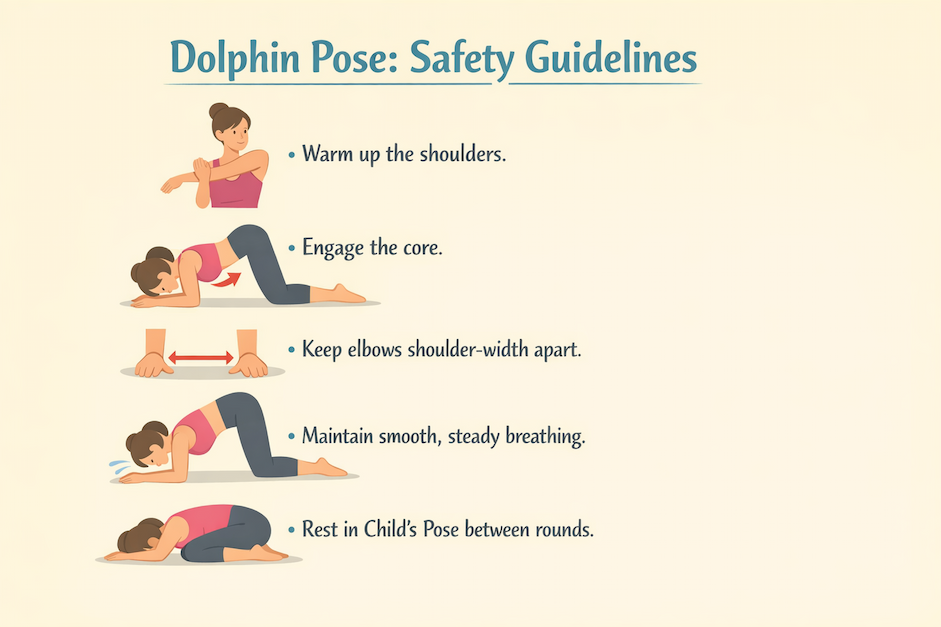
- Warm up the shoulders thoroughly before practicing.
- Engage the core to support the spine.
- Keep elbows shoulder-width apart for stability.
- Maintain smooth, steady breathing.
- Rest in Child’s Pose between rounds.
Avoid:
- Practicing without a proper warm-up.
- Forcing the shoulders or hamstrings deeper than comfortable.
- Holding the breath or straining.
- Continuing if sharp pain appears.
- Practicing immediately after eating (wait 2–3 hours).
When to Consult a Healthcare Provider
Seek professional advice before practicing the Dolphin Pose if you have:
- Shoulder, neck, or wrist injuries
- Cardiovascular or blood pressure conditions
- Eye conditions such as glaucoma
- Osteoporosis or bone-density concerns
- Recent surgeries affecting the upper body
- Pregnancy or postpartum recovery
Practicing the Dolphin Pose with patience and proper technique allows strength to develop gradually while reducing the risk of injury.
Dolphin Pose: Related Yoga Poses
These poses complement the Dolphin Pose by further strengthening the upper body while stretching the leg muscles.
1. Forearm Stand (Pincha Mayurasana)
Builds on the Dolphin Pose by taking the same forearm foundation into a full inversion, strengthening the shoulders, core, and balance.
- Start in the Dolphin Pose with forearms firmly grounded and elbows shoulder-width apart.
- Walk the feet closer toward the elbows to stack the hips more over the shoulders.
- Lift one leg, then lightly hop or press both legs upward with control.
- Balance steadily through the forearms, then come down slowly and rest in Child’s Pose.
2. Headstand (Sirsasana)
Uses many of the same inversion skills as Dolphin Pose while adding balance, core control, and full-body awareness.
- Kneel on the mat and interlace the fingers, placing the forearms on the floor.
- Rest the crown of the head lightly inside the hands and lift the knees.
- Walk the feet inward until the hips stack over the shoulders.
- Slowly lift the legs up with control, hold steadily, then lower down carefully.
3. Supported Headstand (Salamba Sirsasana)
Offers a more supported way to explore inversion while building the strength and confidence needed for a full Headstand.
- Set the forearms on the mat with fingers interlaced and elbows shoulder-width apart.
- Place the crown of the head gently on the floor, supported by the hands and forearms.
- Lift the hips and walk the feet inward until the body feels light and stable.
- Raise the legs overhead with control, hold for a few breaths, then lower slowly and rest.
Enjoy a Free 1-on-1 Session with a Coach!
Receive personalized guidance tailored to your unique fitness goals, live with a dedicated coach—no credit card required.
Frequently Asked Questions (FAQs)

Dolphin Pose strengthens the shoulders, arms, and core while stretching the hamstrings and opening the chest. It is commonly used to prepare the body for inversions such as Forearm Stand and Headstand.
Beginners can hold the Dolphin Pose for 30 seconds to 1 minute, while intermediate practitioners may hold it for 1–2 minutes. Advanced practitioners may stay for up to 3 minutes, depending on strength and comfort.
Dolphin Pose is performed on the forearms, which increases shoulder and core engagement. Downward-Facing Dog is practiced on the hands with straight arms, making it more accessible for beginners.
To practice both poses effectively, book a free 1-on-1 session with a certified coach!
Yes. Dolphin Pose is one of the most effective yoga poses for building shoulder stability and strength. It strengthens the rotator cuff muscles and upper back, which are essential for safe inversion practice.
Yes, beginners can practice the Dolphin Pose with modifications. Keeping the knees bent, using blocks under the forearms, or practicing against a wall can make the pose more accessible while still building shoulder strength.
Related Articles on Padmasana
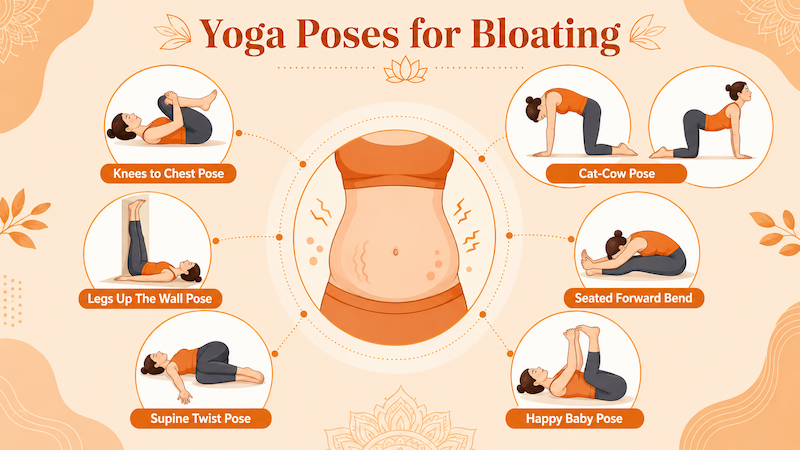
Yoga for Bloating: 8 Gentle Poses to Relieve Gas
Yoga for bloating relief: try 8 gentle poses to ease trapped gas and stomach discomfort. Beginner-friendly guidance from expert Indian yoga teachers.


Yin vs Restorative Yoga: What’s the Difference?
Yin vs Restorative Yoga explained. Compare intensity, hold times, props, and benefits. Learn the key differences and choose the right slow yoga style for you.
.webp)
Detox Yoga Sequence: Refresh and Renew After Holiday Indulgence
Refresh and renew after holiday indulgence with this 12-pose detox yoga sequence. Gentle twists and mindful stretches for digestion, circulation, and energy.


