


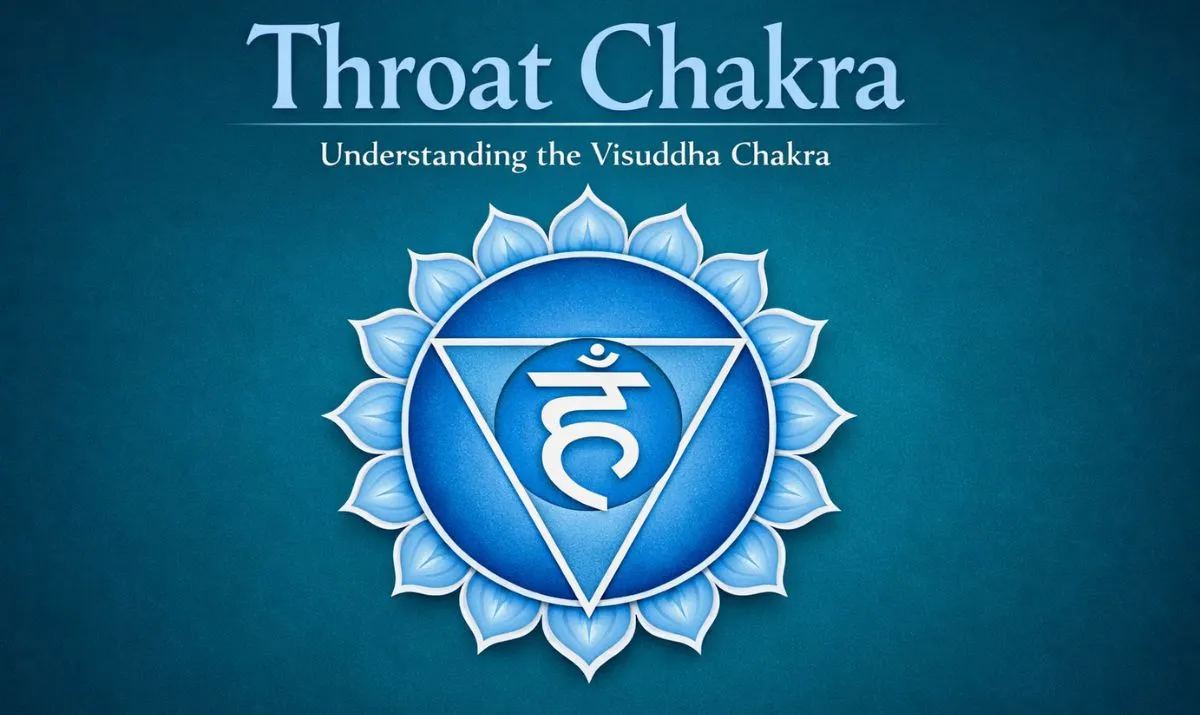
The throat chakra, known as Vishuddha in Sanskrit, is the center of communication, self-expression, and truth. It governs how clearly and honestly you express your thoughts, emotions, and needs—both to others and to yourself. When the throat chakra is balanced, your voice feels steady, clear, and authentic. You’re able to express yourself honestly without fear of judgment. When it’s blocked, you may hesitate to speak up, suppress your true thoughts, or say things that don’t fully reflect how you feel.
This energy center plays a vital role in how you communicate with others and uphold your personal integrity. A healthy throat chakra supports clear boundaries, deep listening, and respectful self-expression. When imbalanced, communication often becomes strained—showing up as silence, people-pleasing, or excessive talking that lacks genuine connection.
Working with the throat chakra emphasizes honest and truthful communication and conscious listening. Through practices such as yoga, sound work, breath awareness, and mindful expression, you can gently clear blockages and reconnect with your authentic voice.
In this guide, you’ll learn about the meaning of the throat chakra, its location, symbol, and characteristics, as well as the signs of imbalance and practical tools, including yoga poses, meditation, and affirmations, to open, heal, and balance the Vishuddha safely.
Learn more about the 7 Chakras in this detailed guide!
Traditional yogic teachings describe the throat chakra as the center of expression and purification. It is the point where inner thoughts, emotions, and intentions are translated into sound, language, and communication. Without clarity at this center, expression can feel blocked, distorted, or inauthentic.
Modern perspectives echo this understanding by linking the throat chakra to communication skills, boundary-setting, and self-expression. Together, these views highlight Vishuddha’s role as the bridge between inner experience and outer expression—allowing truth to move from the heart into the world with clarity and integrity.
The Sanskrit name Vishuddha means “especially pure” or “purification.” This reflects the chakra’s function of refining raw thoughts and emotions into conscious, intentional expression. Rather than impulsive speech, Vishuddha governs clarity, honesty, and discernment in communication.
The throat chakra is traditionally symbolized by a blue lotus with sixteen petals. Blue represents clarity, truth, and calm awareness, while the lotus symbolizes expression emerging from stillness. At the center of the symbol is the seed mantra HAM (हं), the vibrational sound associated with the throat chakra. Chanting HAM is believed to stimulate the throat region and support clear expression.
The throat chakra is located at the base of the throat, in the neck region near the collarbones. It corresponds physically to the throat, vocal cords, neck, shoulders, thyroid gland, mouth, and ears.
This placement reflects its dual function—both speaking and listening. Physical tension in the neck or shoulders, throat tightness, or voice-related discomfort often parallels difficulty expressing oneself or holding back unspoken thoughts.
Vishuddha is associated with the ether (space) element, which represents sound, vibration, and the medium through which communication occurs. Ether is subtle and expansive, allowing movement and resonance rather than form.
This association explains why sound-based practices—such as chanting, humming, and mindful speech—are central to throat chakra work. Clear expression requires inner space, just as sound requires open space to travel without obstruction.
The throat chakra is the first of the upper chakras, marking the transition from emotional experience to conscious expression. While the heart chakra governs feeling and connection, Vishuddha determines how those feelings are communicated.
As a bridge between the heart and higher centers of awareness, the throat chakra ensures that expression is aligned with inner truth. Strengthening this center supports honest communication, healthy boundaries, and the ability to speak and listen with clarity and confidence.
| Aspect | Details |
|---|---|
| Sanskrit Name | Vishuddha (विशुद्ध) |
| Meaning | Especially Pure / Purification |
| Location | Throat and neck region, base of the throat |
| Color | Blue (sky blue or turquoise) |
| Element | Ether / Space (Akasha) |
| Bija Mantra | HAM (हं) |
| Sound Frequency | 741 Hz |
| Associated Organs | Throat, vocal cords, mouth, ears, neck, shoulders |
| Endocrine Gland | Thyroid gland |
| Sense | Hearing |
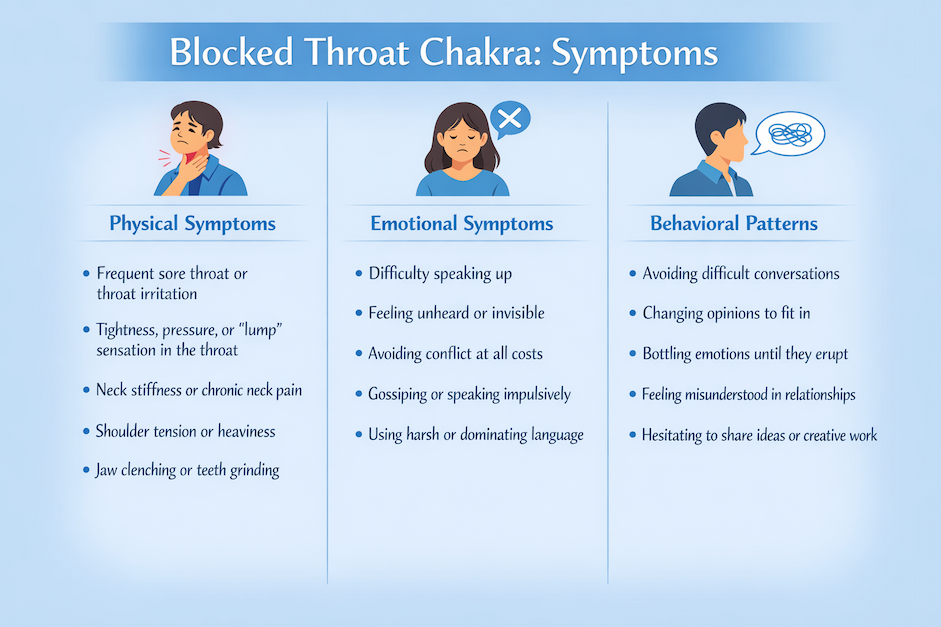
A blocked throat chakra can affect how you express yourself, communicate with others, and stay aligned with your truth. Recognizing these signs is the first step toward clearing blockages and restoring healthy self-expression.
Imbalance in the throat chakra often shows up physically in the neck, throat, and surrounding areas, especially when emotions or words are repeatedly suppressed.
Common physical symptoms include:
Because the throat chakra is closely linked to communication and expression, these physical symptoms are often connected to unspoken emotions or withheld truth.
Important note: While chakra imbalances can contribute to physical sensations, persistent throat pain, thyroid issues, or difficulty swallowing should always be evaluated by a qualified healthcare professional. Chakra work supports overall well-being but does not replace medical care.
Throat chakra imbalances often reveal themselves through communication patterns—either holding back or overexpressing.
When the throat chakra is underactive or blocked:
When the throat chakra is overactive:
Both patterns point to imbalance—not failure. The goal of throat chakra healing is balanced, conscious communication, not silence or dominance.
Over time, suppressed expression can shape everyday behavior in subtle ways:
Ask yourself:
If you answered yes to three or more, your throat chakra may benefit from gentle clearing and activation.
[inline-CTA-1]
Yoga poses that release tension in the neck, shoulders, jaw, and upper chest, along with gentle inversions, are especially effective for activating the throat chakra (Vishuddha).
Practice slowly, breathe consciously, and allow your voice and expression to soften open over time.

Often called the queen of yoga poses, the Shoulder Stand directly stimulates the throat chakra by gently compressing the thyroid area. It stimulates the thyroid, balances hormones, and activates Vishuddha through throat compression.
Modification: Legs up the wall for a gentler alternative.

Fish Pose is the ideal counterpose to Shoulder Stand and a powerful throat opener. It deeply opens the throat and chest, releasing stored tension and unspoken emotion.

Plow Pose creates strong, energetic stimulation in the throat region. It compresses the throat area, stimulating Vishuddha and calming the nervous system.
Modification: Rest feet on a chair or blocks.

Camel Pose opens the entire front body, including the throat and jaw. It also encourages vulnerability, emotional release, and confident self-expression.

This pose directly activates the voice and releases inhibition. It also releases jaw and throat tension and builds confidence in vocal expression.
Simple but essential for daily throat chakra care. It releases stored tension from suppressed expression.
A powerful sound-based practice for Vishuddha. The sound vibration directly stimulates the throat chakra and calms the mind.
Practice Tip:
Even 10–15 minutes daily of these poses can begin to soften tension and restore your natural voice. Move slowly, breathe deeply, and allow expression to emerge naturally.
For personalized guidance, our certified Indian yoga teachers can help you safely open and balance your throat chakra through tailored practices.
[inline-CTA-2]
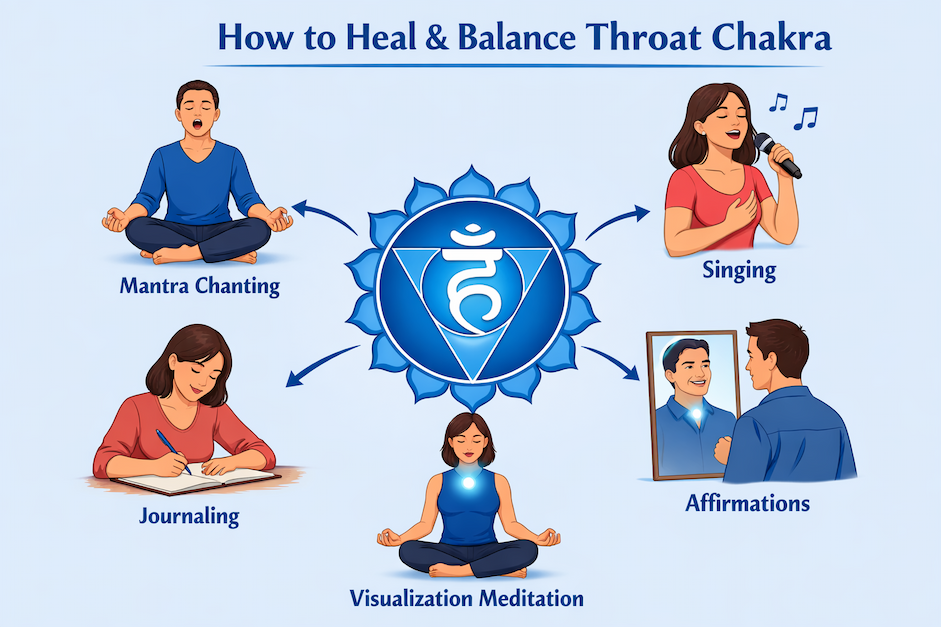
While yoga poses help release physical tension in the neck and shoulders, throat chakra healing goes deeper than movement alone. Vishuddha is closely connected to sound, breath, truth, and conscious communication. Healing this chakra involves learning to express yourself honestly, listen deeply, and allow your authentic voice to emerge without fear.
Here are seven gentle yet powerful techniques to help clear and activate the throat chakra.
Sound is the most direct way to stimulate the throat chakra. The vibration of HAM massages the vocal cords and energetically activates Vishuddha, supporting clarity and confidence in expression.
Affirmations help rewire unconscious patterns around fear of speaking and self-expression.
Place your hand on your throat and repeat slowly:
Learn Affirmations for the 7 Chakras in this detailed guide!
Writing is often the safest first step toward speaking your truth.
Set a timer for 10 minutes and write freely without editing. Reflect on prompts like:
This practice clears mental blocks and builds confidence in your voice.
If speaking feels difficult, it helps to practice using your voice regularly.
Simple ways to begin:
Using your voice strengthens the throat chakra, just like exercising a muscle.
Visualization helps release energetic blockages in the throat area.
The throat chakra governs both speaking and listening.
Practice mindful listening:
True communication heals Vishuddha as much as speaking does.
Simple sound practices can be deeply therapeutic. Sound clears stagnation and restores natural flow in the throat chakra.
Explore Chakra Healing Techniques in this detailed guide!
[GC]
There are certain phases in life when focusing on the throat chakra becomes especially important. Because Vishuddha governs communication, truth, and self-expression, it often calls for attention when your voice feels restricted, unclear, or unheard.
1. Difficulty Speaking Up: If you struggle to express your needs, avoid difficult conversations, or often say “yes” when you mean “no,” your throat chakra may need support. These patterns commonly develop when expression feels unsafe and can lead to both emotional suppression and physical tension.
2. Career or Role Transitions: Throat chakra work is especially helpful during transitions that require clear communication—such as stepping into leadership, teaching, public speaking, or sharing your ideas more visibly. As responsibility grows, so does the need for confident and truthful expression.
3. People-Pleasing or Fear of Judgment: If you grew up feeling silenced, dismissed, or criticized for your opinions, Vishuddha healing can help you reclaim your voice without aggression or defensiveness. It supports speaking honestly while remaining grounded and respectful.
4. Creative Blocks: Writers, singers, speakers, and creatives may feel blocked when the throat chakra is imbalanced. Supporting this chakra helps restore flow between inner inspiration and outward expression.
5. Physical Signals in the Throat and Neck: Recurring throat discomfort, frequent voice strain, neck stiffness, or shoulder tension can indicate unexpressed thoughts or emotions. These physical signs often reflect communication held back over time.
A balanced throat chakra allows your voice to flow with clarity, honesty, and ease. You express your thoughts and emotions without fear or overexplanation, listen with presence, and communicate from a place of integrity. Your words feel aligned with who you are—calm, confident, and authentic.
If you’ve been holding back, people-pleasing, or feeling unheard, gentle throat chakra practices can help restore this balance. Start small: release tension in your neck and shoulders, chant HAM, or speak one truth each day. Consistency matters more than intensity.
If you’re ready for deeper, personalized guidance, our certified Indian yoga teachers specialize in authentic throat chakra activation through yoga, sound healing, and mindful communication practices.
Book your free 1-on-1 session and begin your throat chakra healing journey today!

The throat chakra is associated with the color blue, often described as sky blue or turquoise. Blue represents clarity, truth, calm communication, and honesty. Visualizing blue light at the throat can help activate and balance Vishuddha.
Common throat chakra blocked symptoms include difficulty speaking up, fear of expressing opinions, people-pleasing, chronic throat tightness, hoarseness, neck or shoulder tension, jaw clenching, and feeling misunderstood. Emotionally, it may show up as fear of judgment, suppressed emotions, or excessive talking without meaningful connection.
You can open and unblock the throat chakra through a combination of practices:
For personalized guidance, book a free 1-on-1 session today!
The seed mantra for the throat chakra is HAM (pronounced “hum”). Chanting this sound creates vibrations in the throat and neck that help activate Vishuddha and support clear, confident expression.
The throat chakra resonates with the frequency 741 Hz, which is associated with expression, clarity, and conscious communication. Listening to or meditating with this frequency may support energetic cleansing and balanced self-expression.
Yes. Yoga is one of the most effective ways to balance the throat chakra. Poses that release tension in the neck, shoulders, and chest, along with sound-based breathing practices, help clear physical and energetic blockages, making it easier to speak and express yourself authentically.






Receive personalized guidance tailored to your unique fitness goals, live with a dedicated coach—no credit card required.

Discover the crown chakra (Sahasrara): location, meaning, blockage signs, 8 meditative poses, and consciousness practices for spiritual awakening.

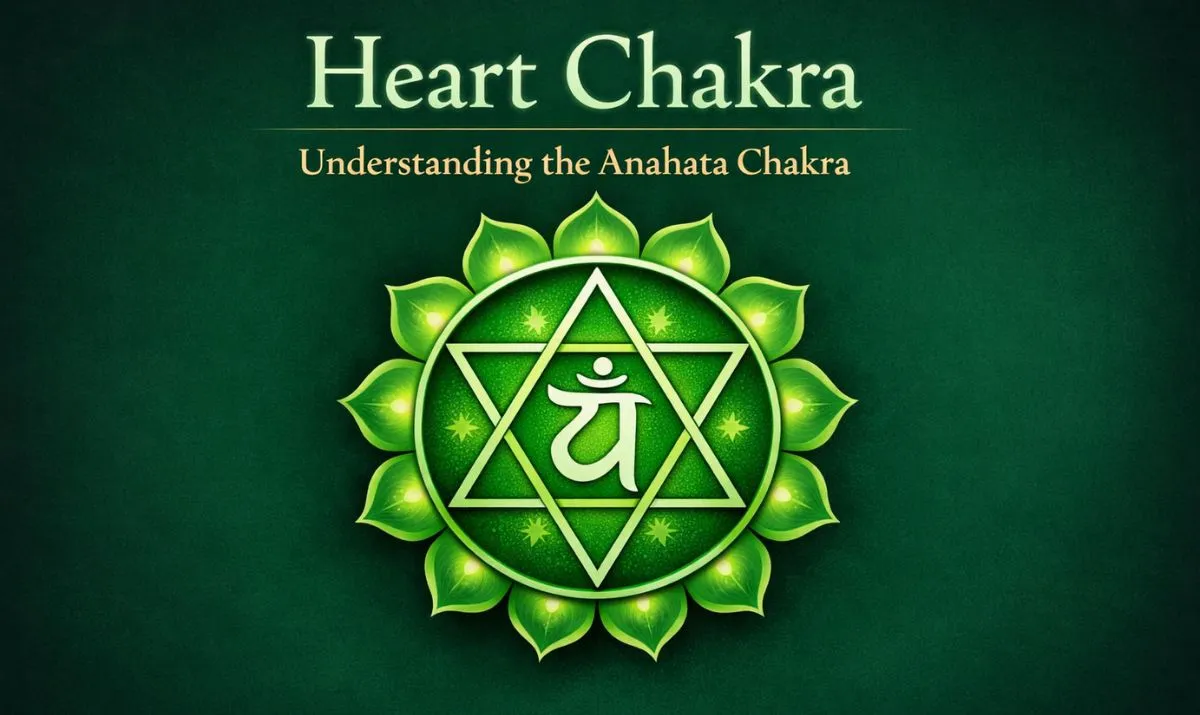
Discover the heart chakra (Anahata): location, signs of blockage, heart-opening yoga poses, affirmations, and healing techniques.
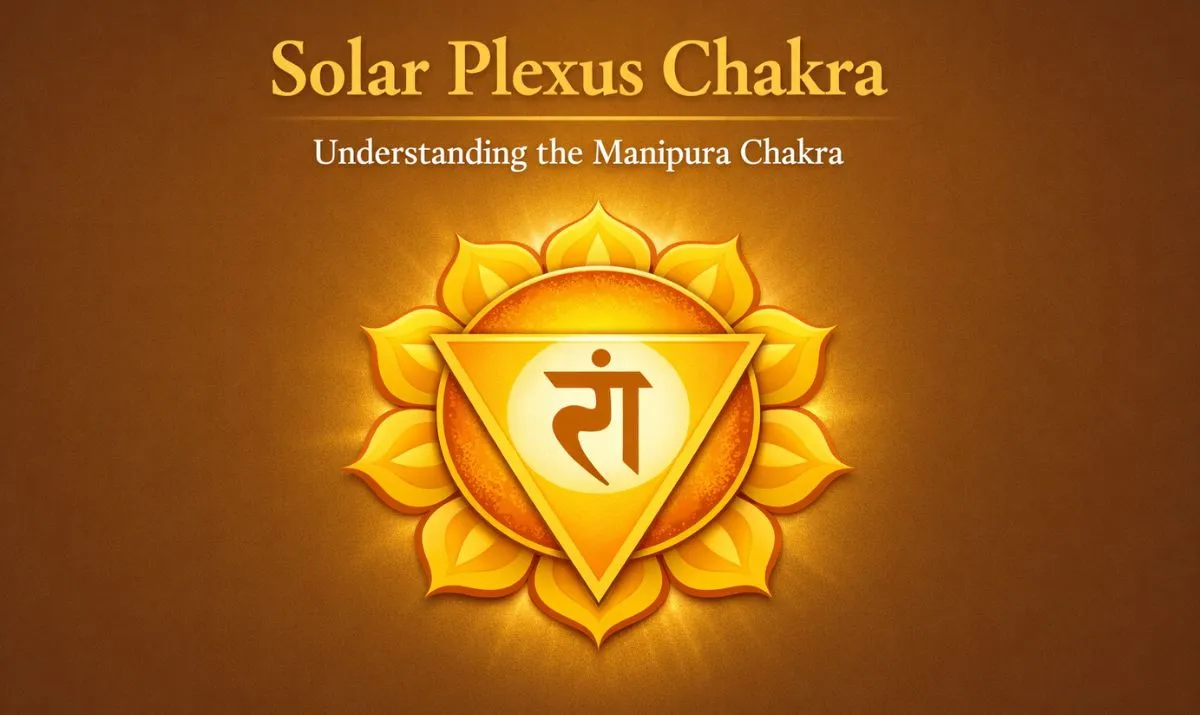
Discover the solar plexus chakra (Manipura): location, signs of imbalance, 8 powerful yoga poses, and healing techniques to reclaim your personal power and confidence.


© Copyright 2025 MyYogaTeacher Inc


