


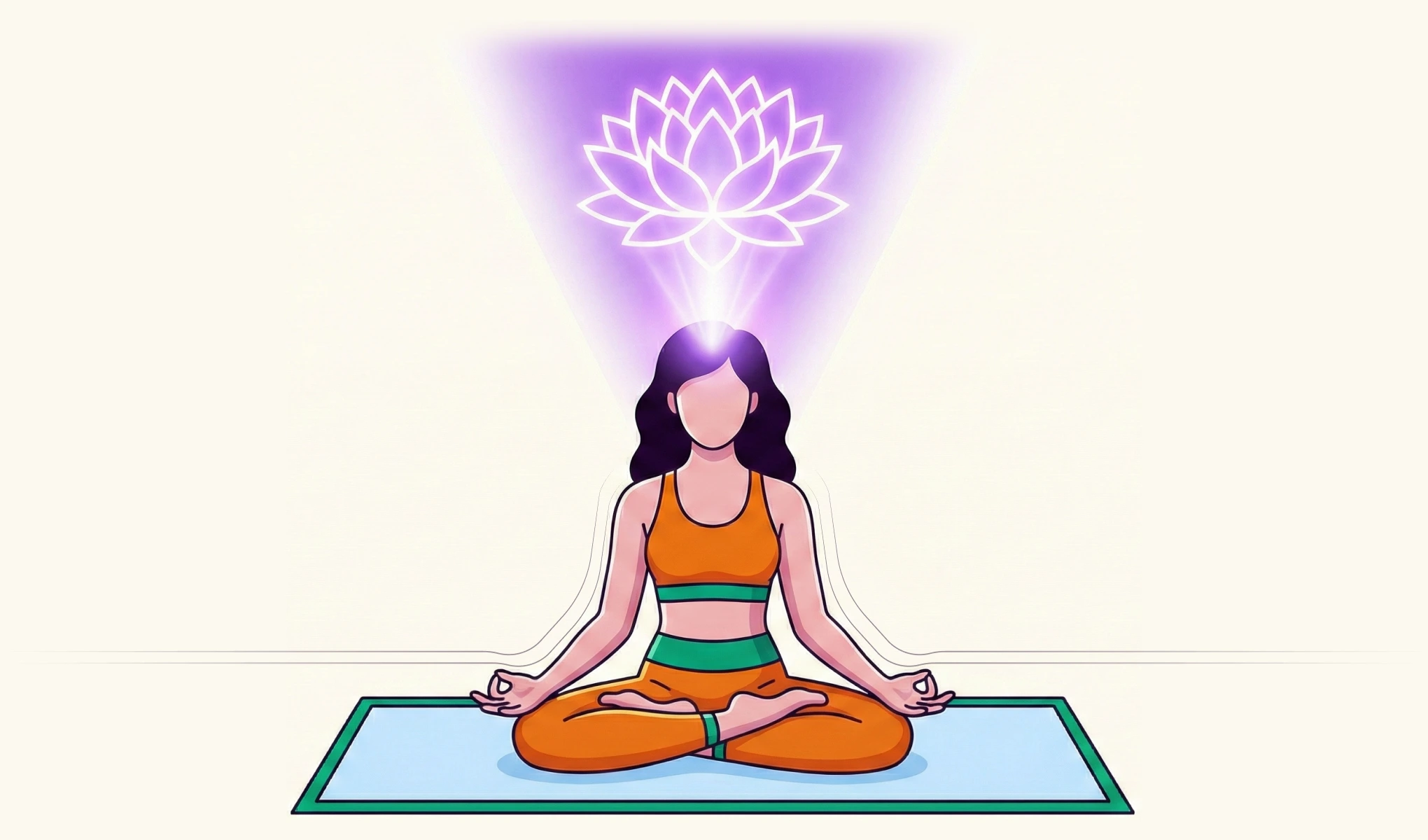
Do you ever feel like life looks complete on the outside, yet something still feels missing on the inside? In yogic philosophy, this experience is often linked to the crown chakra, the energy center associated with awareness, meaning, and inner peace.
Known as Sahasrara in Sanskrit, the crown chakra is the highest energy center in the human chakra system. It governs consciousness, spiritual awareness, and your connection to something greater than the individual self. This is the space where personal identity softens, and a sense of unity, trust, and inner peace begins to emerge.
Unlike other chakras, the crown chakra is not about fixing, striving, or becoming. It is about remembering—remembering who you are beyond thoughts, roles, and stories. When this chakra is balanced, life feels meaningful, guided, and deeply interconnected.
In this guide, you’ll explore the meaning of the crown chakra, its location and symbol, signs of imbalance, and powerful yoga, meditation, and awareness practices to gently open Sahasrara and reconnect with infinite consciousness.
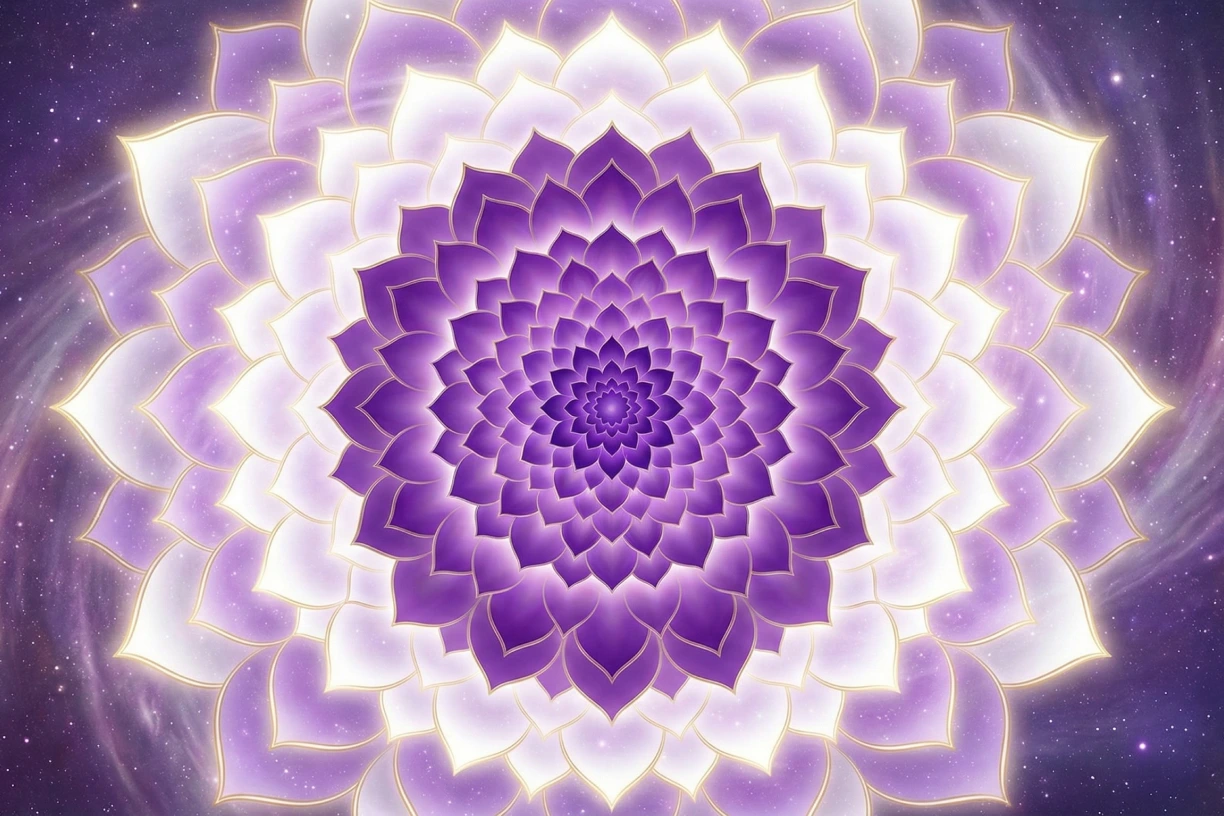
Traditional yogic teachings describe the crown chakra as the seat of consciousness and spiritual awareness. It represents the highest level of perception, where individual identity softens, and awareness expands beyond the personal self. Rather than governing action or emotion, the crown chakra is associated with observation, presence, and understanding.
Modern perspectives reflect this view by linking the crown chakra to meaning-making, perspective, and a sense of connection beyond the ego. Together, these views highlight Sahasrara’s role as the center of awareness—allowing life to be experienced with clarity, trust, and calm presence rather than constant mental effort.
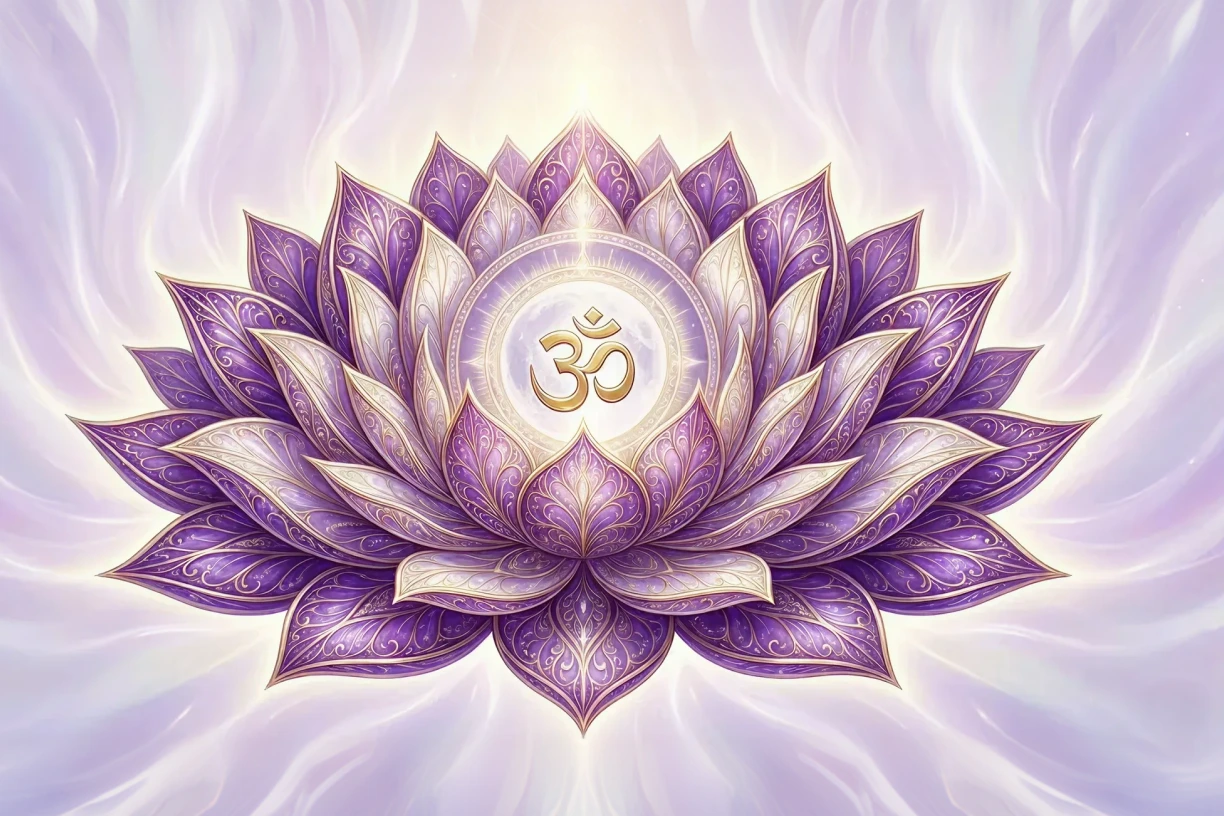
The Sanskrit name Sahasrara translates to “thousand-petaled” or “infinite.” This refers not to a literal number, but to boundlessness—symbolizing expanded awareness and limitless consciousness. Sahasrara is understood as the culmination of the entire chakra system, where the energies cultivated in the lower chakras come to rest in awareness.
Its symbol is a thousand-petaled lotus opening upward, representing full awakening and receptivity rather than effort. Unlike other chakra symbols, which emphasize elements or structure, the crown chakra symbol reflects unity and openness. The upward-facing lotus signifies surrender—allowing awareness to unfold naturally when the body and mind are prepared.
The crown chakra is most commonly associated with violet, purple, or white. Violet represents the highest frequency of visible light and spiritual transcendence, while white or golden light symbolizes pure consciousness, where all distinctions dissolve.
The crown chakra is located at the very top of the head, at the crown or vertex of the skull. It is often described as extending slightly above the physical body, forming an energetic opening upward rather than outward or downward. This orientation reflects its role as a receiver of insight, awareness, and higher understanding.
Unlike other chakras, Sahasrara is not confined to physical sensation. It is experienced more as spaciousness, clarity, or stillness rather than heat, movement, or pressure. Because of this, the crown chakra is most accessible through quiet attention and meditation rather than physical stimulation.
Energetically, the crown chakra is associated with the brain, central nervous system, and the pineal and pituitary glands, which influence sleep cycles, hormonal balance, and overall regulation of the body. These associations help explain why meditation and contemplative practices can affect perception, mental clarity, and states of awareness.
Rather than governing a specific physical function, Sahasrara reflects how the nervous system processes meaning and perspective. When this chakra is supported by balance in the lower chakras, awareness feels stable, grounded, and clear rather than detached or overwhelmed.
Unlike the other chakras, the crown chakra is not associated with any element. It exists beyond earth, water, fire, air, and ether, representing consciousness itself rather than form. For this reason, it is often accessed through silence rather than sensation, stillness rather than movement, and observation rather than effort.
Sahasrara marks the point where doing gives way to being—where awareness recognizes itself without striving. When approached gently and with a balanced foundation, the crown chakra supports insight, presence, and a quiet sense of unity that can be integrated into everyday life.
This does not require withdrawal from everyday life—rather, it allows you to participate in life with wisdom, humility, and inner freedom.
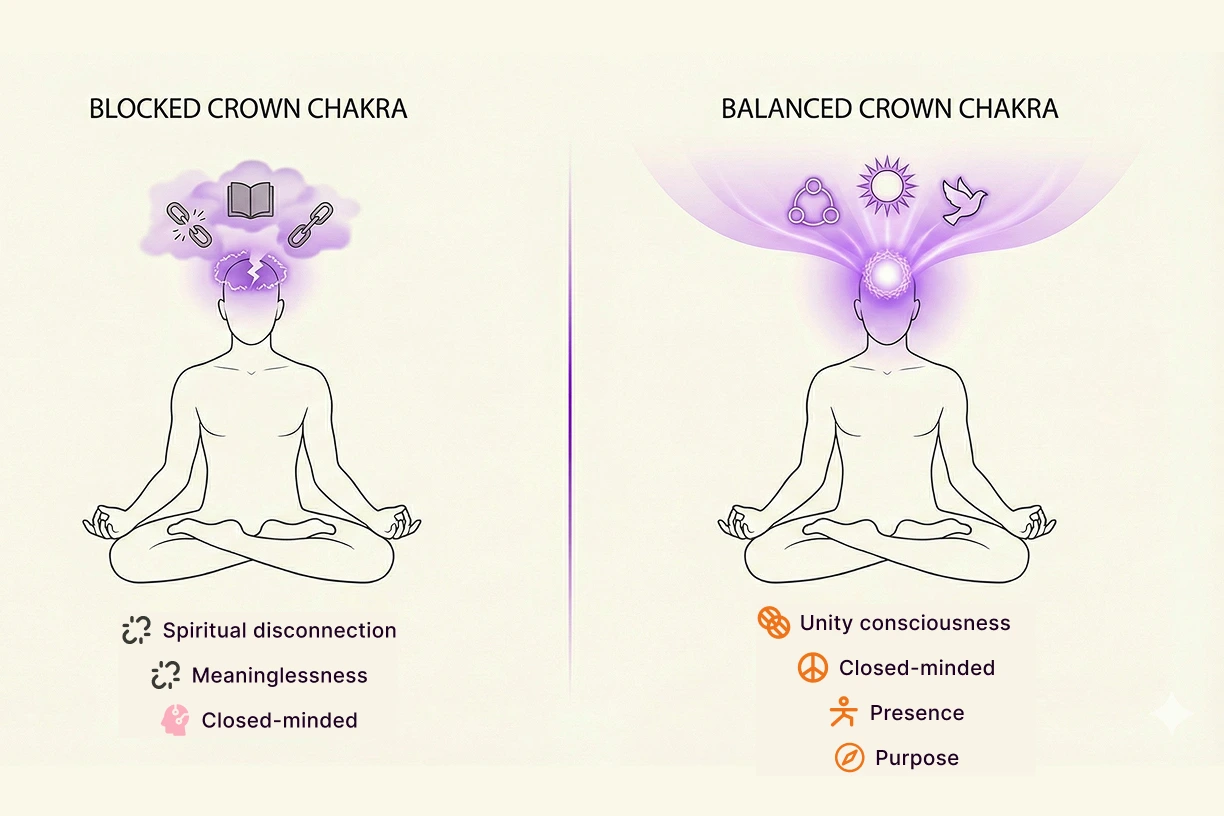
A blocked or imbalanced crown chakra often shows up as a sense of disconnection—from yourself, from life, or from something greater than the mind can explain. Recognizing these signs is not about labeling yourself as “unspiritual.” In many cases, a blocked crown chakra reflects exhaustion, disillusionment, or an overidentification with thought and control.
When the crown chakra is underactive or closed, you may experience:
When the crown chakra is overactive or ungrounded, imbalance can appear in different ways:
Because the crown chakra is associated with the brain and nervous system, imbalance may also be reflected physically, such as:
Important note: Persistent headaches, neurological symptoms, or hormonal imbalances should always be evaluated by a healthcare professional. Crown chakra practices are supportive and complementary, not a substitute for medical care.
On a deeper level, crown chakra imbalance may show up as:
If you recognize several of these signs, it doesn’t mean something is wrong with you. Often, it means your awareness is ready to shift from seeking outward to remembering inward. The crown chakra opens not through force, but through presence, patience, and gentle inquiry.
[inline-CTA-1]
Yoga practices for the crown chakra are less about physical effort and more about stillness, surrender, and awareness. While movement prepares the body, Sahasrara opens most fully through poses that quiet the nervous system, reverse habitual perspectives, and create space for meditation.
These poses encourage the mind to soften, allowing awareness to rise beyond thought and identity. Practice slowly, without strain, and allow pauses between poses to integrate their effects.
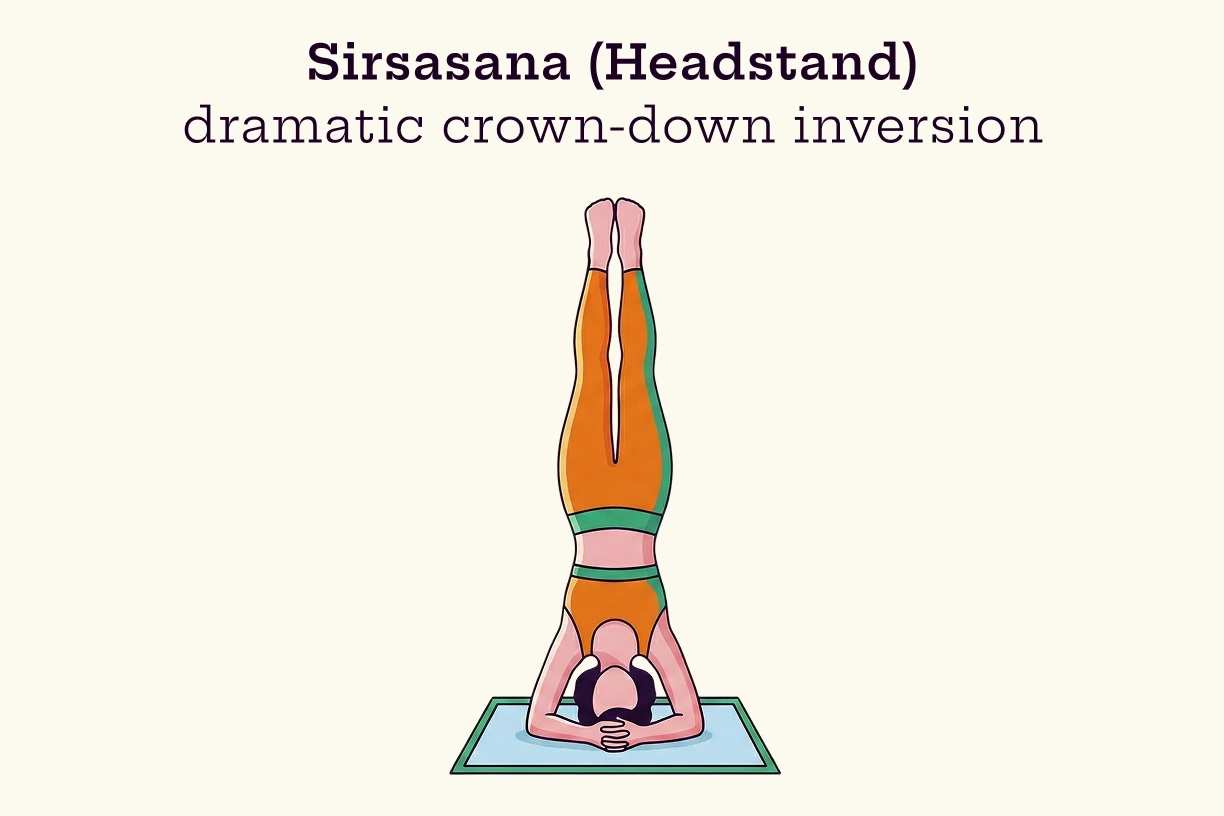
Grounds awareness at the crown and brings clarity and stillness to the mind.
Focus: Let awareness settle at the crown—steady, open, and receptive.
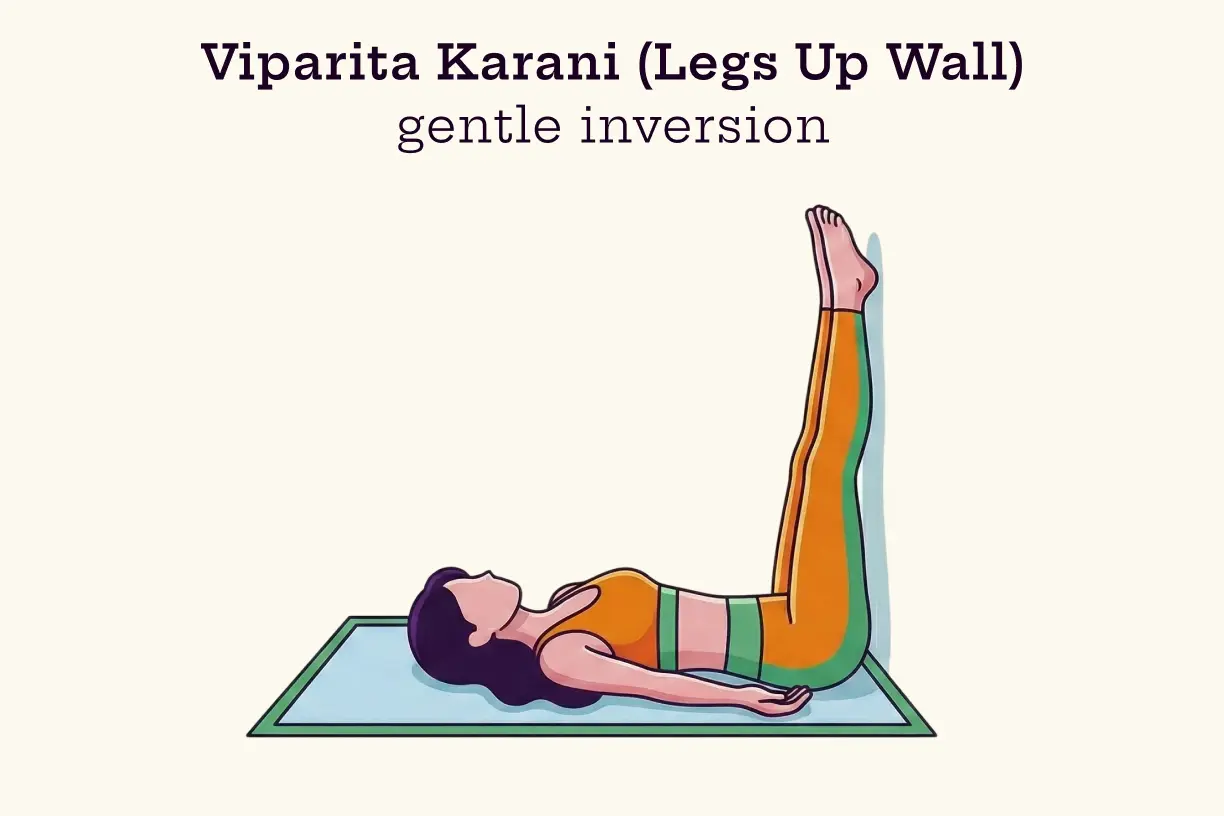
Calms the nervous system and gently turns awareness inward.
Focus: Release effort and allow the mind to soften into stillness.
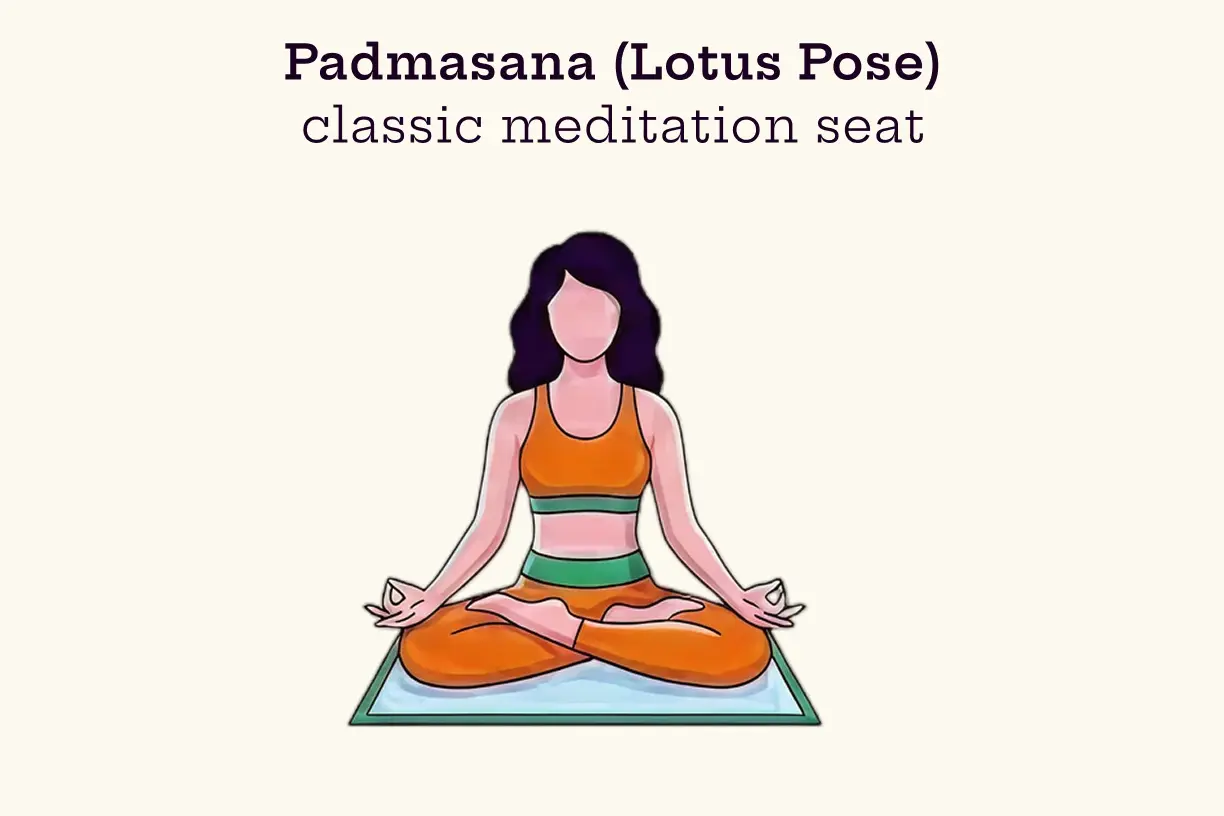
Creates a stable base for meditation and crown awareness.
Focus: Feel the spine rise naturally as the crown lifts without strain.
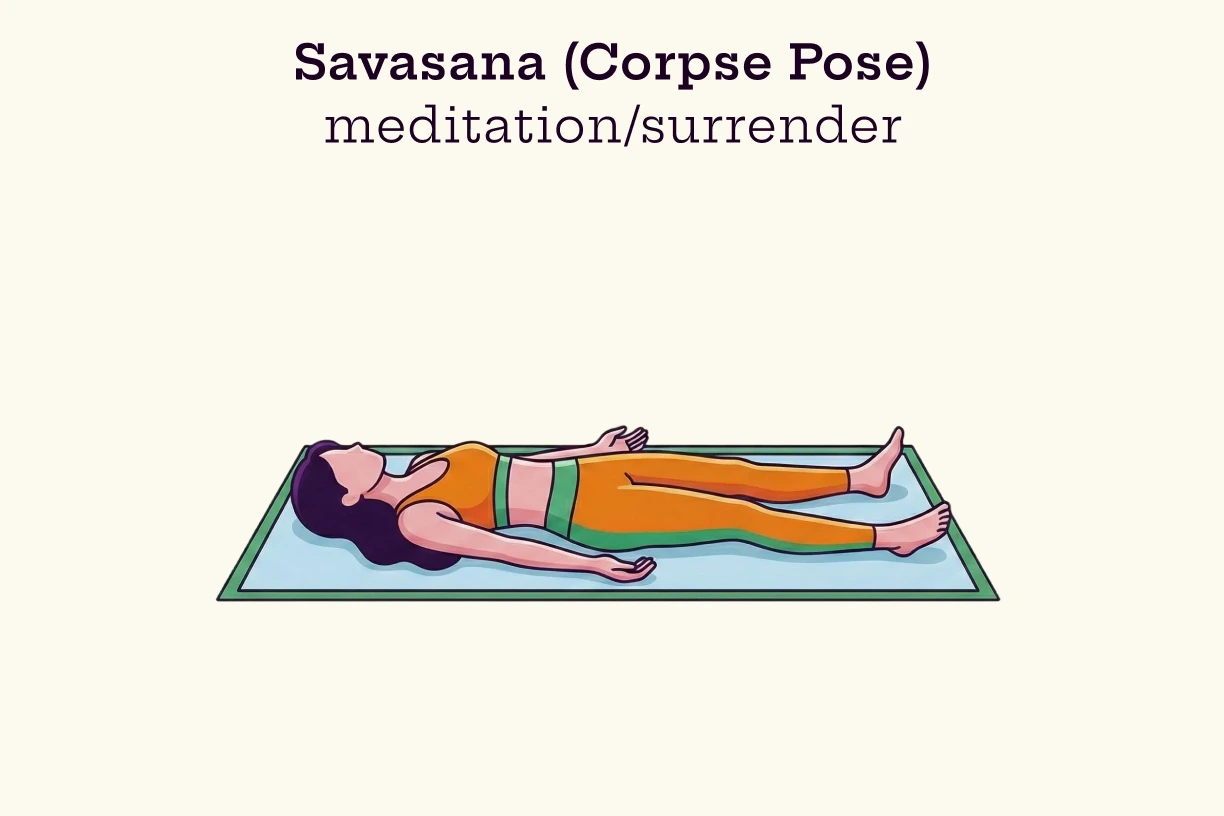
Encourages deep surrender and effortless awareness.
Focus: Rest as the witness—nothing to do, nothing to change.
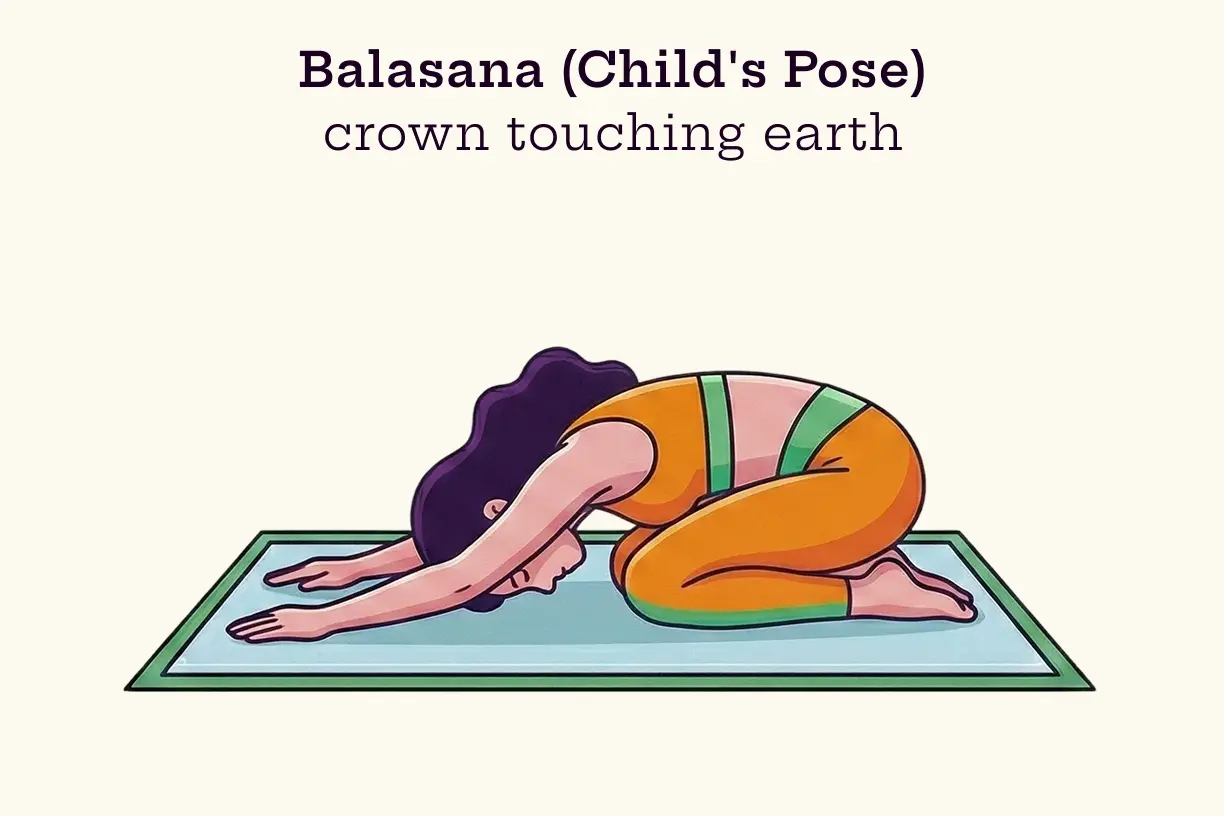
Promotes humility, grounding, and mental quiet.
Focus: Soften effort and allow the mind to settle.
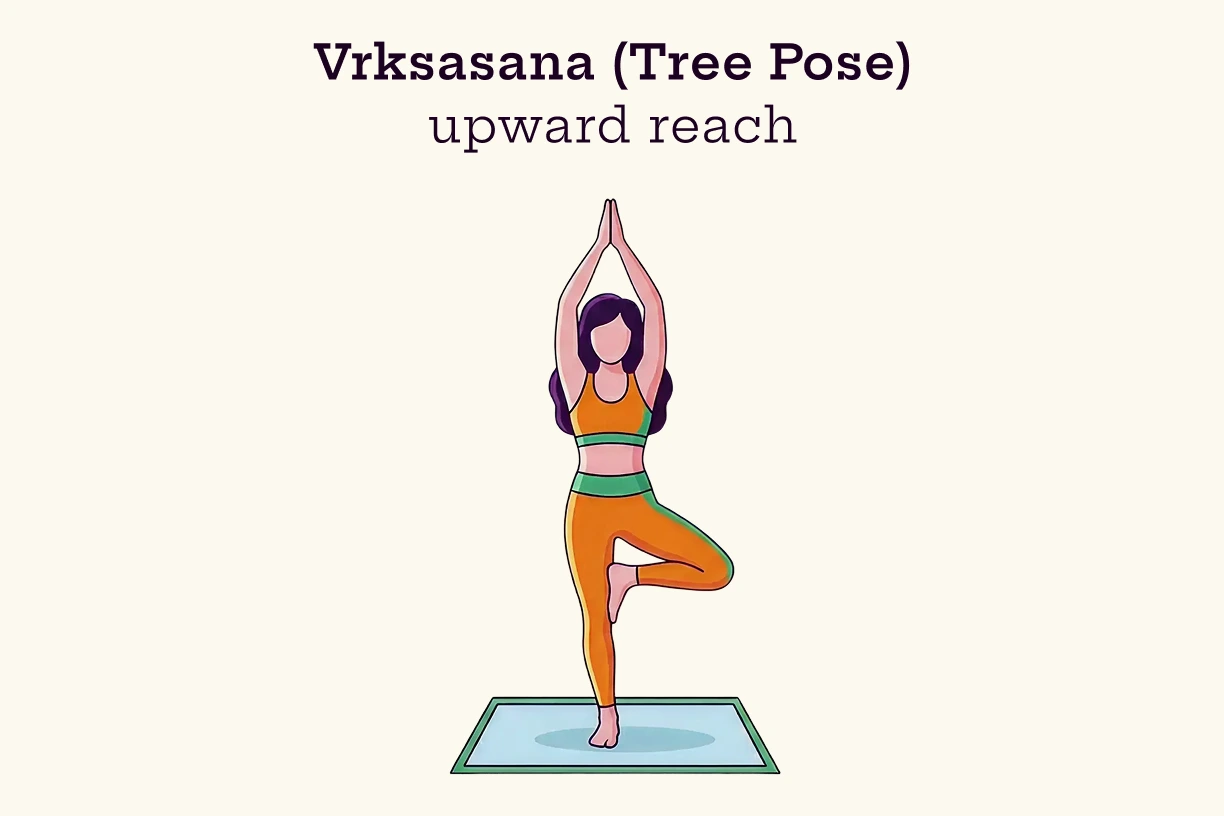
Builds mental focus and steady awareness.
Focus: Find stillness within balance and movement.
Directly supports crown chakra activation through awareness alone.
Focus: Silence itself becomes the practice.
Gently expands awareness beyond thought and form.
Focus: Let awareness open naturally—no forcing, no striving.
Crown chakra work is not about achievement, but recognition. These practices support the natural remembering of consciousness rather than forcing an experience.
Even 10–15 minutes of daily meditation or stillness-based yoga can create profound shifts over time.
[inline-CTA-2]
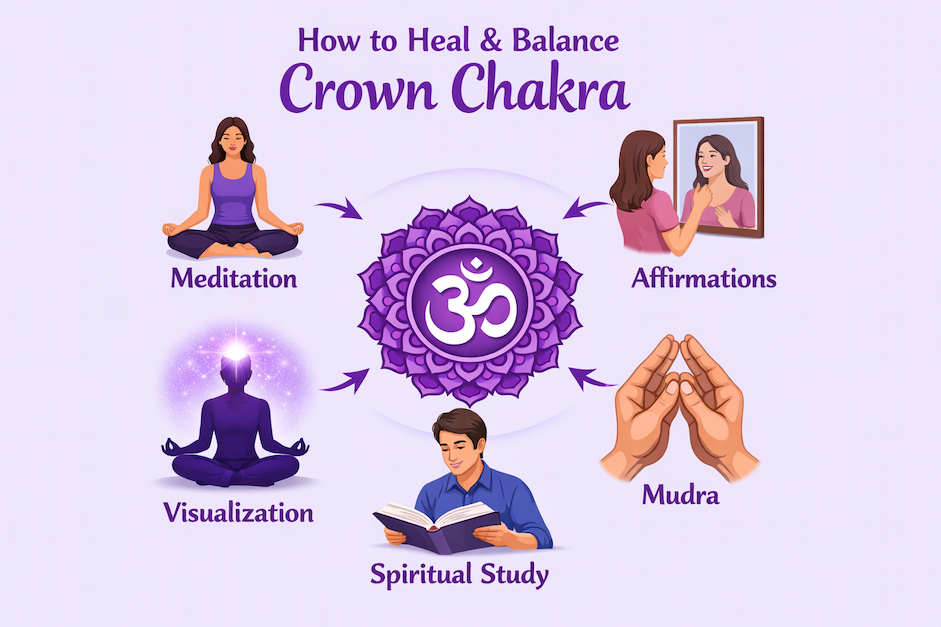
Opening the crown chakra is not about effort or control—it is about stillness, presence, and surrender. While the lower chakras respond well to action-oriented practices, Sahasrara opens when the mind quiets and awareness rests in itself.
These practices are gentle yet profound. Choose one or two and approach them with consistency rather than intensity.
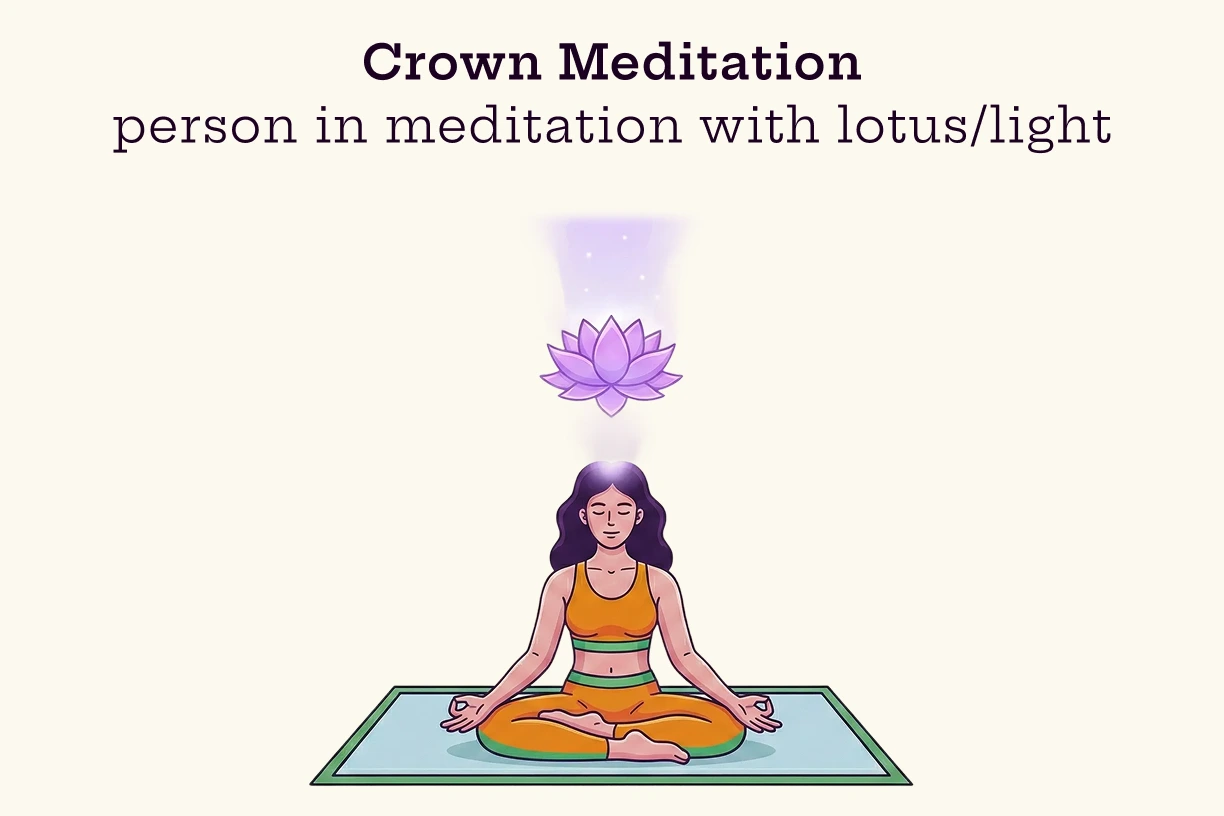
Meditation is the most direct way to access Sahasrara.
The crown chakra is often accessed through silence rather than sound.
This practice cultivates direct recognition of consciousness.
Affirmations help loosen rigid identity patterns and open awareness to unity.
Place a hand gently on the crown and repeat:
Speak slowly, allowing the meaning to settle beyond the intellect.
Explore more Chakra Affirmation Techniques in this detailed guide!
This practice supports mental clarity and subtle awareness.
A symbolic gesture of receptivity.
This mudra represents openness to higher awareness rather than control over it.
Explore Mudras for the 7 Chakras in this detailed guide!
The crown chakra is nourished by wisdom and inquiry.
Let insight arise naturally rather than forcing understanding.
Periods of quiet allow consciousness to reveal itself.
Silence is not emptiness—it is awareness unoccupied.
Crown chakra healing is not about escaping life or chasing transcendence. It is about being fully present to what already is. Progress here is subtle, often felt as peace, trust, and clarity rather than dramatic experiences.
[GC]
There are certain phases in life when attention naturally turns toward the crown chakra. Because Sahasrara governs consciousness, meaning, and spiritual connection, it often comes into focus when outer achievements no longer satisfy inner questions.
A balanced crown chakra (Sahasrara) brings a quiet sense of connection—to yourself, to others, and to life as it unfolds. You remain engaged in daily responsibilities while holding a deeper awareness beneath them. Peace feels steady and grounded, not distant or dramatic.
Crown chakra work doesn’t require effort or achievement—only consistent presence. Begin with a few minutes of daily meditation or silent awareness, allowing the mind to settle naturally.
If you’d like guided support, our certified Indian yoga teachers offer authentic meditation and crown chakra practices rooted in traditional wisdom.
Book your free 1-on-1 session and begin your crown chakra healing journey today!

The crown chakra, known as Sahasrara in Sanskrit, is the seventh and highest chakra in the energy system. It governs consciousness, spiritual awareness, enlightenment, and connection to the universal whole. Located at the top of the head, it represents the point where individual awareness meets infinite consciousness.
The crown chakra is most commonly associated with violet or purple, symbolizing the highest frequency of consciousness and spiritual transcendence. Some traditions also associate it with white or golden light, representing pure awareness and unity beyond form.
Signs of a blocked crown chakra may include feeling spiritually disconnected, a lack of meaning or purpose, rigid belief systems, excessive attachment to material identity, difficulty trusting life, chronic mental fog, or an inability to experience stillness. In some cases, spiritual bypassing—using spirituality to avoid real-life responsibilities—can also indicate imbalance.
The crown chakra opens gradually through meditation, mindfulness, silence, and spiritual inquiry. Practices such as seated meditation, observing awareness, chanting OM, spending time in nature, and reducing mental overstimulation support Sahasrara. Unlike other chakras, the crown responds more to presence and surrender than active effort.
The primary mantra for the crown chakra is OM (ॐ), the primordial sound representing universal consciousness. Silent meditation is also considered a powerful practice for Sahasrara, as the crown chakra is ultimately accessed beyond sound and thought.
The crown chakra is commonly associated with 963 Hz, often referred to as the frequency of divine consciousness or oneness. This frequency is believed to support deep meditation, spiritual awareness, and connection to higher states of consciousness.





Receive personalized guidance tailored to your unique fitness goals, live with a dedicated coach—no credit card required.

Discover the throat chakra (Vishuddha): location, blockage symptoms, 8 yoga poses, sound healing techniques, and affirmations to speak your truth clearly.

Discover the heart chakra (Anahata): location, signs of blockage, heart-opening yoga poses, affirmations, and healing techniques.
Discover the solar plexus chakra (Manipura): location, signs of imbalance, 8 powerful yoga poses, and healing techniques to reclaim your personal power and confidence.


© Copyright 2025 MyYogaTeacher Inc


