



What is Padahastasana (Hand-to-Foot Pose)?

Padahastasana (Hand-to-Foot Pose) is a standing forward bend where the hands are placed under the feet, creating a deep stretch through the hamstrings and spine. This intermediate yoga pose improves flexibility, calms the nervous system, and supports healthy digestion when practiced with proper alignment.
Padahastasana: Overview and Meaning of Hand-to-Foot Pose
Padahastasana (पादहस्तासन), pronounced pah-dah-hahs-TAHS-anna, is commonly known as Hand-to-Foot Pose or Hand Under Foot Pose. The name comes from Sanskrit: pada, meaning ‘foot,’ hasta, meaning ‘hand,’ and asana, meaning ‘posture.’ Together, it directly describes the defining action of the pose—placing the hands beneath the feet while folding forward.
Traditionally rooted in Hatha Yoga, Padahastasana was practiced as a standing forward bend to quiet the mind, improve flexibility, and prepare the body for seated meditation. In modern yoga, the pose has evolved to prioritize safety and accessibility, with bent knees and props commonly encouraged. Today, Padahastasana is widely used in Vinyasa and Ashtanga-style classes and is especially valued for counteracting the effects of prolonged sitting and limited mobility.
The hand-to-foot pose provides a deep stretch to the hamstrings and calves, which are frequently shortened by sedentary lifestyles. The hands-under-feet placement creates gentle traction, allowing the spine to lengthen rather than compress. The pose also offers mild inversion benefits, supporting circulation and calming the nervous system. It also releases tension along the entire back body while promoting flexibility, balance, and a grounded sense of ease.
At a Glance
- Sanskrit Name: पादहस्तासन (Padahastasana)
- Pronunciation: pah-dah-hahs-TAHS-anna
- English Names: Hand-to-Foot Pose, Hand Under Foot Pose
- Pose Type: Standing forward bend
- Level: Intermediate
- Hold Time: 30 seconds to 2 minutes
- Primary Benefit: Hamstring and spinal flexibility
- Strengthens: Thighs, knees
- Stretches: Hamstrings, calves, spine, back
Benefits of Padahastasana (Hand-to-Foot Pose)
Padahastasana offers a powerful blend of deep physical stretching, nervous system calming, and internal stimulation.
Physical Benefits of Padahastasana
Padahastasana is best known for its ability to lengthen the entire back body, particularly the hamstrings, which tend to become tight due to prolonged sitting, lack of movement, or aging.
- Deep hamstring stretch: Releases chronic tightness caused by sedentary habits and improves leg flexibility
- Lengthens the posterior chain: Stretches calves, hamstrings, glutes, and spinal muscles together
- Decompresses the lower back: Gentle traction through the spine can ease stiffness and compression
- Improves spinal flexibility: Encourages length and mobility through the vertebral column
- Enhances hip mobility: Deep hip hinge helps improve range of motion
- Strengthens thighs and knees: Quadriceps engage to support the posture safely
- Improves posture: Counteracts rounded shoulders and forward-slouching patterns
- Boosts circulation: Mild inversion improves blood flow from the legs back to the heart
- Releases neck and shoulder tension: Letting the head hang freely reduces upper-body strain
- Supports balance and body awareness: Standing fold improves proprioception and stability
Mental and Emotional Benefits
The posture naturally encourages the body to turn inward, quieting mental chatter.
- Calms the nervous system: Activates the parasympathetic “rest and digest” response
- Reduces stress and anxiety: Gentle inversion soothes the mind
- Improves focus and concentration: Grounding effect enhances mental clarity
- Relieves mental fatigue: Increased circulation refreshes the brain
- Supports emotional release: Forward folding can help release stored tension
- Encourages mindfulness: Requires attention to breath and bodily sensations
- Builds patience and self-awareness: Flexibility develops gradually, not instantly
Digestive, Energetic, and Holistic Benefits
The forward fold position creates gentle compression in the abdominal region, which can stimulate digestive organs such as the stomach, liver, and intestines. This may help:
- Improve digestion and metabolism
- Relieve mild bloating or constipation
- Support healthy elimination
Therapeutic Applications (With Modifications)
When practiced mindfully and with appropriate modifications, Padahastasana may help support:
- Chronic hamstring tightness
- Mild, non-acute lower back discomfort
- Stress-related tension and anxiety
- Fatigue caused by long hours of sitting
- Poor posture patterns
- Mild headaches linked to tension
- Digestive sluggishness
Reap the benefits of Padahastasana. Book your free 1-on-1 session with an expert yoga teacher.
How to Do Padahastasana (Hand-to-Foot Pose): Step-by-Step Guide
This step-by-step guide will help you practice the pose safely while building flexibility over time.
Part 1: Preparing for the Pose
Before attempting Padahastasana, try a simple test in Standing Forward Fold (Uttanasana):
- If you can comfortably touch your toes with bent or straight knees, you’re ready to explore Padahastasana.
- If you feel strong pulling or strain, practice Uttanasana with bent knees for a few weeks first. There is no rush—hamstring flexibility develops gradually.
Props You May Need
- Yoga mat
- Two yoga blocks (highly recommended for tight hamstrings)
- Wall nearby for balance (optional)
Warm-Up (Essential)
Always warm up for at least 10 minutes before practicing Padahastasana:
- Cat–Cow Pose (10 rounds)
- Downward-Facing Dog (1–2 minutes)
- Standing Forward Fold with bent knees (1 minute)
- Sun Salutations A (3–5 rounds)
- Pyramid Pose (30 seconds each side)
- Ragdoll Pose (1 minute)
Cold hamstrings are prone to strain. Warming up allows deeper stretching with far less injury risk.
Part 2: How to Do Padahastasana: Step-by-Step Instructions
- Stand tall at the front of your mat with feet hip-width apart, grounding evenly through both feet and lengthening the spine.
- Inhale and sweep your arms overhead, creating space along the sides of the body while keeping the neck relaxed.
- Exhale and hinge forward from the hips with a long spine, bending the knees generously as your head and arms relax down.
- With knees bent, slide your hands under your feet, palms facing up, or hold your ankles or blocks if needed.
- Lightly draw the hands toward the heels to create traction, deepening the stretch without forcing.
- If your hamstrings allow, slowly work toward straightening the legs; keep knees bent if there is any strain.
- Let the crown of the head release toward the floor, softening the jaw and allowing gravity to assist the fold.
- Hold for:
- 30–60 seconds (beginners)
- 1–2 minutes (intermediate)
- Up to 3 minutes (advanced) breathing deeply and steadily.
- Slide the hands out, bend the knees deeply, and roll up slowly to standing, bringing the head up last.
Common Mistakes and Alignment Tips
- Forcing straight legs: This increases injury risk
- Rounding the lower back excessively: It strains the spine
- Bouncing to go deeper: Can trigger muscle resistance
- Holding the breath: Will create tension
- Locking the knees: This risks hyperextension
- Pulling aggressively with the arms: This can stress the shoulders
Alignment Checkpoints
- Knees bent as needed
- Spine long, not compressed
- Weight evenly distributed
- Head and neck relaxed
- Breathe slowly and steadily
Improve your flexibility and perform Padahastasana effortlessly. Try these group classes today!


Flow into Flexibility: Beginner Vinyasa Yoga


Padahastasana Variations
Padahastasana can be adapted to suit different flexibility levels and body types. Whether your hamstrings are very tight or already quite open, these variations and modifications allow you to practice safely while steadily progressing toward the full pose.
Beginner-Friendly Modifications
1. Padahastasana with Bent Knees
- Stand in a forward fold and bend your knees generously.
- Slide your hands under your feet, palms facing up.
- Focus on lengthening the spine rather than straightening the legs.
- Hold and breathe without forcing depth.
2. Padahastasana with Hands on Yoga Blocks
- Fold forward with knees slightly bent.
- Place one or two blocks under your hands instead of sliding them under your feet.
- Keep the spine long and the chest gently moving toward the thighs.
- Hold comfortably while breathing steadily.
3. Hands on Ankles or Shins
- Fold forward from the hips with bent knees.
- Hold your ankles or shins instead of placing your hands under the feet.
- Relax the head and neck while maintaining a long spine.
- Use this version to gradually build flexibility.
Intermediate Variations
4. Wide-Legged Padahastasana (Wide Stance Variation)
- Step your feet 3–4 feet apart.
- Fold forward from the hips with a long spine.
- Place your hands under your feet or hold your ankles.
- Allow the torso to hang freely between the legs.
5. Full Padahastasana (Classic Expression)
- Fold forward and place your hands fully under your feet.
- Gradually work toward straightening the legs.
- Draw hands gently toward the heels for traction.
- Hold the pose while maintaining steady breath.
6. Dynamic Padahastasana in Flow
- Move into Padahastasana from a standing position.
- Hold for 3–5 breaths.
- Slowly rise back up with bent knees.
- Repeat within a flowing sequence to build flexibility.
Advanced Variations
7. Utthita (Lifted) Padahastasana
- Begin in full Padahastasana.
- Keep your hands under your feet and engage the core.
- Slightly lift the torso while maintaining balance.
- Lower your back down with control.
8. One-Legged Padahastasana
- Fold forward and shift weight onto one leg.
- Place hands under the standing foot.
- Lift the other leg slightly behind you.
- Maintain balance while breathing steadily.
9. Padahastasana with Arm Bind
- From a forward fold, bind the arms behind the back.
- Release the bind and slide your hands under the feet.
- Lengthen through the spine and back body.
- Hold the pose without straining the shoulders.
Props and Support for Safer Practice
- Yoga blocks: Reduce distance to the floor and prevent strain
- Folded blanket: Placed under heels for comfort and stability
- Wall: Provides balance support
- Yoga strap: Helps maintain leg alignment and prevents knee splaying
Using props is a sign of smart practice, not limitation. They allow flexibility to develop steadily and safely.
To practice these variations under expert guidance, book a free 1-on-1 session today!
Padahastasana: Precautions & Contraindications
Padahastasana is generally safe when practiced mindfully and with bent knees and proper progression. However, because it places a strong stretch on the hamstrings and lower back, certain conditions require extra caution or complete avoidance.
Avoid Padahastasana If You Have:
- Hamstring tear or recent hamstring injury
- Herniated, bulging, or slipped disc (especially in the lumbar spine)
- Acute lower back pain or recent back injury
- Severe sciatica or active flare-ups
- Recent abdominal or pelvic surgery
- Detached retina or serious eye conditions
- Uncontrolled high blood pressure
- Severe osteoporosis or spinal fractures
- Vertigo or significant balance disorders
If any of these apply, choose gentler alternatives such as seated forward bends or practice only under professional supervision.
Practice with Caution and Modifications
- Tight Hamstrings: Keep the knees bent, use blocks or ankle holds, and progress gradually over time without forcing depth.
- Chronic Lower Back Discomfort: Hinge from the hips with a long spine, engage the core gently, and exit immediately if pain increases.
- Mild Sciatica: Practice very gently, avoid deep stretching, and stop the pose if you feel shooting or radiating pain down the leg.
- Pregnancy: Avoid Padahastasana after the first trimester and practice only gentle, modified versions with medical approval. To learn yoga for pregnancy, explore our detailed prenatal yoga guide here!
- High Blood Pressure (Controlled): Keep holds short, exit slowly, and avoid the pose if blood pressure is not well managed.
- Neck or Knee Issues: Avoid heavy head hanging and keep the knees softly bent to prevent strain or hyperextension.
Critical Safety Guidelines
Do’s
- Warm up for at least 10 minutes before practice
- Bend knees as much as needed at all times
- Prioritize spinal length over depth
- Breathe steadily and smoothly
- Exit the pose slowly, rolling up one vertebra at a time
- Practice on an empty stomach
- Build flexibility gradually
Don’ts
- Don’t force straight legs
- Don’t bounce or jerk into the pose
- Don’t lock the knees
- Don’t hold your breath
- Don’t practice with cold muscles
- Don’t ignore pain signals
- Don’t compare your flexibility to others
When to Stop Immediately
Exit the pose if you experience:
- Sharp or stabbing pain in the hamstrings
- Pain in the lower back (not a stretch sensation)
- Numbness or tingling in the legs
- Dizziness or nausea
- Pain behind the knees
If discomfort persists, consult a qualified healthcare provider.
Related Yoga Poses
These poses complement Padahastasana by further improving hamstring flexibility, spinal length, and forward-fold mobility.
1. Seated Forward Fold (Paschimottanasana)
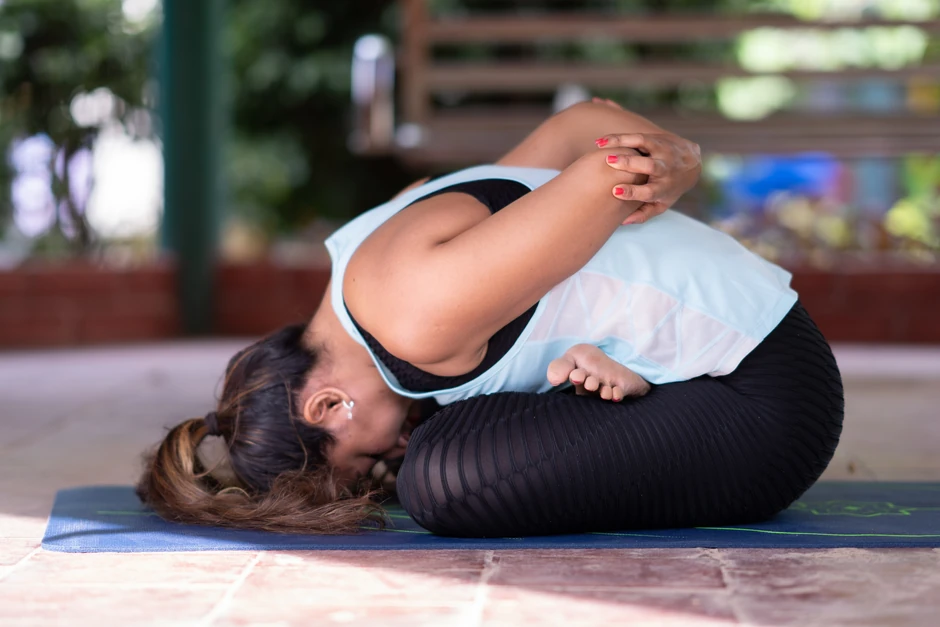
A seated forward bend that deeply stretches the hamstrings and lengthens the spine.
- Sit with legs extended straight in front of you.
- Inhale to lengthen the spine and raise the arms.
- Exhale and fold forward from the hips.
- Hold the feet, shins, or use a strap while breathing steadily.
2. Head-to-Knee Pose (Janu Sirsasana)
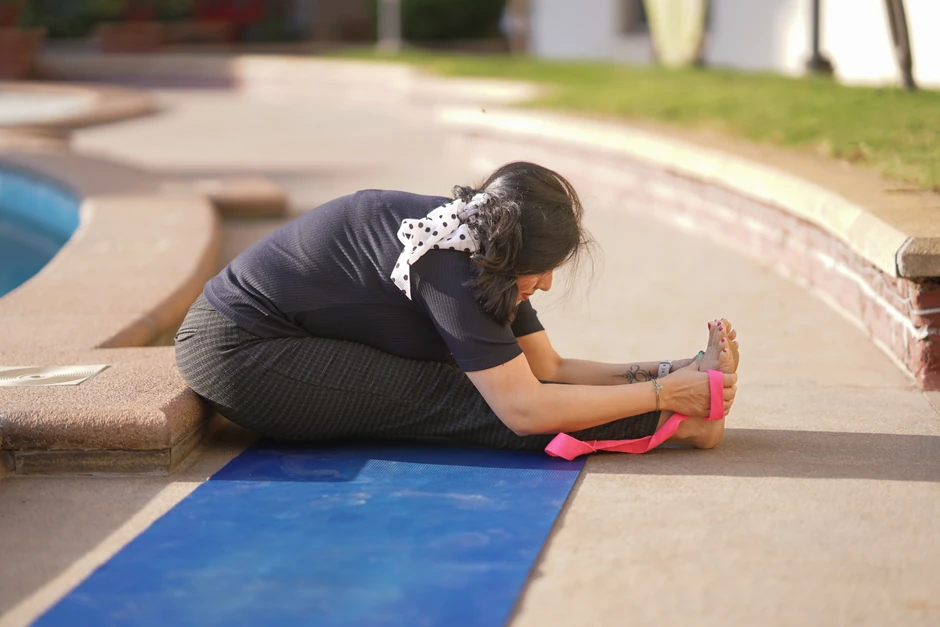
A gentle asymmetrical forward fold that targets one leg at a time.
- Sit with one leg extended and the other foot placed against the inner thigh.
- Inhale and lengthen the spine.
- Exhale and fold over the extended leg.
- Hold the foot or shin and breathe deeply.
Intense Side Stretch (Parsvottanasana)
A standing forward fold that stretches the hamstrings while improving balance and posture.
- Step one foot back into a staggered stance.
- Square the hips and inhale to lengthen the spine.
- Exhale and fold forward over the front leg.
- Place hands on the floor, blocks, or shins and hold steadily.
Enjoy a Free 1-on-1 Session with a Coach!
Receive personalized guidance tailored to your unique fitness goals, live with a dedicated coach—no credit card required.
Frequently Asked Questions

Padahastasana is excellent for improving hamstring flexibility, lengthening the spine, and calming the nervous system. It helps release tightness caused by prolonged sitting, improves posture, supports digestion, and prepares the body for deeper forward bends.
Beginners can hold Padahastasana for 30 seconds to 1 minute with bent knees. Intermediate practitioners may hold for 1–2 minutes, while advanced practitioners can stay for up to 3 minutes. Always increase duration gradually and exit if you feel pain.
In Uttanasana, the hands rest beside the feet, on the legs, or on the floor. In Padahastasana, the hands are placed under the feet with palms facing up. This hand placement creates a deeper hamstring stretch and adds gentle traction to the spine.
Padahastasana may help relieve mild, chronic lower back discomfort when practiced with bent knees and proper hip hinging. However, it should be avoided during acute back pain or injury. Stop immediately if pain increases and consult a healthcare professional if needed.
To ensure a safe and effective practice, book a free 1-on-1 session with a certified yoga coach!
Practice Uttanasana, Downward-Facing Dog, Pyramid Pose, and seated forward folds regularly. Warm up thoroughly, hold stretches for at least 1–2 minutes, and practice consistently 3–5 times per week. Most people see progress within 2–3 months.
Tight hamstrings are the most common reason. Sitting for long hours shortens the hamstrings significantly. This is very common and normal. Using blocks, bending the knees, and practicing regularly will gradually improve flexibility.
Related Articles on Padmasana
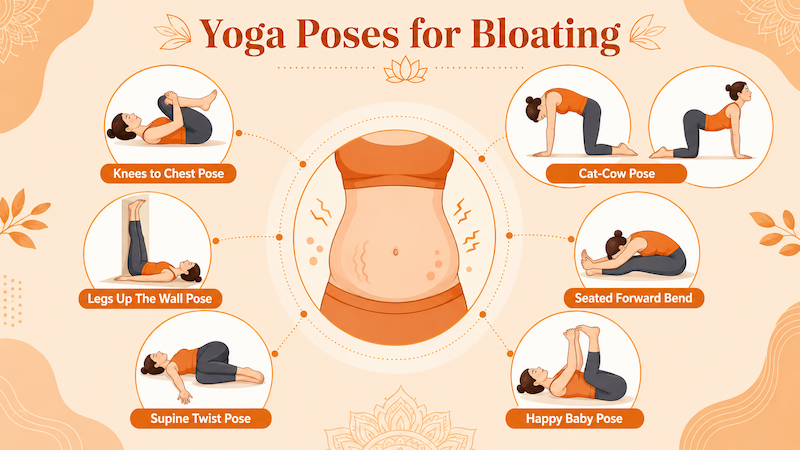
Yoga for Bloating: 8 Gentle Poses to Relieve Gas
Yoga for bloating relief: try 8 gentle poses to ease trapped gas and stomach discomfort. Beginner-friendly guidance from expert Indian yoga teachers.


Yin vs Restorative Yoga: What’s the Difference?
Yin vs Restorative Yoga explained. Compare intensity, hold times, props, and benefits. Learn the key differences and choose the right slow yoga style for you.
.webp)
Detox Yoga Sequence: Refresh and Renew After Holiday Indulgence
Refresh and renew after holiday indulgence with this 12-pose detox yoga sequence. Gentle twists and mindful stretches for digestion, circulation, and energy.


