


With several slow yoga styles available today, it’s easy to feel unsure about which one to choose. Among the most commonly confused relaxing yoga styles are Yin vs Restorative yoga. At first glance, they look nearly identical—both are quiet, prop-supported, and involve long-held poses with minimal movement.
But once you experience them, the differences become clear.
So, Yin yoga vs Restorative yoga — which one is right for you? The answer depends on what your body and nervous system need at the moment.
Yin yoga focuses on applying gentle, sustained stress to connective tissues through longer-held stretches. Restorative yoga, on the other hand, removes effort completely, using extensive prop support to encourage deep relaxation. In simple terms, Yin works your tissues; Restorative rests your system.
Both styles can activate the parasympathetic nervous system and support stress reduction. However, they serve different purposes—one emphasizes mobility and tissue loading, while the other prioritizes complete recovery and nervous system regulation.
Continue reading for a detailed comparison of Yin vs Restorative yoga to understand their key differences and decide which practice best supports your needs today.
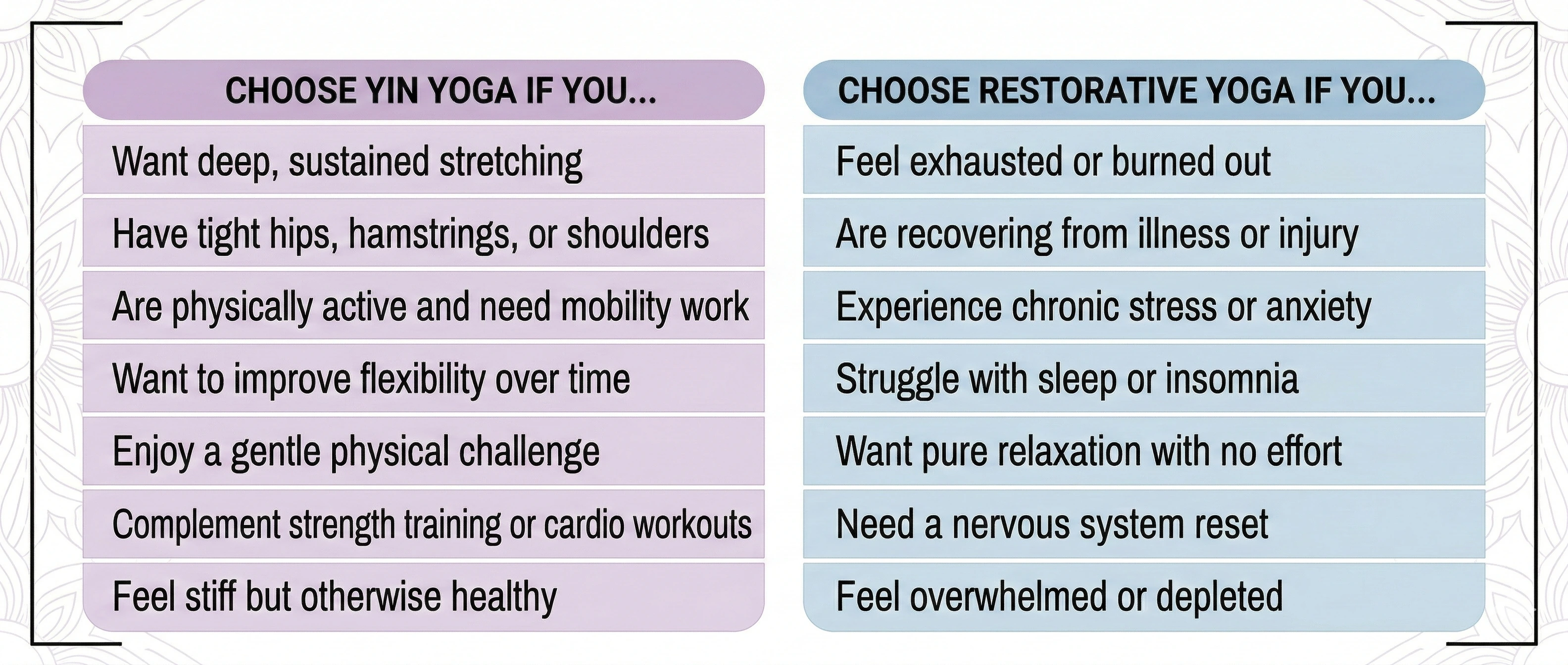
To choose the best fit, it’s important to understand your body’s needs and what you need at that moment. Take a quick look at the guide below to make an informed decision.
[inline-CTA-1]
Before we dive into the differences, it’s important to understand each style individually.
Yin yoga is a slow-paced practice that targets the body’s connective tissues—including fascia, ligaments, and joint capsules—rather than focusing primarily on muscles. Poses are typically performed on the floor and held for 3–5 minutes, allowing gentle, sustained stress to encourage mobility and circulation in deeper structures.
Unlike dynamic yoga styles, Yin is practiced in stillness. You’ll move into a shape, settle at your “edge” (the point of noticeable but manageable sensation), and remain there while breathing steadily. The goal isn’t muscular effort, but passive loading of tissues over time. Props such as blocks or bolsters may be used to support alignment, though the stretch sensation remains present.
Yin yoga is often chosen by athletes or active individuals who want to balance strength training, running, or high-intensity workouts with dedicated mobility work. It can also benefit anyone experiencing stiffness from prolonged sitting.
For a deeper look at its philosophy and origins, explore our complete guide to Yin Yoga.
Restorative yoga is a practice centered on complete relaxation and nervous system regulation. Unlike Yin yoga, it does not aim to stretch connective tissue or create physical sensation. Instead, every pose is fully supported with props—bolsters, blankets, blocks, and sometimes eye pillows—so the body can release effort entirely.
Poses are typically held for 10–15 minutes or longer, with minimal transitions between them. The goal is comfort. If there is strain or stretch, additional props are added to eliminate it. This full support encourages the body to shift into its parasympathetic “rest and digest” state, helping reduce stress and promote recovery.
Originally developed within the Iyengar yoga tradition to support healing and recuperation, Restorative yoga is now widely practiced by people managing stress, fatigue, or demanding schedules. Many describe the experience as deeply calming—similar to guided rest rather than exercise.
To learn more about its foundations and benefits, read our full guide to Restorative Yoga.
Both practices are slow and meditative, but their methods and outcomes differ significantly. Yin introduces controlled stress to encourage tissue adaptation, while Restorative removes stress entirely to promote deep relaxation.
[GC]
The fundamental difference between Yin and Restorative yoga lies in how they use—or remove—stress.
Yin yoga applies mild, sustained stress to connective tissues by holding poses at a point of noticeable stretch. This controlled load may support mobility and joint range over time when practiced consistently.
Restorative yoga, by contrast, removes stress entirely. The body is fully supported, so muscles can release without effort. The goal is not adaptation, but recovery and nervous system downregulation.
In short, Yin works with stress. Restorative eliminates it.
In Yin yoga, you will feel sensation—sometimes intense but manageable. The practice encourages you to stay present with that stretch while breathing steadily. Discomfort should never become pain, but the edge is part of the method.
In Restorative yoga, there should be no stretch sensation at all. If discomfort arises, more props are added. The aim is complete comfort so the body can shift into relaxation without resistance.
In short, Yin involves sensation. Restorative prioritizes ease.
Yin yoga uses props selectively. A block or bolster may support alignment or prevent overstretching, but the posture still creates tissue load. Props assist positioning—they don’t remove sensation.
Restorative yoga relies heavily on props. Multiple blankets, bolsters, and blocks create full-body support. The setup may take several minutes because comfort is essential. The props create a stable “nest” so the body can let go completely.
In short, Yin props position you. Restorative props support you.
Yin poses are typically held for 3–5 minutes, allowing connective tissues to respond gradually to sustained load. A class may include 8–12 poses with slow transitions between them.
Restorative poses are held much longer—often 10–15 minutes or more—with fewer total postures in a session. The extended duration encourages deeper relaxation and nervous system regulation.
In short, Yin is slow. Restorative is slower.
Yin yoga is often chosen when the body feels tight or restricted. It pairs well with strength training, running, cycling, or long hours of sitting. It supports mobility and provides structured stretching within a meditative format.
Restorative yoga is often chosen during periods of stress, fatigue, or overwhelm. It’s commonly practiced before bed, during recovery phases, or when energy levels are low.
In short, choose Yin for tissue-focused mobility work. Choose Restorative for deep rest and reset.
[inline-CTA-2]
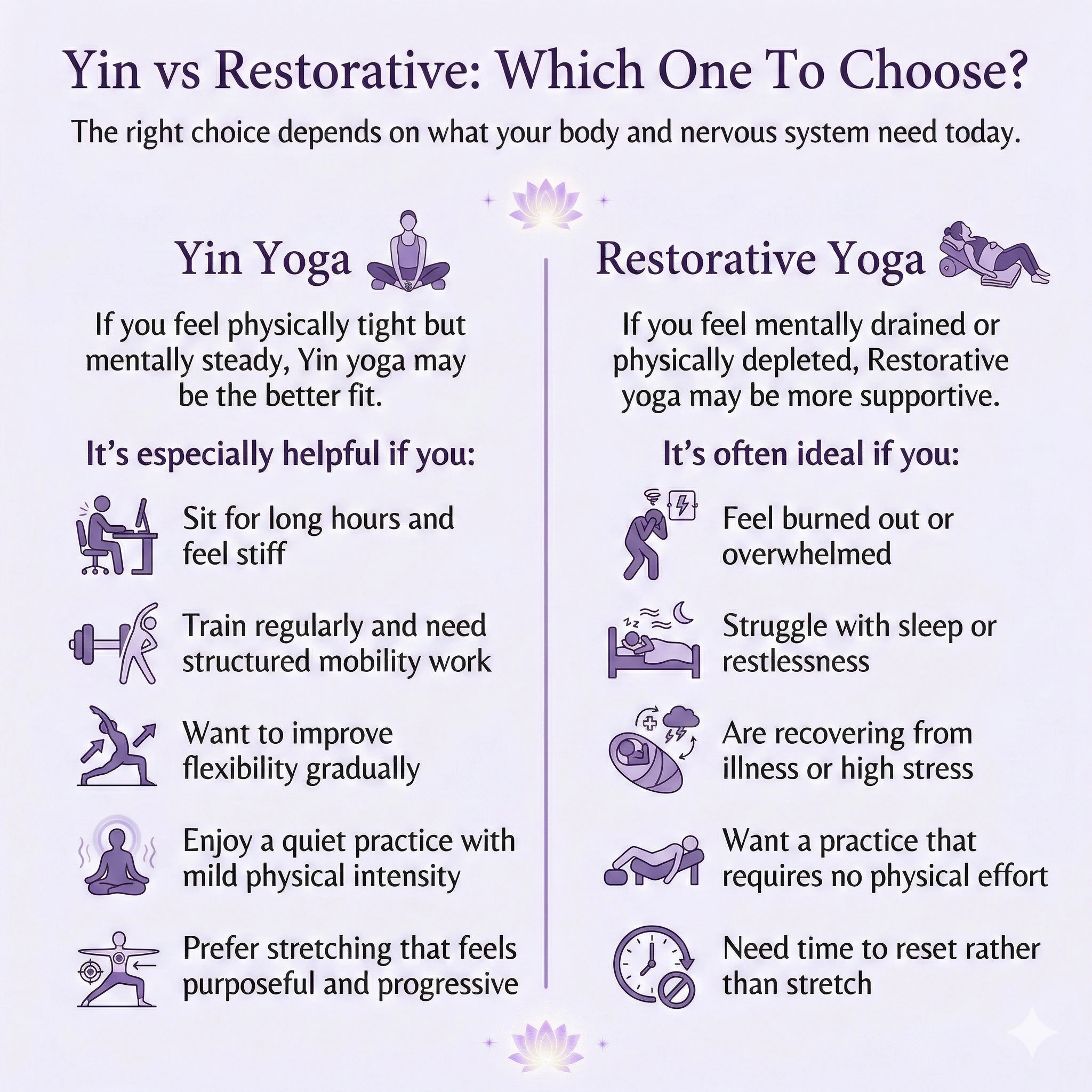
The right choice depends on what your body and nervous system need today.
If you feel physically tight but mentally steady, Yin yoga may be the better fit. It’s especially helpful if you:
If you feel mentally drained or physically depleted, Restorative yoga may be more supportive. It’s often ideal if you:
Many practitioners benefit from both. A balanced week might include active yoga sessions, one Yin practice for mobility, and one Restorative session for recovery. Others alternate based on how they feel—choosing Yin when stiff and Restorative when stressed.
There’s no permanent choice. The more useful question isn’t “Which style is better?” but “What does my body need right now?”

No. While both are slow and prop-supported, Yin yoga applies gentle, sustained stretches to connective tissues, while Restorative yoga focuses on complete relaxation without any stretch or muscular effort.
Restorative yoga is generally more deeply relaxing because it removes all physical effort. Yin yoga can feel calming, but it includes noticeable stretch sensations that may feel mildly challenging.
Yes. Many people practice Yin earlier in the day for mobility and choose Restorative in the evening to unwind. Since they serve different purposes, they complement each other well.
For the most effective practice, book a free 1-on-1 session with an experienced Indian yoga teacher.
Restorative yoga is typically more supportive for sleep because it emphasizes complete relaxation and parasympathetic activation. Yin yoga may also help, but it focuses more on mobility than full rest.




Receive personalized guidance tailored to your unique fitness goals, live with a dedicated coach—no credit card required.

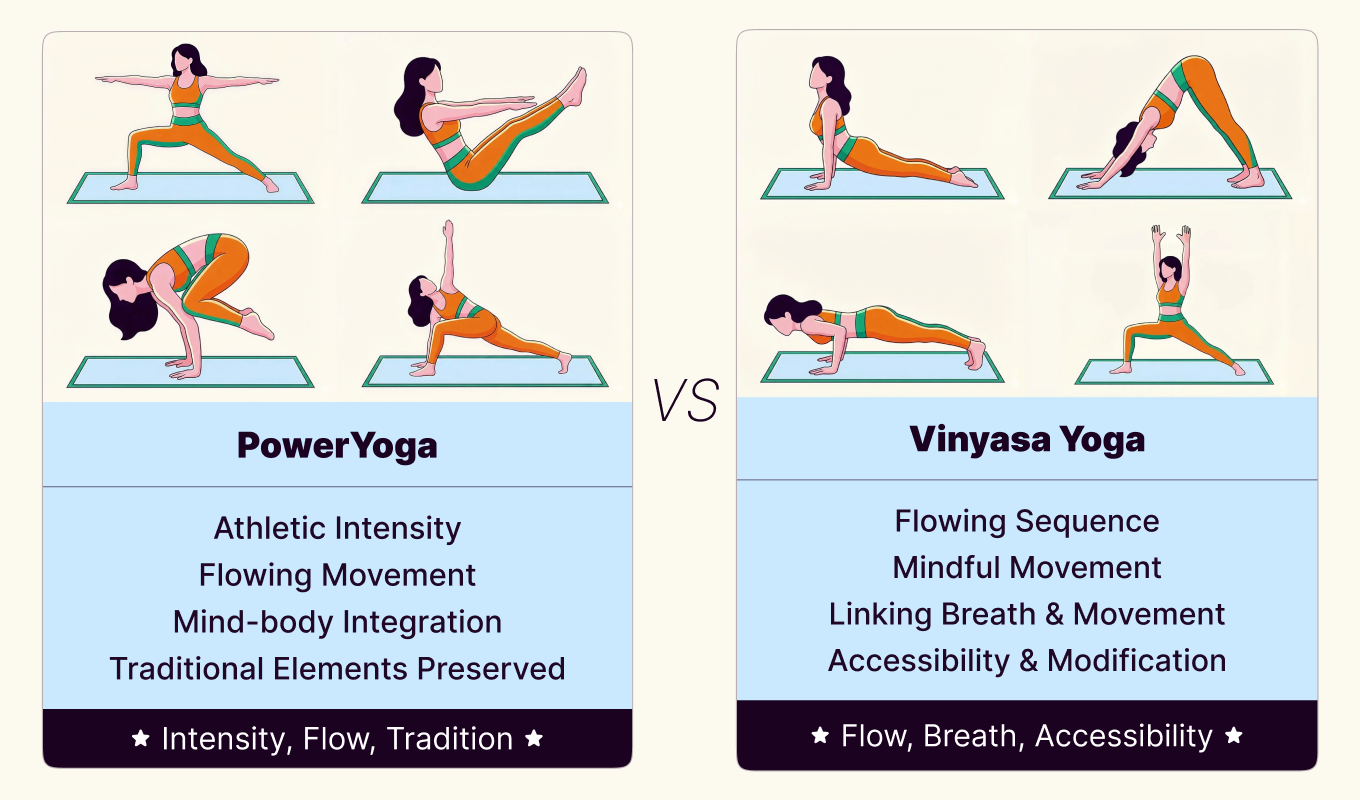
Power Yoga vs Vinyasa yoga: Compare pace, intensity, calories burned & benefits. Discover which dynamic yoga style matches your fitness goals. Start today!

.webp)
Refresh and renew after holiday indulgence with this 12-pose detox yoga sequence. Gentle twists and mindful stretches for digestion, circulation, and energy.
.webp)
Learn 7 gentle yoga poses for period cramps that ease pain naturally. Get step-by-step instructions and discover how yoga helps relieve menstrual discomfort.


© Copyright 2025 MyYogaTeacher Inc


