


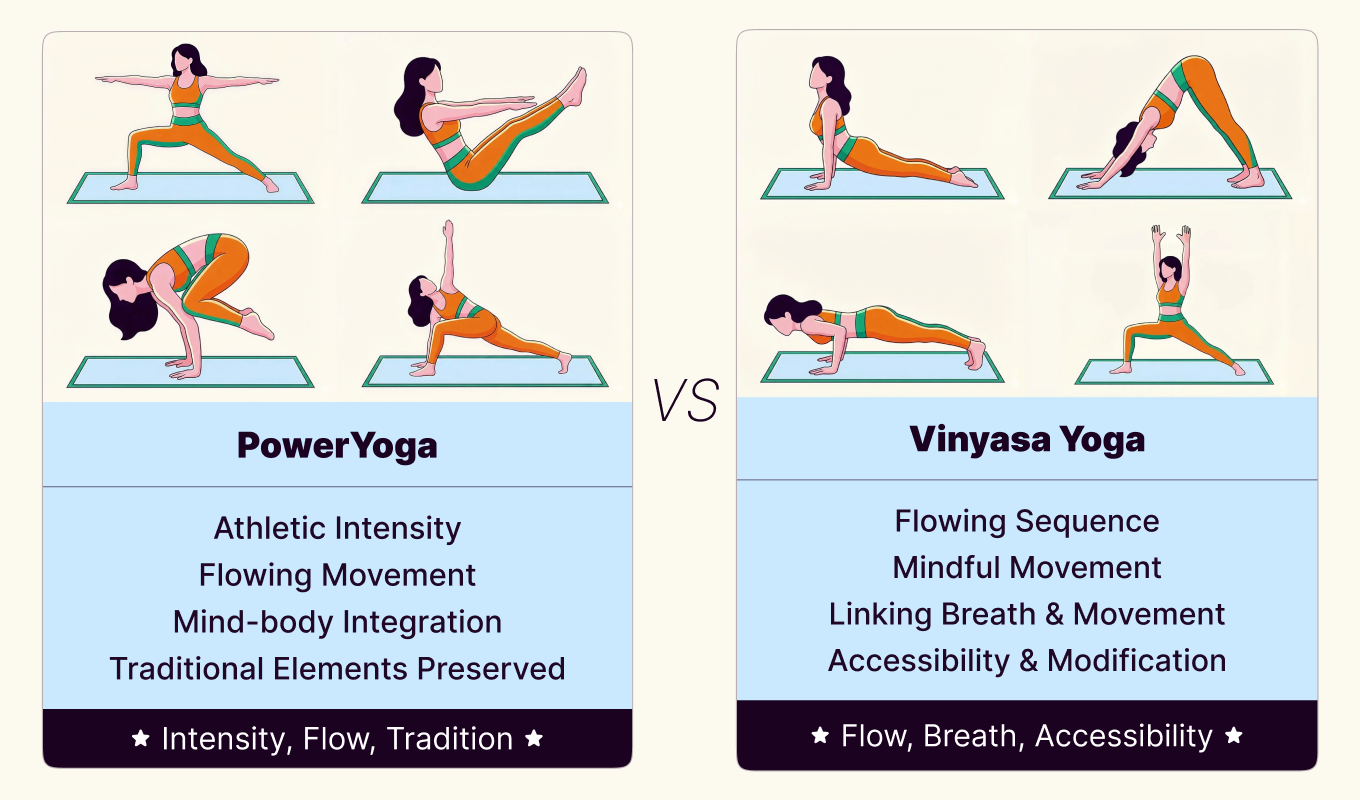
With so many dynamic yoga styles to choose from, picking one can feel confusing—especially if you’re focused on fitness and want results. Among the most popular options, Power Yoga and Vinyasa Yoga often come up together. At first glance, both look similar: flowing sequences, continuous movement, and a sweat-inducing pace. But once you start practicing, the differences become easier to notice.
So, Power Yoga vs Vinyasa Yoga—which one should you choose? The answer depends on what you’re looking for from your practice: a high-intensity workout, a breath-led flow, or a balance of both. Your fitness background, energy levels, and personal goals all play a role.
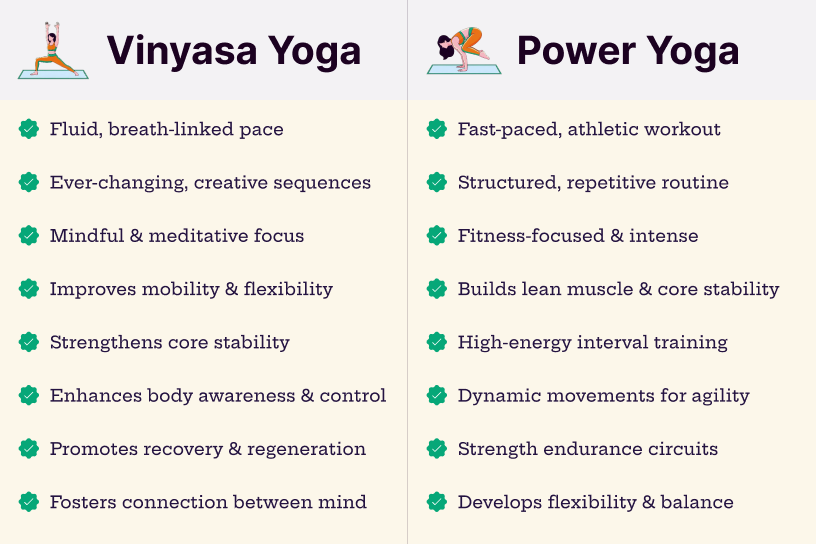
Power Yoga follows a more fitness-focused, structured approach, emphasizing strength building, endurance, and calorie burn through challenging, repetitive sequences. Vinyasa Yoga, on the other hand, is known for its fluid, creative flow, where each movement is guided by the breath, offering a deeper sense of rhythm and mind-body connection.
While both styles improve strength, flexibility, and cardiovascular health, they differ in pace, structure, and overall experience. Continue reading for a detailed breakdown of Power Yoga vs Vinyasa Yoga to understand how each style works—and decide which one best fits your body, lifestyle, and fitness goals.
Before diving into the differences, it helps to understand what Power Yoga and Vinyasa Yoga truly represent. While both are dynamic, flow-based practices, their purpose, structure, and experience on the mat can feel very different.
Power Yoga is a modern, fitness-oriented style of yoga that gained popularity in the United States during the 1990s, largely through teachers like Bryan Kest and Baron Baptiste. It evolved as a Western adaptation of traditional yoga, retaining the physical postures while placing less emphasis on chanting, philosophy, or rigid sequencing rules.
In a Power Yoga class, the focus is firmly on strength, endurance, and intensity. The practice is fast-paced and physically demanding, often including poses like planks, chaturangas, lunges, and arm balances held for longer durations to build muscle and stamina.

“This dynamic and physically challenging style of yoga can tone your body and sharpen your mind.”
Most Power Yoga classes follow a structured and predictable format, which helps practitioners track progress, build muscle memory, and steadily increase strength over time—much like a gym training routine.
Key characteristics of Power Yoga:
Power Yoga is particularly well-suited for fitness-focused beginners, gym-goers, athletes, and anyone prioritizing weight loss, toning, and physical conditioning.
Read our in-depth guide on Power Yoga here!
Vinyasa Yoga is a dynamic, flow-based style rooted in traditional Indian yoga, with strong links to Ashtanga Yoga. The word Vinyasa means “to place in a special way,” referring to the intentional sequencing of poses synchronized with breath.
In Vinyasa Yoga, movement and breath are inseparable. Each posture flows smoothly into the next, often following the rhythm of one movement per inhale or exhale. This creates a continuous, graceful flow that feels both physically engaging and mentally grounding.
“In Vinyasa, the idea is to glide from one pose to the next seamlessly, using your breath to guide your physical movements.”
Unlike Power Yoga, Vinyasa has no fixed sequence. Each class may differ based on the teacher’s creativity, theme, or focus—ranging from strength-building flows to slower, flexibility-focused sessions. Traditional elements such as pranayama (breathing techniques) and moments of mindfulness are often naturally integrated.
Key characteristics of Vinyasa Yoga:
Vinyasa Yoga is ideal for those who enjoy creative movement, want a blend of fitness and mindfulness, and are looking for an accessible yet challenging yoga style—whether they’re beginners or experienced practitioners.
For a deeper understanding, explore our guides on Vinyasa Yoga and Vinyasa Flow Yoga.
[GC]
| Aspect | Power Yoga | Vinyasa Yoga |
|---|---|---|
| Intensity | High-intensity, strength-focused, minimal rest | Moderate to high; smoother flow with pauses |
| Calorie Burn | Up to 400–600 calories/hour | Around 300–450 calories/hour |
| Class Structure | Structured and predictable sequences | Creative, varied sequences |
| Breathing | Breath supports effort and stamina | Breath leads movement |
| Overall Focus | Fitness, strength, endurance | Flow, balance, mindfulness |
Below are the key differences to help you understand how Power Yoga and Vinyasa Yoga work and which one may be a better fit for your goals, fitness level, and lifestyle. These include:
One of the most noticeable differences between Power Yoga and Vinyasa Yoga is the level and type of physical intensity involved.
Power Yoga: High-Intensity and Strength-Driven
Power Yoga is designed to be physically demanding. Classes often include longer holds in challenging poses—sometimes 30 to 60 seconds—along with repeated plank-to-chaturanga transitions and minimal rest between sequences. Muscles stay engaged for most of the session, making the practice feel similar to a strength and cardio workout. Depending on pace and experience level, Power Yoga can burn up to 400–600 calories per hour.
Vinyasa Yoga: Dynamic but Flow-Focused
Vinyasa Yoga also offers moderate to high intensity, but the experience feels more fluid. Poses are usually held for fewer breaths, and the focus is on smooth transitions rather than sustained muscular effort. Classes often balance strong sequences with gentler postures and intentional pauses, leading to a calorie burn of around 300–450 calories per hour, depending on the flow and teacher.
So, if you enjoy intense workouts and pushing physical limits, Power Yoga may feel more satisfying. If you prefer dynamic movement with moments to reset, Vinyasa may suit you better.
The way a class is structured can significantly affect how comfortable and confident you feel in your practice.
Power Yoga: Structured and Predictable
Power Yoga classes usually follow a consistent structure. While not as fixed as Ashtanga, many classes repeat similar sequences—starting with a warm-up, moving into standing strength poses, arm balances, core work, and ending with a short cool-down. This predictability helps you track progress, build strength steadily, and know what to expect each session.
Vinyasa Yoga: Creative and Varied
Vinyasa Yoga is known for its variety. There is no fixed sequence, and each class may feel different depending on the teacher’s creativity or theme. Some sessions focus on hip opening or backbends, while others emphasize stress relief or mobility. This keeps the practice fresh and engaging, especially for those who enjoy exploring movement in new ways.
So, if you like routine and measurable progress, Power Yoga offers structure. If you enjoy variety and creative flow, Vinyasa delivers that flexibility.
While breath is essential in both styles, it’s used differently.
Power Yoga: Breath Supports the Effort
In Power Yoga, breathing—often strong ujjayi breath—helps sustain intensity and support physical effort. The breath acts as fuel, helping you hold challenging poses and maintain rhythm. However, there is generally less focus on formal pranayama or breath instruction beyond what supports the workout.
Vinyasa Yoga: Breath Leads the Movement
In Vinyasa Yoga, breath is central. Each movement is guided by an inhale or exhale, creating a natural rhythm throughout the practice. Teachers often cue breath intentionally, helping students develop awareness and focus. Over time, this breath-led flow can feel meditative, even during physically demanding sequences.
So, if you want breath to drive your entire practice, Vinyasa is a better match. If you see breath as a tool to support strength, Power Yoga fits well.
[inline-CTA-1]
Both styles improve strength and flexibility, but they serve different fitness goals.
Power Yoga: Fitness-First Results
Power Yoga is particularly effective for:
Vinyasa Yoga: Balanced Physical Wellness
Vinyasa Yoga supports:
So, if your primary goal is physical conditioning and calorie burn, Power Yoga stands out. If you want a balanced, sustainable practice, Vinyasa offers more range.
The mindset each style encourages can shape your overall experience.
Power Yoga: Focus Through Physical Challenge
Power Yoga minimizes traditional elements such as chanting or philosophy. Mental benefits come through discipline, focus, and resilience built during physically challenging sequences. It’s often described as “yoga as a workout.”
Vinyasa Yoga: Mindfulness Through Flow
Vinyasa Yoga integrates mindfulness more naturally. Breath awareness, smooth transitions, and occasional references to yogic philosophy help cultivate a strong mind-body connection. Many practitioners describe it as a “moving meditation.”
So, if you prefer a purely physical focus, Power Yoga fits well. If you value mental clarity alongside movement, Vinyasa may feel more fulfilling.
[inline-CTA-2]
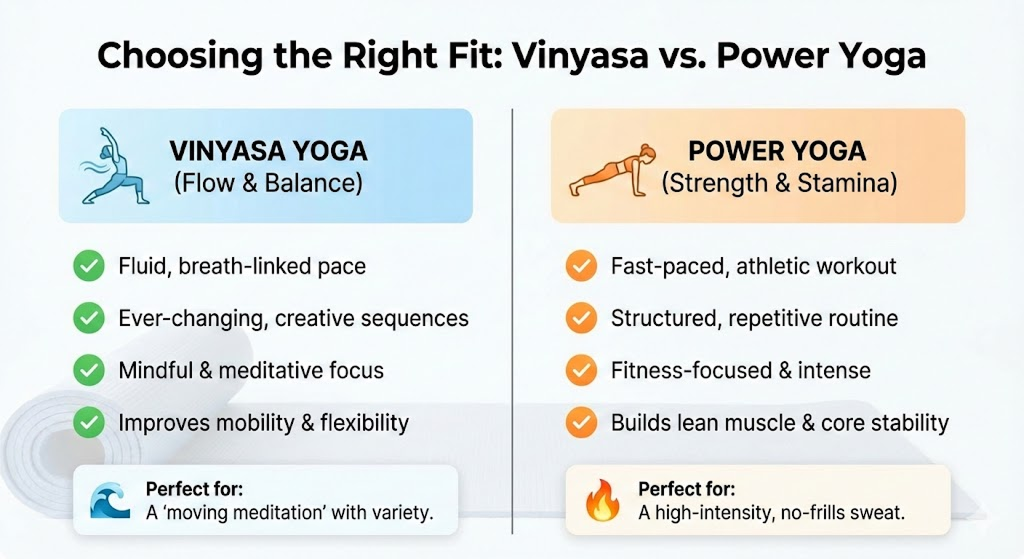
Still unsure which style is right for you? Here’s a quick breakdown to help you decide based on your goals and experience level:
Note that you don’t have to choose just one. Many practitioners do Power Yoga on weekdays for fitness and Vinyasa Yoga on weekends for recovery and balance—giving you the best of both worlds.
When it comes to Power Yoga vs Vinyasa Yoga, the right choice depends on what you want from your practice. Power Yoga is ideal if you’re looking for an intense, fitness-focused workout that builds strength and burns calories. Vinyasa Yoga offers a more fluid, breath-led experience that balances physical effort with mindfulness and stress relief.
Both styles are effective—and both can fit into a well-rounded routine. The key is choosing the one that aligns with your goals and keeps you consistent.
If you’re unsure where to start, experience both styles firsthand. At MyYogaTeacher, certified Indian yoga teachers guide you through Power Yoga and Vinyasa Yoga with personalized 1-on-1 sessions tailored to your body and goals.
Start your free trial today and find the yoga style that works best for you.

Power Yoga typically burns more calories because it is more intense and strength-focused. A Power Yoga class can burn up to 400–600 calories per hour, depending on pace and individual effort. Vinyasa Yoga generally burns 300–450 calories per hour, as it balances strong sequences with smoother transitions and brief recovery moments. If weight loss or calorie burn is your primary goal, Power Yoga usually has the edge.
In most cases, yes. Power Yoga is more physically demanding due to longer holds in challenging poses, fewer rest breaks, and a stronger emphasis on muscular endurance.
Vinyasa Yoga can still be challenging, but the difficulty often comes from continuous flow and breath coordination rather than raw strength. Many people find Power Yoga harder on the body, while Vinyasa feels more balanced and sustainable.
Beginners can do Power Yoga if they already have a reasonable fitness base, such as experience with gym workouts or sports. However, complete beginners may find the pace and intensity overwhelming at first.
Absolutely. Many practitioners combine both styles to meet different needs. Power Yoga works well on days when you want a strong workout and calorie burn, while Vinyasa Yoga is ideal for improving flexibility, reducing stress, and supporting recovery. Practicing both can create a well-rounded routine that supports strength, mobility, and mental balance.






Receive personalized guidance tailored to your unique fitness goals, live with a dedicated coach—no credit card required.


Yin vs Restorative Yoga explained. Compare intensity, hold times, props, and benefits. Learn the key differences and choose the right slow yoga style for you.

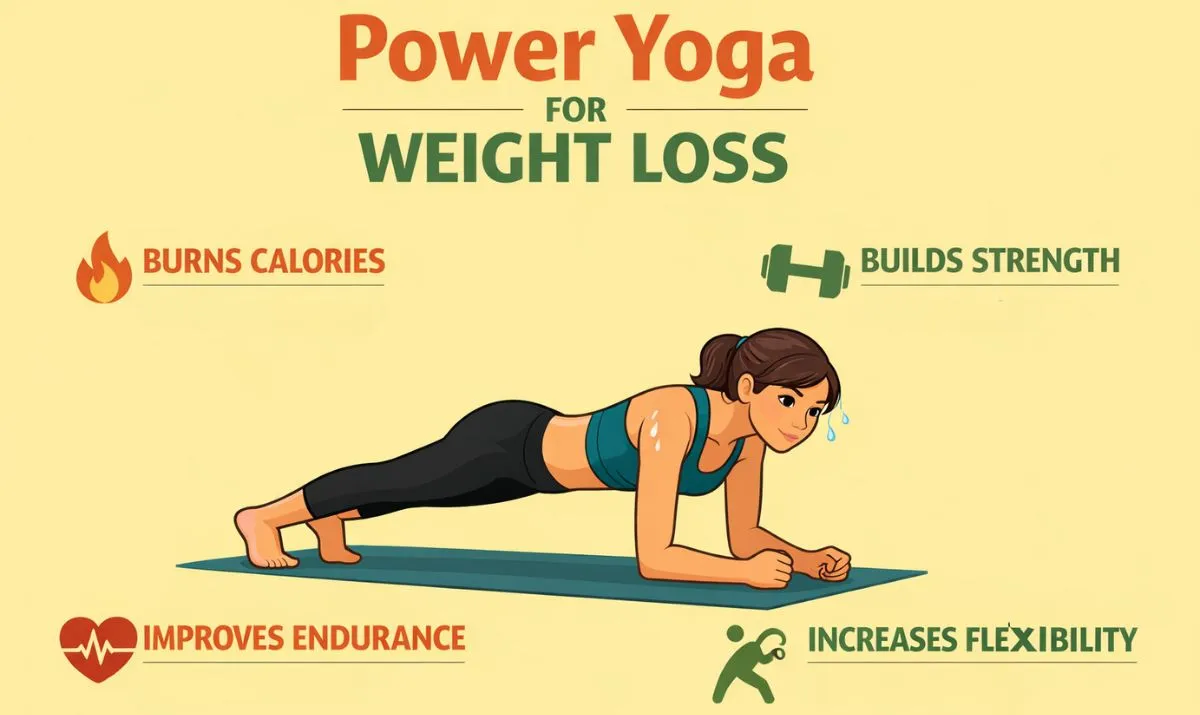
Is power yoga good for weight loss? Yes! Burn 400-600 calories per hour, build lean muscle, and boost metabolism. Learn how it works + best practices.
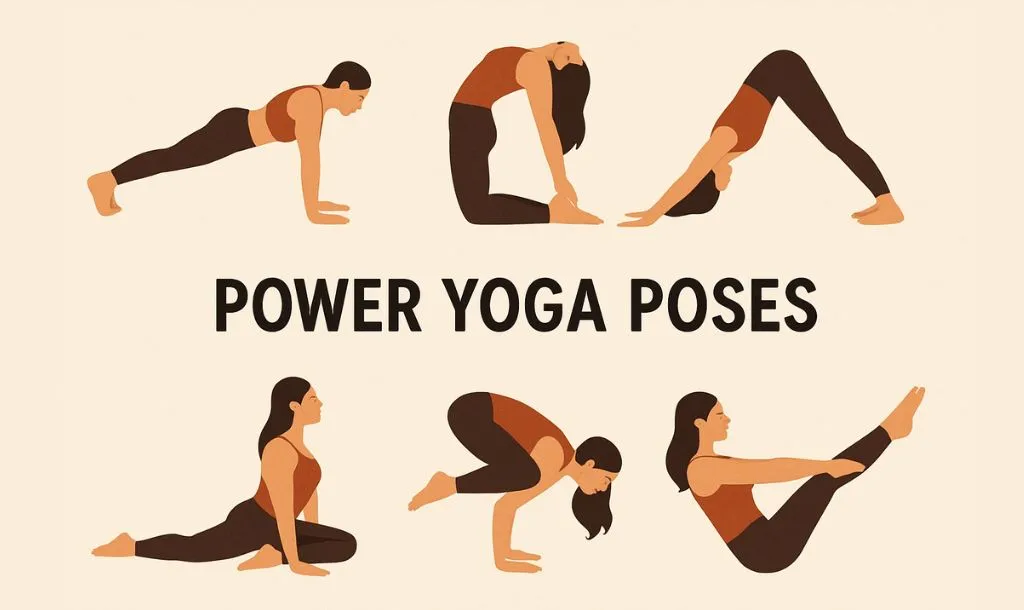
Master Power Yoga poses for all levels. Learn beginner to advanced asanas, weight loss sequences, and safety tips with expert guidance. Start today!


© Copyright 2025 MyYogaTeacher Inc


