


What is Sphinx Pose (Salamba Bhujangasana)?
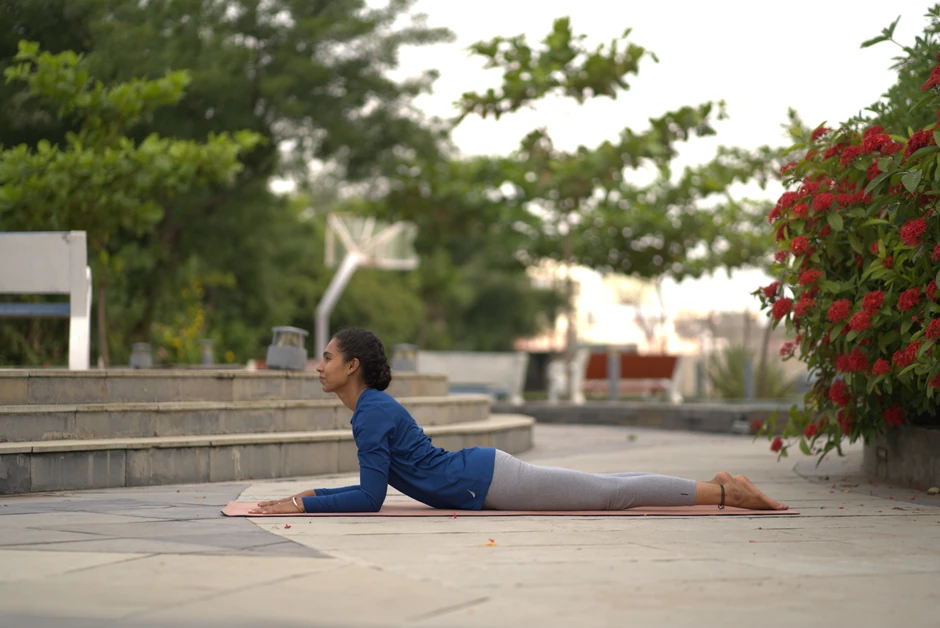
Sphinx Pose, also known as Salamba Bhujangasana, is a gentle backbend that lifts the chest forward and up while the forearms stay grounded on the mat. Commonly practiced in Hatha, Yin, and Restorative Yoga, this beginner-friendly pose helps open the chest, strengthen the spine, and introduce the body to backbending in a safe and accessible way.
Sphinx Pose: Overview and Meaning of Salamba Bhujangasana
Salamba Bhujangasana comes from the Sanskrit words salamba (supported), bhujanga (cobra or serpent), and asana (pose), meaning Supported Cobra Pose. The English name, Sphinx Pose, comes from its resemblance to the Egyptian Sphinx, with the forearms grounded and the chest lifted in a calm, upright position. Together, these names reflect both the shape and quality of the posture: steady, supported, and gently expansive through the front body.
As a modern yoga posture, the Sphinx Pose has become widely used as a gentle introduction to backbending since it allows the chest to open while the forearms provide support. Today, Sphinx Pose is commonly practiced in Hatha, Yin, Restorative, and therapeutic yoga, where it is used both as a preparatory pose for deeper backbends and as a calming posture on its own. Its modern relevance is especially strong for people with tight chests, rounded shoulders, and stiffness from long hours of sitting.
Anatomically, Sphinx Pose is a mild backbend with the forearms, pelvis, and legs resting on the floor. This support makes it more stable and less intense than deeper backbends. The pose gently strengthens the back and upper spine while stretching the chest, abdomen, shoulders, and hip flexors. Because of this, Sphinx Pose is often used to improve posture, build spinal awareness, and prepare the body for stronger backbends.
At a Glance
- English Name: Sphinx Pose
- Sanskrit Name: Salamba Bhujangasana
- Pronunciation: sa-LOM-ba boo-jahn-GAHS-uh-nuh
- Pose Type: Gentle backbend, chest opener, prone pose
- Level: Beginner
- Duration: 1–5 minutes, depending on the style of practice
Benefits of Sphinx Pose
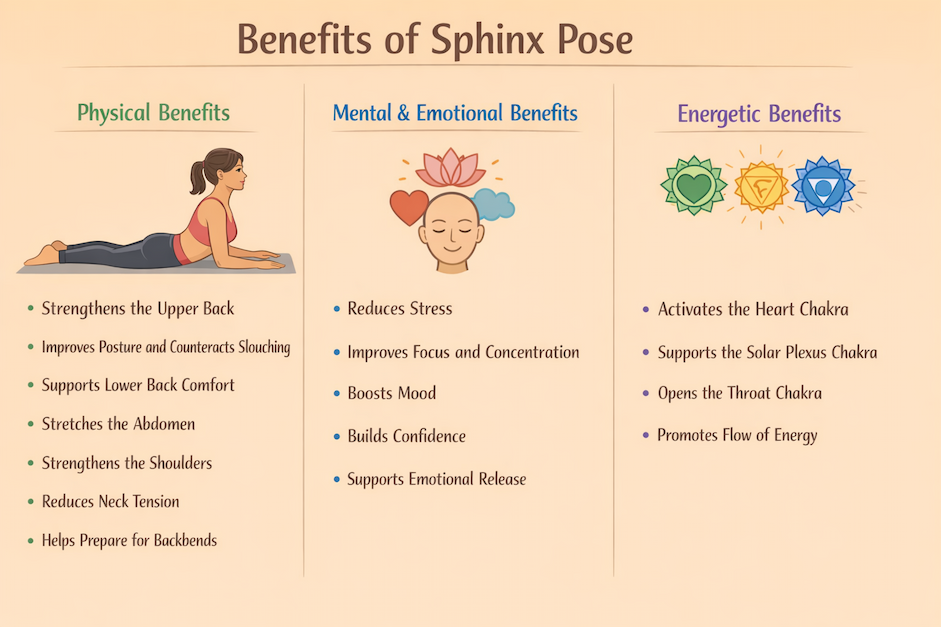
Sphinx Pose is a gentle yet effective backbend that offers a wide range of benefits for the body and mind. Because it creates supported spinal extension without demanding deep flexibility, it is one of the most accessible poses for beginners and a valuable practice for experienced yogis as well.
Physical Benefits of Sphinx Pose
- Gently strengthens the spine and upper back by engaging the muscles along the back without putting the body into an intense backbend.
- Opens the chest and front shoulders, which can help improve posture and counteract slouching from long hours of sitting.
- Supports lower back comfort when practiced with proper alignment and without forcing the lift.
- Stretches the abdomen, front body, and hip flexors in a mild and accessible way.
- Strengthens the shoulders and arms isometrically as the forearms press down to support the chest.
- Reduces neck and upper-body tension when the shoulders stay relaxed, and the back of the neck remains long.
- Prepares the body for deeper backbends such as Cobra Pose, Seal Pose, and Upward-Facing Dog.
Mental and Emotional Benefits
- Helps reduce stress and calm the nervous system, especially when practiced with slow breathing or held longer in Yin or Restorative Yoga.
- Improves focus and concentration by encouraging stillness and awareness in the body.
- Boosts mood gently through the uplifting quality of a mild heart-opening posture.
- Builds confidence by offering a safe and approachable introduction to backbends.
- Encourages patience and reduces mental fatigue, especially during longer, quieter holds.
- Supports emotional release for some practitioners, particularly when tension is held in the chest and shoulders.
Energetic Benefits
- Activates the Heart Chakra (Anahata) through gentle chest opening and a sense of emotional spaciousness.
- Supports the Solar Plexus Chakra (Manipura) by encouraging steadiness, confidence, and inner strength.
- Opens the Throat Chakra (Vishuddha) by lengthening the front of the neck and chest.
- Promotes a balanced flow of energy that feels grounding through the lower body and uplifting through the upper body.
To experience the full benefits of Sphinx Pose with personalized support, book a free 1-on-1 session with a certified Indian yoga teacher.
How to Do Sphinx Pose (Salamba Bhujangasana): Step-by-Step Guide
Sphinx Pose is simple to set up, but the way you arrange the forearms, shoulders, chest, and lower body can make a big difference in how the pose feels. When practiced with steady support and relaxed breathing, it can become both a strengthening backbend and a calming restorative posture.
Part 1: Preparing for the Pose
Before practicing Sphinx Pose, check if you can lie comfortably on your stomach and lift your chest gently without strain in the lower back, shoulders, or neck. To practice the pose with more support, you may need props like a yoga mat, a bolster or folded blanket, and a small towel under the forearms if needed.
Simple Warm-Up
- Cat-Cow Pose
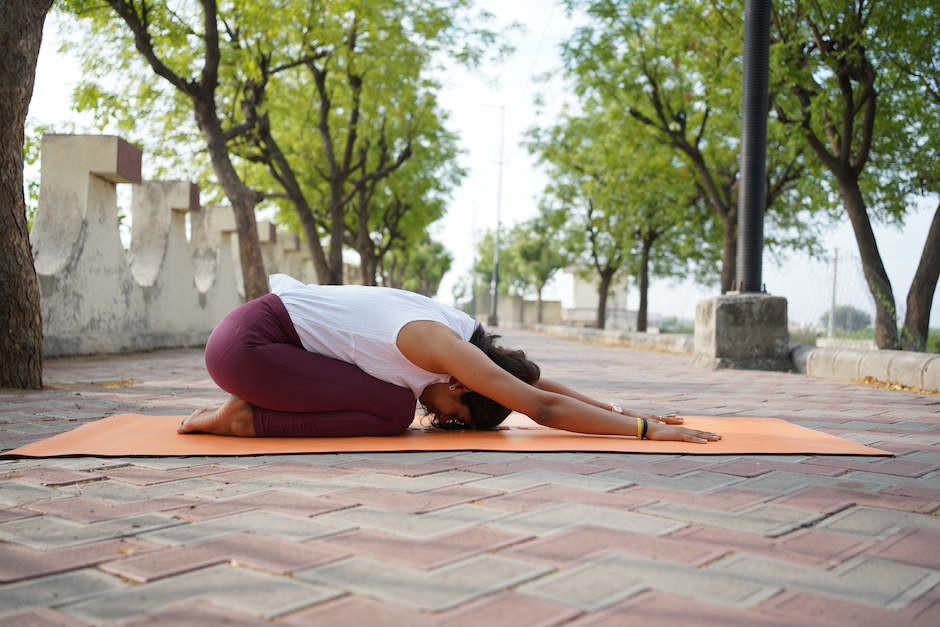
- Child’s Pose
- Gentle shoulder rolls
- Prone rest on the belly with relaxed breathing
Part 2: How to do the Sphinx Pose: Step-by-Step Instructions
- Begin by lying flat on your belly with your legs extended behind you and your forehead resting on the mat. Let the body settle for a few breaths.
- Keep the legs hip-width apart or together, depending on what feels more comfortable for your lower back. Let the tops of the feet press gently into the mat.
- Slide your elbows under your shoulders and place your forearms parallel to each other on the floor. Keep the palms pressing down lightly and the fingers relaxed.
- Press into the forearms and begin lifting the chest forward and up. Let the lift feel broad and natural rather than forced. Keep the lower ribs and pelvis grounded.
- Draw the shoulders away from the ears and widen across the collarbones. Keep the neck long and the gaze forward or slightly ahead on the floor.
- Press the tops of the feet down and allow the legs to stay long and grounded. In an active version, the legs and lower belly can stay gently engaged. In a restorative version, the lower body can remain softer.
- Stay in the pose with smooth, steady breathing. Beginners can hold for 30 seconds to 1 minute, while a restorative or Yin Yoga version may be held for 3 to 5 minutes if comfortable.
- To release, slowly lower the chest back down to the mat. Slide the forearms away, turn the head to one side, and rest for a few breaths. You can then move into Child’s Pose for a gentle counter-stretch.
In Sphinx Pose, you may feel a gentle opening through the chest, abdomen, and front shoulders, along with light strengthening in the back muscles. The pose should feel steady and supportive, not sharp or compressed.
You should not feel pinching in the lower back, tension in the neck, or pressure in the shoulders.
Common Mistakes and Fixes
- Avoid placing the elbows too far forward; instead, keep them stacked under the shoulders for better support.
- Avoid lifting the shoulders toward the ears; instead, draw them down and broaden across the chest.
- Avoid forcing the backbend too deeply; instead, keep the lift gentle and let the forearms support the shape.
- Avoid throwing the head back; instead, keep the back of the neck long and the gaze soft.
- Avoid holding the breath; instead, breathe smoothly and let the breath guide the depth of the pose.
Build flexibility and strength to practice the Sphinx Pose and its variations with ease. Explore these guided group classes for free!
Sphinx Pose Variations
Sphinx Pose can be adjusted in many ways depending on your flexibility, comfort, and practice style. These variations help make the pose more accessible for beginners, more supportive for restorative practice, or more active for those exploring deeper backbends.
Beginner Variations
1. Sphinx Pose with Forearms on a Blanket
This variation adds cushioning and support, especially if the forearms or elbows feel uncomfortable on the floor.
- Lie on your stomach and place a folded blanket under your forearms.
- Bring your elbows under your shoulders and forearms parallel.
- Press gently into the forearms and lift the chest into Sphinx Pose.
- Relax the shoulders and breathe steadily.
Restorative Variations
2. Restorative Sphinx Pose with Bolster
This supported variation makes Sphinx Pose more restful and is often used in restorative yoga.
- Place a bolster or folded blanket lengthwise under the chest.
- Lie on your stomach with the forearms resting comfortably on the floor or support.
- Allow the chest to lift gently without effort.
- Soften the shoulders, relax the jaw, and stay for several slow breaths.
3. Yin Yoga Sphinx Pose
This longer-held version encourages stillness and a deeper release through the front body.
- Come into Sphinx Pose with the elbows under the shoulders and forearms grounded.
- Lift the chest gently and allow the lower body to stay relaxed.
- Hold the pose for 3 to 5 minutes with slow, steady breathing.
- Come out slowly and rest in Child’s Pose afterward.
Intermediate to Advanced Variations
4. Cat Sphinx Pose
This more active variation strengthens the shoulders and core while changing the angle of the stretch.
- Begin in Sphinx Pose with the forearms grounded firmly.
- Tuck the toes under and lift the hips up and back.
- Keep the shoulders strong over the elbows as the chest moves away from the floor.
- Hold briefly, then lower back down with control.
5. Seal Pose
Seal Pose is a deeper progression from Sphinx Pose and creates a stronger backbend through the spine.
- Begin in Sphinx Pose with the chest lifted.
- Place the hands slightly wider than the shoulders.
- Straighten the arms as much as feels comfortable while keeping the pelvis grounded.
- Lift the chest higher and breathe steadily in the pose.
6. Sphinx to Cobra Flow
This dynamic variation helps build awareness of the difference between Sphinx Pose and Cobra Pose.
- Start in Sphinx Pose with the forearms on the mat.
- Lower down slightly and place the palms beside the chest.
- Inhale into Cobra Pose by lifting the chest with the hands and back muscles.
- Exhale and return to Sphinx Pose, repeating slowly with the breath.
Sphinx Pose: Precautions and Contraindications for Salamba Bhujangasana
While Sphinx Pose is a gentle backbend, sometimes, even a mild backbend can create discomfort if the lower back, shoulders, neck, or abdomen are sensitive. Practicing with awareness and the right modifications can help make the pose safer and more supportive.
Avoid Sphinx Pose If You Have
- Severe back injury, including an acute herniated disc, spinal fracture, or severe lower back pain.
- Recent abdominal surgery.
- Recent rib injury or fracture.
- Sharp or worsening pain in the spine during backbending.
- Severe migraine or headache that is aggravated by lifting the chest and head
Practice With Caution and Modifications
- Mild lower back sensitivity: Start with a very small lift, keep the forearms grounded, and place a bolster or folded blanket under the chest if needed.
- Neck discomfort: Keep the gaze slightly forward instead of upward, lengthen the back of the neck, and avoid dropping the head back.
- Shoulder sensitivity: Make sure the elbows stay under the shoulders, keep the chest broad, and use padding under the forearms if needed.
- Pregnancy: This pose may feel manageable in the first trimester with support, but belly-down positions are generally avoided later in pregnancy. Read our detailed prenatal yoga guide here.
- Beginners new to backbends: Start with short holds and focus on comfort and alignment rather than trying to lift higher.
- During menstruation: Many people can practice Sphinx Pose comfortably, but a softer or more restorative version may feel better depending on energy levels and comfort.
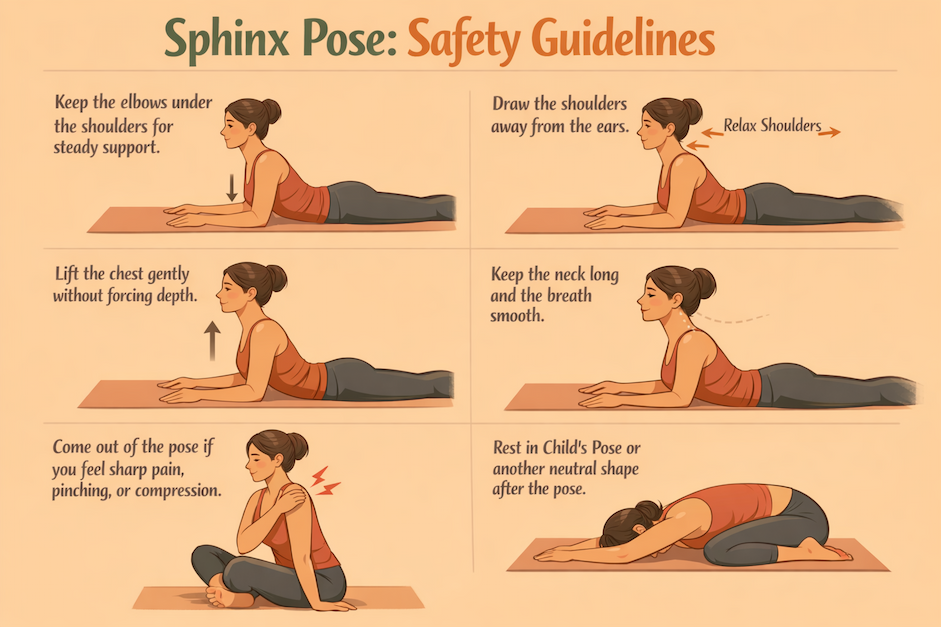
General Safety Guidelines
- Keep the elbows under the shoulders for steady support.
- Draw the shoulders away from the ears.
- Lift the chest gently without forcing depth.
- Keep the neck long and the breath smooth.
- Come out of the pose if you feel sharp pain, pinching, or compression.
- Rest in Child’s Pose or another neutral shape after the pose.
When to Consult a Healthcare Provider
Speak with a healthcare professional before practicing Sphinx Pose if you have:
- Chronic back pain
- Spinal conditions
- Recent surgery
- Severe osteoporosis
- Herniated discs
- Sciatica
- Chronic shoulder issues
- Pregnancy-related concerns.
If you are unsure whether the pose is appropriate for your body, it is best to begin with a supported version and guidance from a qualified teacher.
To practice Sphinx Pose with more confidence and personalized support, book a free 1-on-1 session with a certified Indian yoga teacher.
Sphinx Pose: Related Yoga Poses
If you enjoy the Sphinx Pose, try these similar yoga poses.
1. Crocodile Pose (Makarasana)
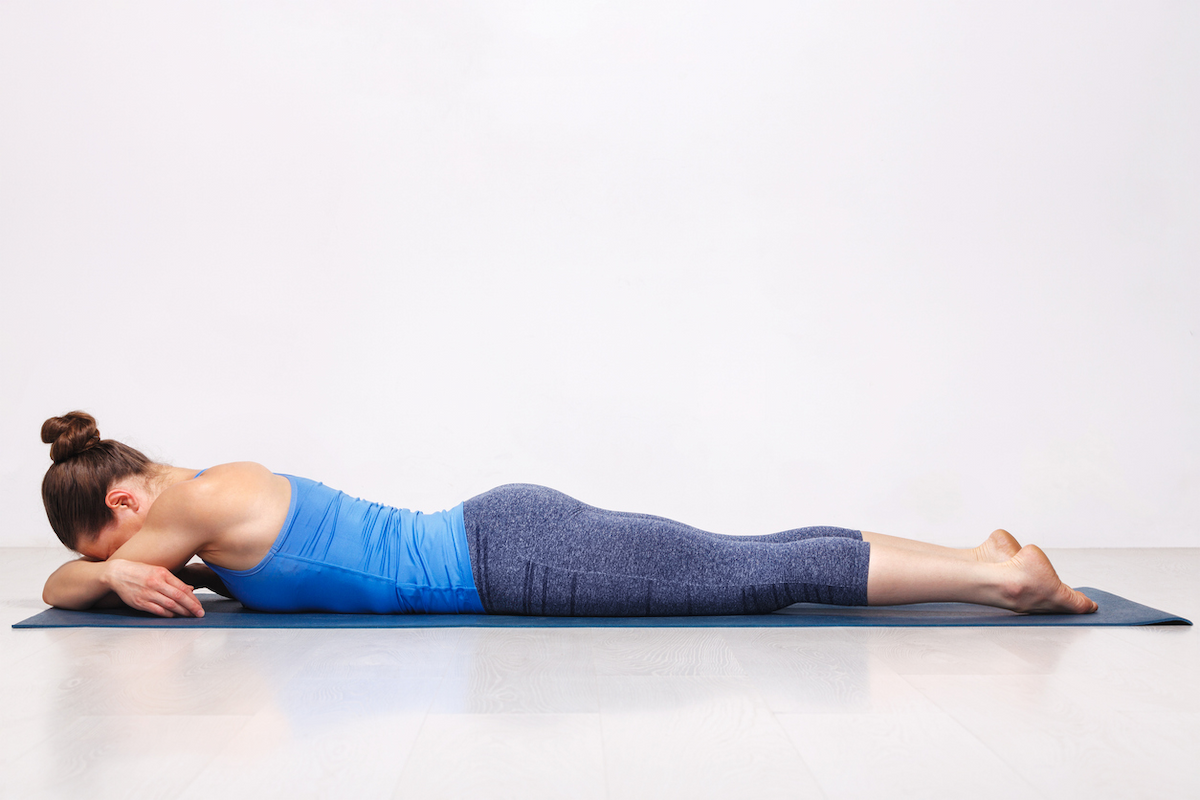
Offers gentle spinal support and deep relaxation, making it a soothing counterbalance to the mild backbend of Sphinx Pose.
- Lie on your stomach with your legs extended comfortably behind you.
- Fold your arms in front of you and rest one hand on top of the other.
- Place your forehead or chin on your hands.
- Relax the shoulders, soften the belly, and breathe slowly.
2. Locust Pose (Salabhasana)
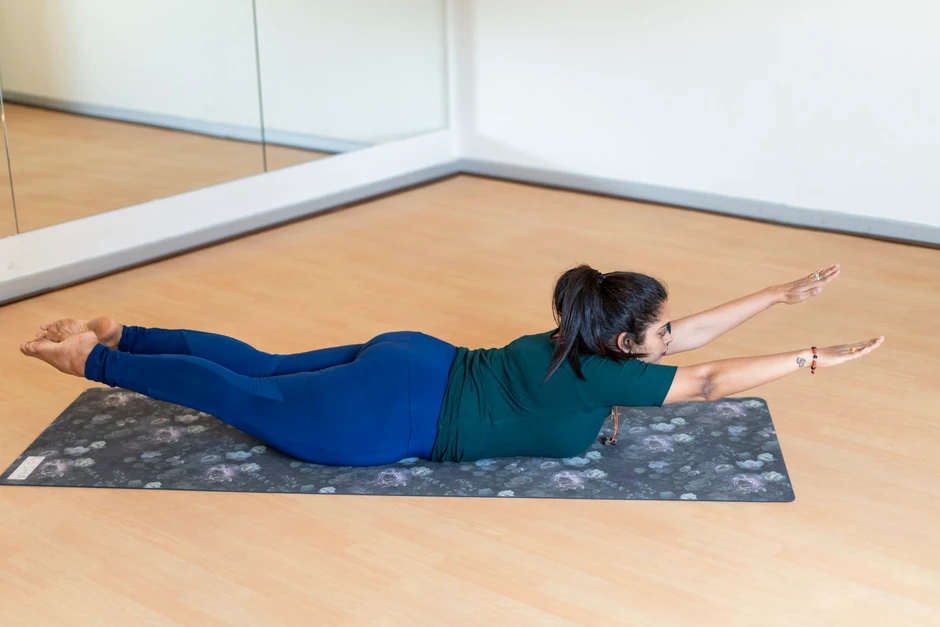
Strengthens the back body more actively than Sphinx Pose and helps build the spinal strength needed for deeper backbends.
- Lie on your stomach with your arms alongside the body and palms facing down or inward.
- Keep the legs long and the forehead lightly on the mat.
- Inhale and lift the chest, arms, and legs off the floor as comfortable.
- Lower down slowly with control and rest between rounds.
3. Bow Pose (Dhanurasana)
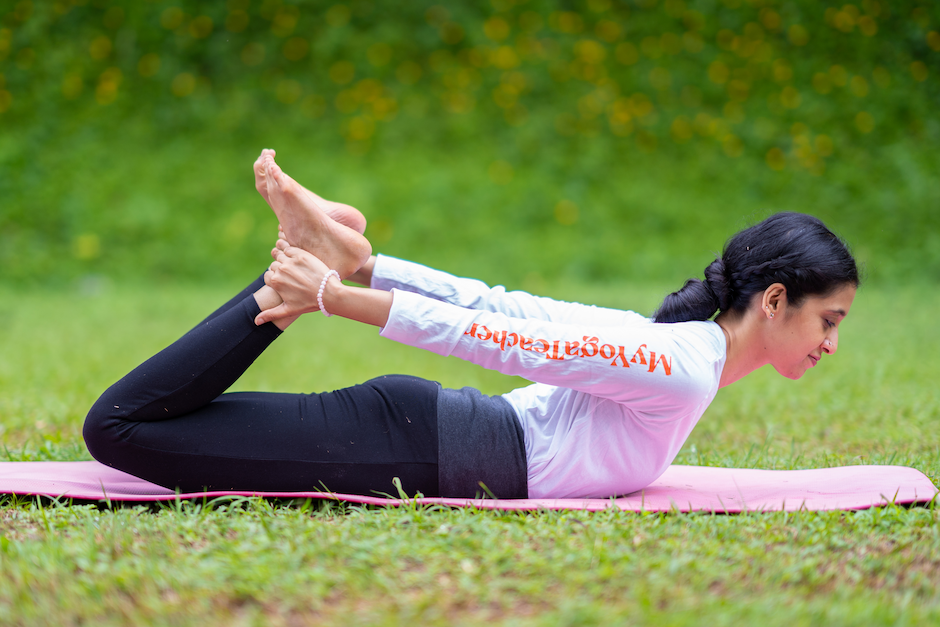
Creates a deeper front-body stretch and stronger backbend, building on the chest opening and spinal extension introduced in Sphinx Pose.
- Lie on your stomach and bend both knees.
- Reach the hands back to hold the ankles or feet.
- Inhale and lift the chest while pressing the feet into the hands.
- Keep the gaze forward and breathe steadily before releasing slowly.
Enjoy a Free 1-on-1 Session with a Coach!
Receive personalized guidance tailored to your unique fitness goals, live with a dedicated coach—no credit card required.
Frequently Asked Questions

Yes, Sphinx Pose is one of the most beginner-friendly backbends in yoga. Because the forearms stay grounded and the lift is mild, it offers more support and stability than stronger poses like Cobra or Upward-Facing Dog.
In Yin Yoga, the Sphinx Pose is held for longer, usually several minutes, with a more passive approach. Instead of actively lifting higher, the body softens into the shape, which can create a deeper release through the front body and help calm the nervous system.
The main difference is that Sphinx Pose uses the forearms for support, while Cobra Pose uses the hands and usually creates a deeper backbend. Sphinx is gentler and often easier for beginners, while Cobra is more active and intense.
Sphinx Pose helps improve posture, gently strengthen the back, open the chest and shoulders, and stretch the front body. It can also help reduce stiffness from sitting for long hours and may feel calming when held with slow breathing.
To reap maximum benefits from your practice, book a free 1-on-1 session today!
Beginners can hold Sphinx Pose for about 30 seconds to 1 minute. In Yin Yoga or restorative practice, it may be held for 3 to 5 minutes if the pose feels comfortable and well supported.
Sphinx Pose may help relieve mild lower back tension when practiced gently and with proper alignment. Because it is a supported backbend, it can help improve posture and spinal awareness. However, people with severe or sharp back pain should speak with a healthcare provider before practicing.
Related Articles on Padmasana
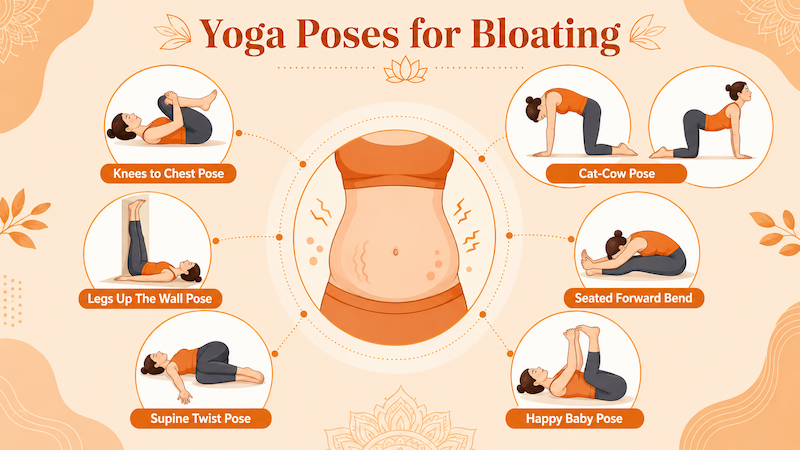
Yoga for Bloating: 8 Gentle Poses to Relieve Gas
Yoga for bloating relief: try 8 gentle poses to ease trapped gas and stomach discomfort. Beginner-friendly guidance from expert Indian yoga teachers.


Yin vs Restorative Yoga: What’s the Difference?
Yin vs Restorative Yoga explained. Compare intensity, hold times, props, and benefits. Learn the key differences and choose the right slow yoga style for you.
.webp)
Detox Yoga Sequence: Refresh and Renew After Holiday Indulgence
Refresh and renew after holiday indulgence with this 12-pose detox yoga sequence. Gentle twists and mindful stretches for digestion, circulation, and energy.


