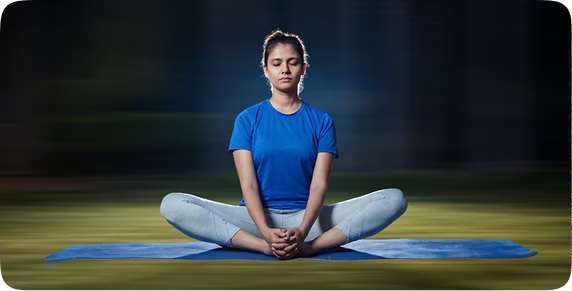
%20(7).webp)
Do you feel emotionally heavy, even when nothing specific is wrong?
Your body may be holding more tension than you realize.
Emotional stress doesn’t always show up as obvious anxiety or sadness. Sometimes, it feels like a tight chest, shallow breathing, slouched shoulders, or a sense of being closed off, especially during long, demanding weeks.
Research shows that emotional stress often manifests physically in the body, particularly in the chest, shoulders, and upper back. Over time, this tension can affect how deeply you breathe, how you carry yourself, and how connected you feel — both to yourself and to others.
This is where heart-opening yoga for emotional wellness can help.
Rather than forcing emotions or pushing your body, heart-opening yoga focuses on gentle movements that create space in the chest, improve breathing, and signal safety to the nervous system. The goal isn’t to “fix” how you feel, but support emotional balance by helping your body open up and releasing tension at its own pace.
In this guide, you’ll learn how emotions are stored in the body, how heart-opening yoga supports emotional well-being, and which gentle poses can help you feel lighter and more open without strain or pressure.
When you experience stress, worry, or emotional overload, your body responds before your mind has time to process it. This response is protective — but when it happens repeatedly, tension can start to linger.
Persistent emotional stress can manifest as stress and tension, especially around the chest, shoulders, neck, and upper back. Over time, this can lead to a protective posture — hunching forward, tightening the jaw, and breathing more shallowly — often without realizing it. When these patterns persist, they can:
This means that the body doesn’t separate emotional stress from physical stress. Both are processed through the nervous system, which means emotional experiences can be felt physically, even when you can’t clearly name the emotion.
This is why addressing emotional wellness through the body can be so effective. By gently releasing tension and encouraging fuller breathing, you help your nervous system recognize that it’s safe to let its guard down.
Heart-opening yoga works with this natural connection between body and emotions — not by forcing release, but by creating space where it’s needed most.
[inline-CTA-1]
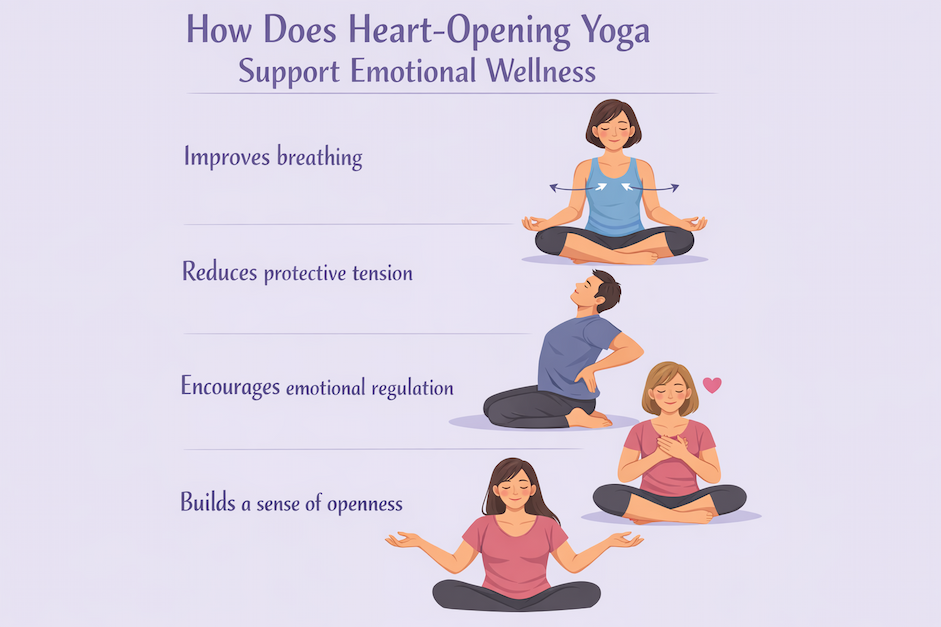
Heart-opening yoga is often misunderstood. It’s not about pushing into deep backbends or forcing emotional release. In fact, the most effective heart-opening practices are gentle, slow, and supportive.
Research shows that posture and breathing patterns influence emotional state. When the chest is tight and the breath is shallow, the body stays in a protective mode. When the chest softens and breathing deepens, the nervous system receives signals of safety.
Heart-opening yoga supports emotional wellness in a few key ways:
Studies indicate that practices combining movement and breath help regulate stress responses, which is essential for emotional balance.
Learn yoga and breathing exercises to regulate stress in this detailed guide!
The goal of heart-opening yoga isn’t to change how you feel in the moment. It’s to create conditions where emotional wellness can naturally unfold without pressure or expectation.
[GC]
These heart-opening poses are designed to create space without strain. You don’t need flexibility or experience, and you should never feel forced into a shape.
Move slowly, breathe steadily, and stop anytime something feels overwhelming.
This simple pose opens the front of the body and invites deeper breathing, helping the nervous system soften.
Time: 1 minute
Best for: Emotional heaviness, shallow breathing
Where: Chair or floor
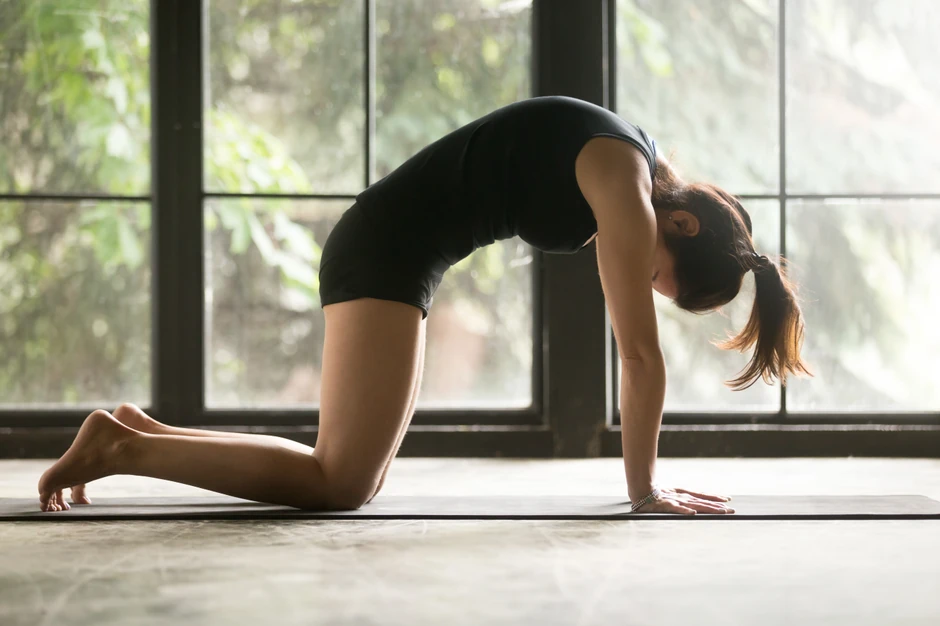
Cat–Cow helps emotions move through the body by gently mobilizing the spine and chest.
Time: 1–2 minutes
Best for: Emotional tension stored in the spine
Where: Mat, floor, or chair
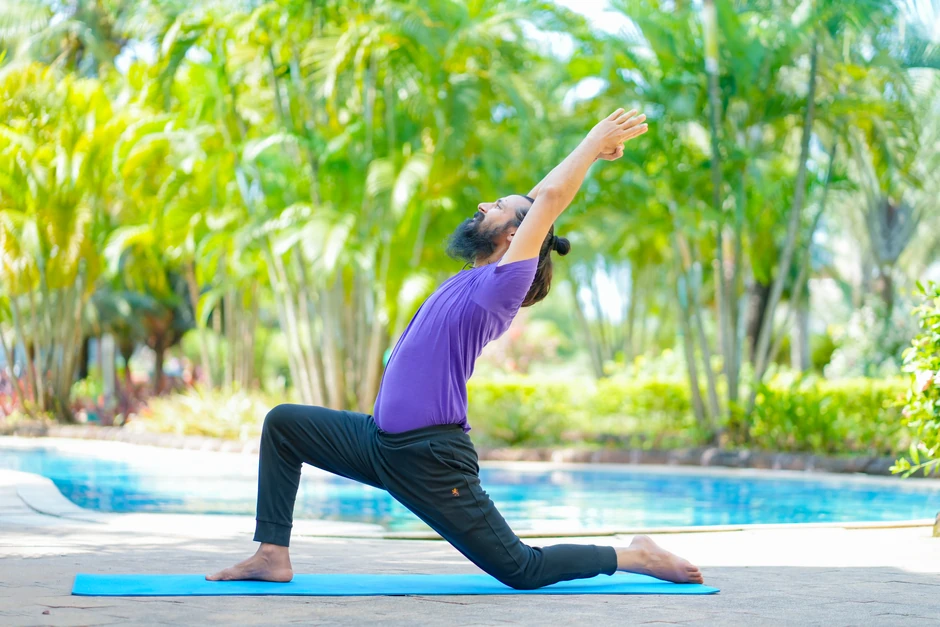
Opening the hips and chest together helps release emotional holding patterns linked to stress.
Time: 30–60 seconds each side
Best for: Stress held in the chest and hips
Where: Floor or mat
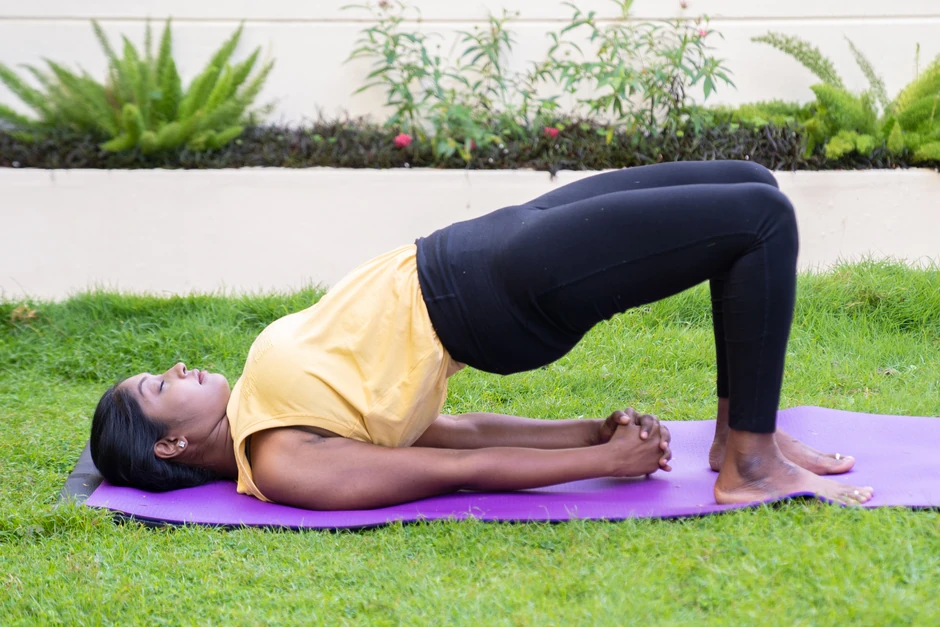
This supported pose opens the chest without effort, allowing the body to relax while gently encouraging emotional openness.
Time: 1–2 minutes
Best for: Gentle emotional release, end-of-day unwinding
Where: Floor with a cushion or block
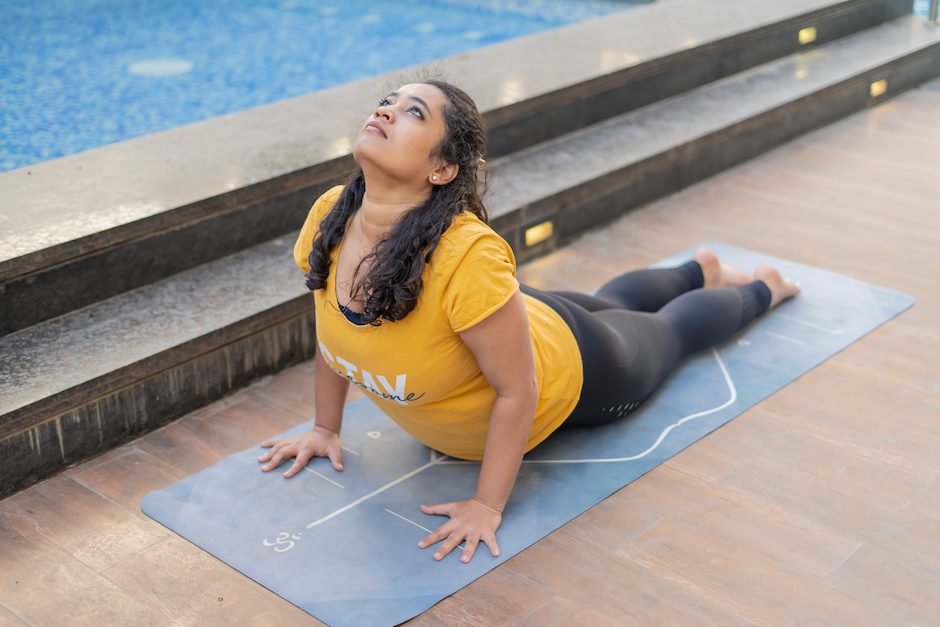
A small lift is enough to stimulate chest opening and breathing without overwhelming the nervous system.
Time: 30 seconds
Best for: Releasing chest tension without strain
Where: Floor or mat
_optimized.webp)
This pose balances openness with grounding, helping emotions settle gently.
Time: 1–2 minutes
Best for: Integration and emotional safety
Where: Floor with a pillow or bolster
These poses can be practiced together in 5–10 minutes or individually when emotional stress feels heavy.
[inline-CTA-2]
Knowing when to use heart-opening yoga poses can make them feel more supportive and less forced.
Heart-opening yoga works best when you listen to your body and emotions, rather than pushing for a specific result.
Heart-opening yoga isn’t about forcing emotions or pushing your body into deep shapes. It’s about creating a little more space — in the chest, in the breath, and in how you meet yourself.
Moving slowly matters. When you stay gentle and listen to your body, your nervous system feels safer and emotional balance becomes easier to access. Some days the effects may feel subtle. Other days you may notice more release. Both are completely normal.
Heart-opening yoga works best when it supports you rather than demands something from you. Even a few mindful movements can help soften tension, encourage deeper breathing, and bring a sense of lightness over time.
If you’d like personalized support, MyYogaTeacher’s certified Indian yoga instructors offer 1-on-1 online sessions designed for your specific needs. Start your free trial today!

Heart-opening yoga focuses on gentle poses that open the chest, shoulders, and upper back while encouraging deeper breathing. These movements help release physical tension and support emotional balance by creating a sense of openness and ease in the body.
Yes. Research shows that emotional stress often shows up physically, especially in the chest and shoulders. Heart-opening yoga can help reduce this tension, improve breathing, and support emotional regulation without forcing emotional release.
Heart-opening yoga doesn’t force emotional release. Instead, it creates space for emotions to settle naturally. Some people may feel lighter or more relaxed, while others may simply notice deeper breathing or reduced tension — all of which are valid outcomes.
Yes. Gentle heart-opening yoga is beginner-friendly when practiced slowly and mindfully. Using props, keeping movements small, and stopping when something feels uncomfortable helps ensure emotional and physical safety.
Heart-opening yoga can be helpful:
Even 5–10 minutes can make a difference.




Receive personalized guidance tailored to your unique fitness goals, live with a dedicated coach—no credit card required.

.webp)
Holiday stress is real. These 5-minute yoga poses and routines provide instant relief - no mat or equipment needed. Science-backed methods for a busy December.

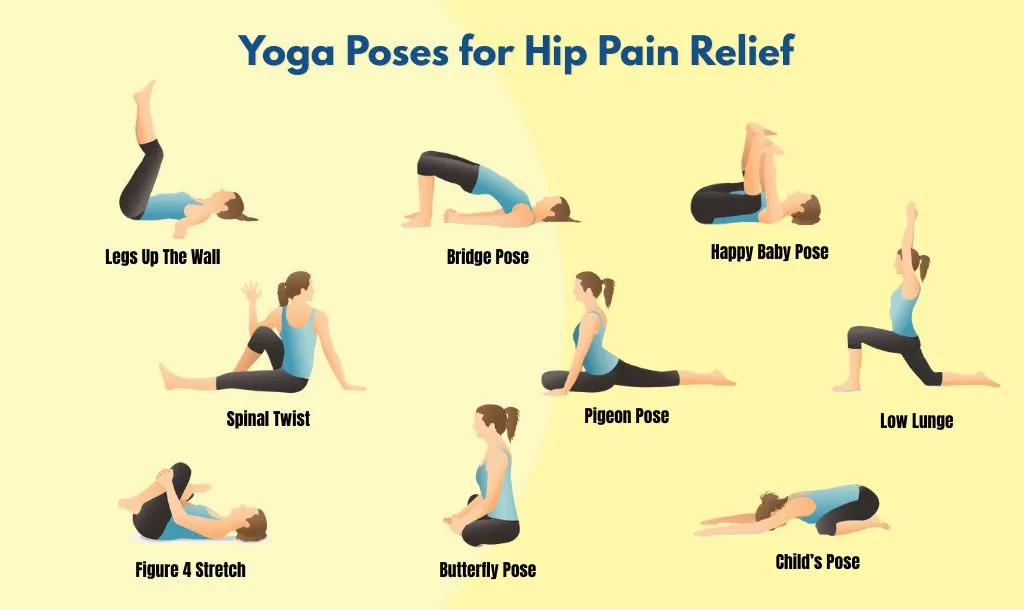
Discover 9 gentle yoga poses for hip pain relief. Expert-guided stretches for arthritis, bursitis, and joint stiffness. Safe, natural healing starts here!
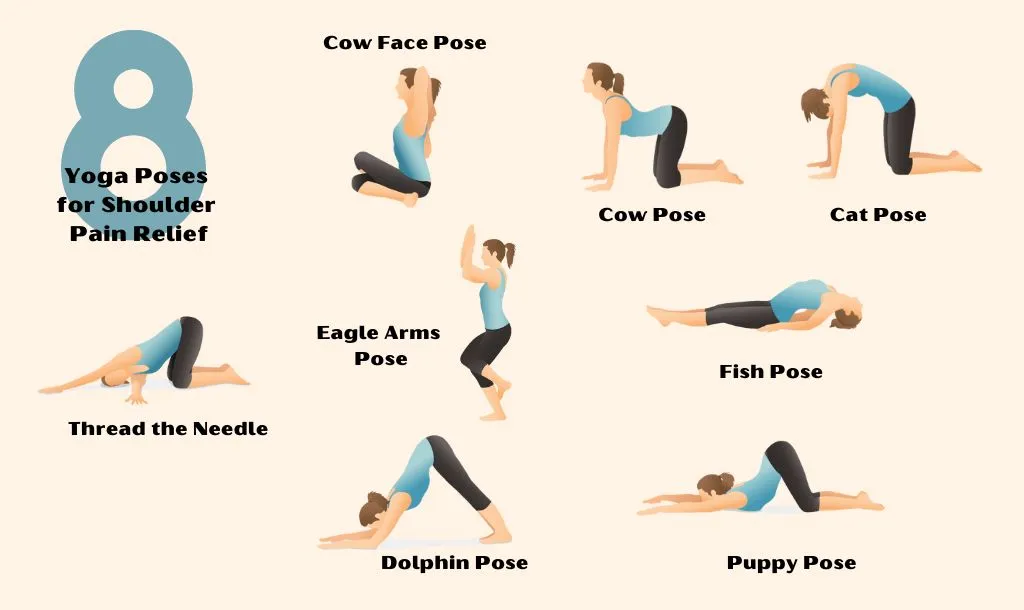
Discover 8 gentle yoga poses for shoulder pain relief. Expert-guided stretches for rotator cuff, shoulder blade pain, and tension. Start healing today!


© Copyright 2025 MyYogaTeacher Inc