


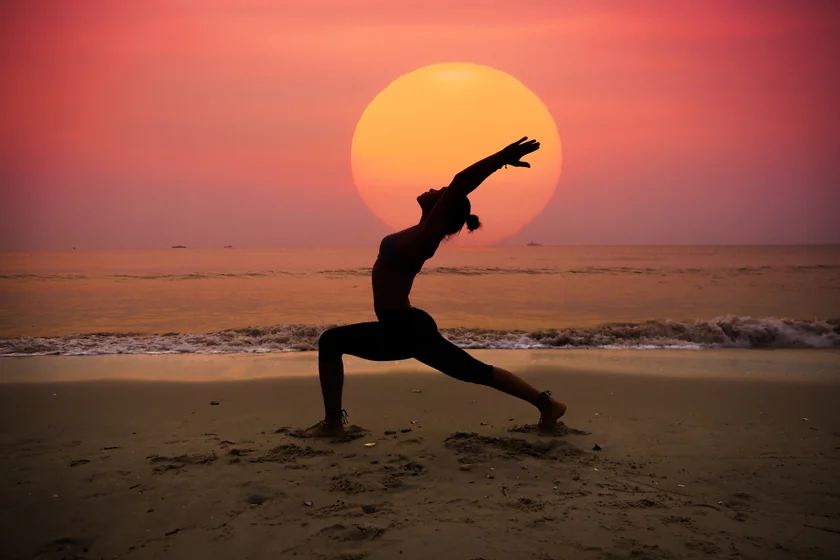
A sun salutation, or Surya Namaskar in Sanskrit, is a flowing sequence of yoga poses that honors the sun as the source of warmth, vitality, and life. This foundational practice links breath with movement to gently warm your body, clear your mind, and prepare you for a deeper yoga practice. Traditionally practiced at sunrise, sun salutations are now embraced worldwide as a moving meditation and a simple morning ritual that helps you begin the day with focus and intention.
For many beginners, this sequence is the first step toward understanding yoga as a mindful and accessible practice that supports both physical and mental well-being.
In this guide, you’ll learn what sun salutations are, why they’re meaningful, and how they became one of the most universal elements of yoga. You’ll also get a simple, beginner-friendly overview of the flow, so you can understand how the sequence works.
A sun salutation is a flowing sequence of 12 yoga poses, each linked with an inhale or exhale to create a smooth, steady rhythm. The practice gently warms the body, stretches major muscle groups, builds steady strength, and invites a moment of mindful focus—all while honoring the sun as a symbol of energy and life. The practice serves as both a standalone workout and a warm-up for longer yoga sessions.
In Sanskrit, this sequence is called Surya Namaskar—with Surya meaning “sun” and Namaskar meaning “greeting” or “salutation.” Simply put, it translates to “saluting the sun.”
Sun salutations combine several important elements of yoga into a single, short practice:
Other versions of Sun Salutations include:
If you'd like detailed, pose-by-pose steps, you can explore our complete Surya Namaskar guide, which breaks down every movement with clear alignment cues.
Sun salutations trace their roots to ancient India, where the sun has long been honored as a symbol of light, clarity, and life. In early Vedic culture, people greeted the rising sun each morning to express gratitude for warmth and energy. Over time, this simple ritual evolved into the flowing sequence we now call Surya Namaskar.
In yoga traditions, the sun represents:
When you practice a sun salutation, you’re acknowledging these qualities. It’s not about worship, but about appreciating nature, connecting with your breath, and arriving in the present moment.
In yogic philosophy, light is often linked with knowledge. Because the sun brings light each day, it was seen as a kind of guide or “guru,” offering clarity and direction. This is why some practitioners view sun salutations as a way of honoring both the outer sun and the inner sense of awareness within ourselves.
However, you don’t need to approach sun salutations in a spiritual or religious way. Many people practice them simply because:
The symbolism is available if it resonates with you, but it’s never required to benefit from the practice.

[inline-CTA-1]
Sun salutations are loved by beginners and experienced yogis alike because they offer a complete, full-body practice in just a few minutes. Below is a simple, beginner-friendly overview of the benefits:
Sun salutations move your entire body through a natural arc of bending, lengthening, strengthening, and opening. With each round, you gently activate major muscle groups while improving circulation.
Here’s what your body gains from the flow:
Because the sequence is low-impact and adaptable, it’s accessible to people of all fitness levels. You don’t need to be flexible or strong to begin, as sun salutations help you develop those qualities naturally.
One of the most powerful benefits of sun salutations is their calming effect on the mind. As movement and breath link together, your focus naturally shifts inward and in the present moment.
Practitioners often notice:
This is why many people practice sun salutations first thing in the morning—it sets the tone for a calmer, clearer, more intentional day.
One of the reasons sun salutations are so universal is that they fit into almost any lifestyle.
For beginners, even 3 rounds per day can be enough to feel a noticeable difference in energy, mobility, and mental clarity.
If you’re open to the traditional side of yoga, sun salutations are believed to support the flow of prana (life force energy) and gently awaken the body’s natural vitality.
But you don’t need to understand chakras or energy systems to feel the effects. Most people simply notice:
These subtle shifts can make the practice feel uplifting, even if you approach it in a completely non-spiritual way.
Want to understand chakras better? Read our detailed guide on The 7 Chakras here!
The 12 basic movements in a sun salutation are:
1. Prayer Pose
2. Upward Salute
3. Forward Fold
4. Halfway Lift
5. Low Lunge
6. Plank Pose
7. Knees-Chest-Chin
8. Cobra/Upward Dog
9. Downward Dog
10. Low Lunge (opposite leg)
11. Forward Fold
12. Return to standing
Here’s a simple overview of how the sequence flows so you can visualize it clearly. If you’d like step-by-step instructions or alignment cues, you can explore our complete Surya Namaskar guide, which walks you through every pose in detail.
While sun salutations vary slightly across traditions, the classical sequence is commonly described in 12 distinct steps. Together, they create one smooth, continuous flow.
1. Prayer Pose (Pranamasana): You begin standing tall with your hands at your heart. This helps you center your breath and prepare for the sequence.
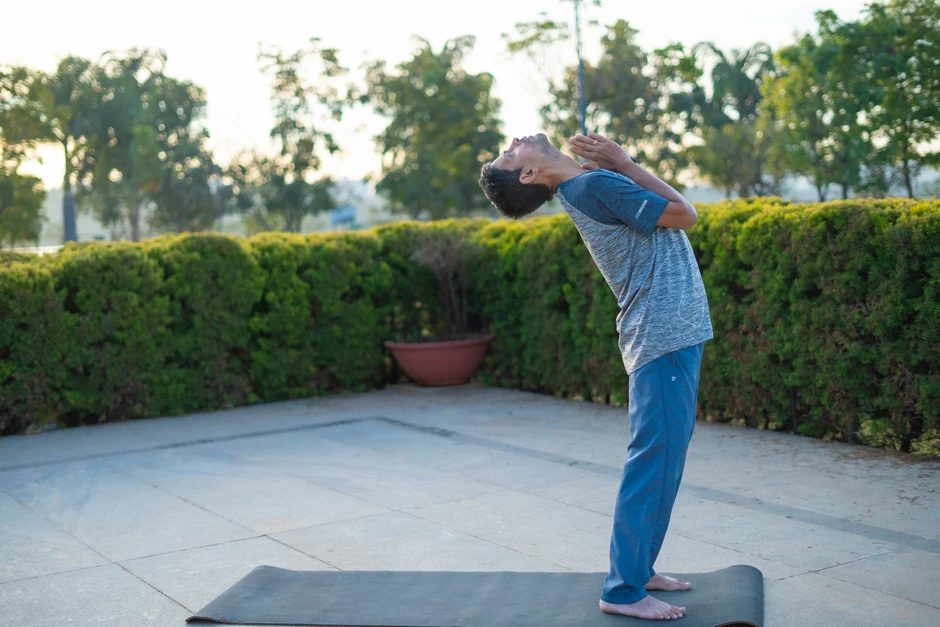
2. Upward Salute (Urdhva Hastasana): Arms sweep up as the chest opens toward the sky.
This lengthens the spine and expands the breath.
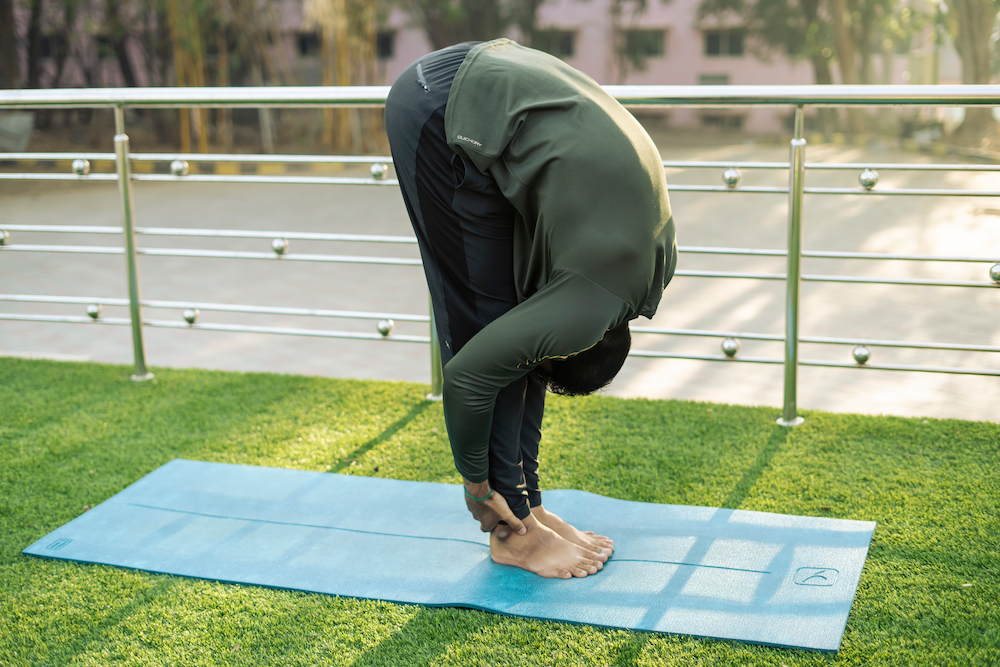
3. Forward Fold (Uttanasana): You hinge at the hips, allowing your head and arms to release down. This movement stretches the back, hamstrings, and entire backside of the body.
4. Halfway Lift / Equestrian Prep: You lengthen your spine as you lift partway up or step one leg back. This creates space in the spine and prepares for the transition.
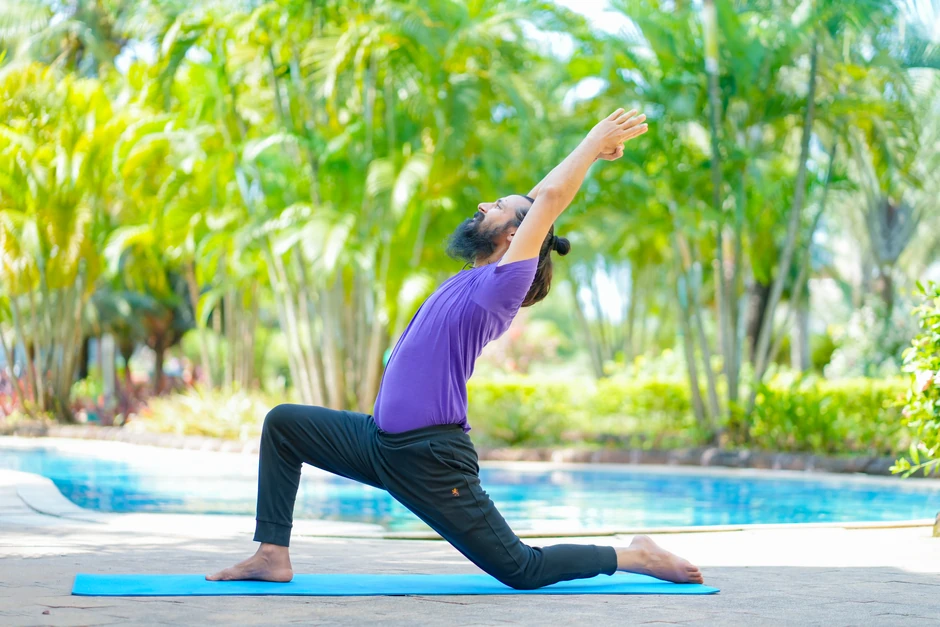
5. Low Lunge (Ashwa Sanchalanasana): One leg steps back into a gentle lunge with the chest forward. This helps open the hips and stabilizes the lower body.
6. Plank Pose (Phalakasana): Both legs extend back into a strong, straight line. This builds core and upper-body strength.
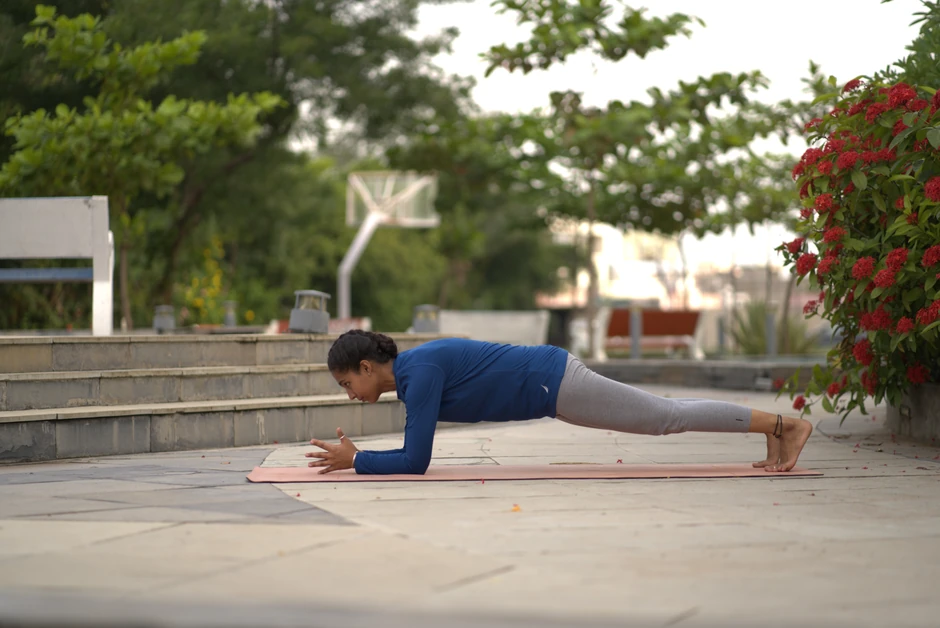
7. Knees–Chest–Chin / Low Plank: You lower toward the ground with control. It strengthens the arms and engages the back body.
8. Cobra or Upward-Facing Dog: The chest lifts into a gentle or deeper backbend. It opens the front body and energizes the spine.
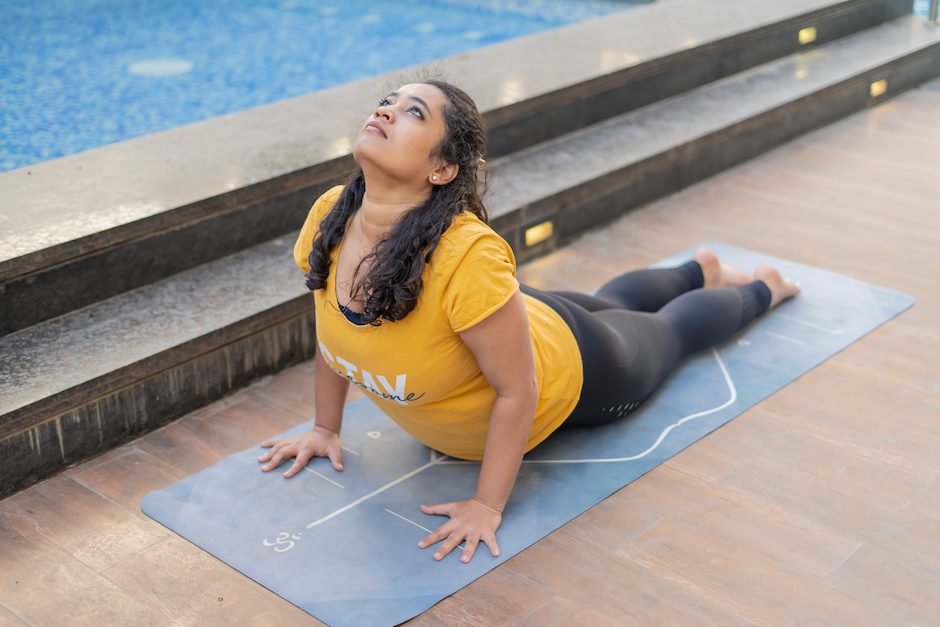
9. Downward-Facing Dog (Adho Mukha Svanasana): Your hips lift back and up into an inverted V. This stretches the whole body and provides a moment of pause.
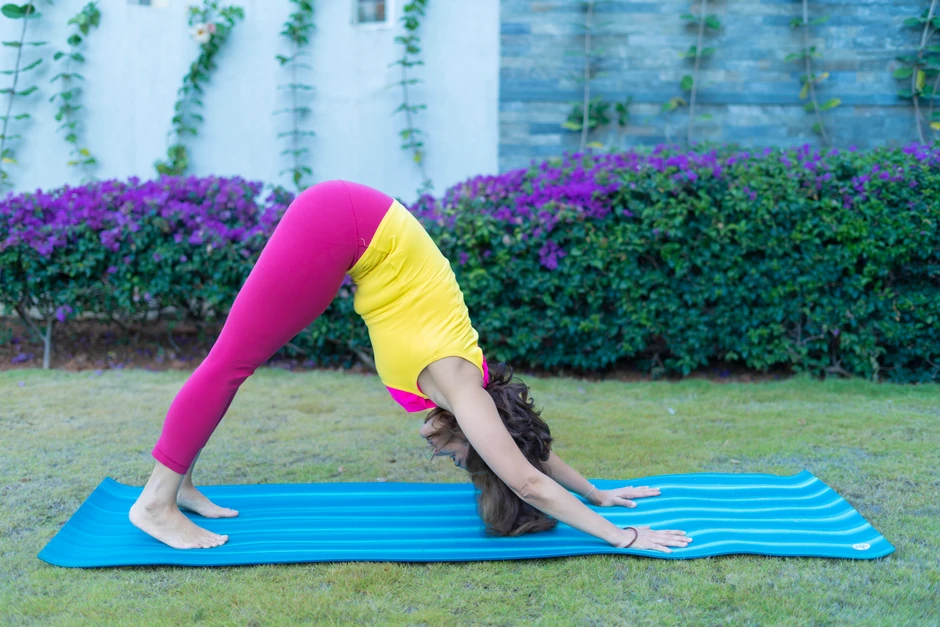
10. Low Lunge (Opposite Leg): You step one foot forward between the hands. It reopens the hips and transitions you toward standing.
11. Forward Fold (Uttanasana): You return to a soft fold over the legs. It resets the spine and prepares you to rise.
12. Upward Salute → Prayer Pose: You rise with an inhale, sweep the arms up, and return hands to heart. This completes the cycle with balance and intention.
One complete cycle contains all 12 steps and takes just a few minutes to complete. Each round feels like a small journey—beginning, expanding, grounding, and returning with a sense of renewed energy.
Breath is the heart of sun salutations.
This rhythm helps calm your nervous system and creates a natural meditative quality.
A certified yoga teacher can guide you through timing, modifications, and building a daily sun salutation ritual that feels natural and sustainable.
[inline-CTA-2]
One of the best things about sun salutations is that you can practice them anytime. Different times of day offer different benefits, so you can choose what feels best for your body and lifestyle.
Practicing in the morning—especially near sunrise—can help you:
A few rounds in the middle of the day can:
Gentle evening sun salutations can:
There’s no “best” time—what matters is consistency. Even 3 rounds a day, practiced whenever, can make a meaningful difference.
The number of rounds you practice each day depends on your experience level, energy, and available time. Here’s a simple guide to help you build a routine that feels sustainable.
| Practice Type | Rounds | Time Needed | What to Focus On | Notes |
|---|---|---|---|---|
| Beginners | 3–5 rounds | 10–15 minutes | Move slowly, sync breath with movement, and use modifications as needed | Builds confidence and helps you learn the flow safely |
| Steady Daily Practice | 6–12 rounds | 15–30 minutes | Choose a comfortable pace, deepen breath, smooth transitions | Balanced routine for strength, flexibility, and mindfulness |
| Busy-Day Routine | 1–3 rounds | 3–8 minutes | Keep it simple and intentional | Even a short practice offers a refreshing reset |
| Special Practices (Advanced) | 108 rounds | Varies widely | Slow, steady endurance; meditative repetition | Traditional for seasonal shifts; not recommended for beginners |
Most people complete one round in about:
So even three rounds can be done in under ten minutes.
All you need is:
You don’t need to be flexible, strong, or experienced to begin. Sun salutations are adaptable, beginner-friendly, and start to feel natural surprisingly quickly. Here’s a simple, supportive way to get started.
For your first week, try:
This takes about 10 minutes and is more than enough to begin feeling the benefits.
As you grow comfortable, you can gradually add more rounds—but consistency matters far more than quantity.
Modifications make the sequence safer and more enjoyable. Try:
These adjustments help the flow meet you where you are.
Sun salutations should feel energizing, not painful. Pause and adjust if you feel discomfort in:
If you’d like support as you begin, a little guidance can make the sequence feel much easier. With MyYogaTeacher, you can learn sun salutations step-by-step in a live 1-on-1 session with a certified Indian instructor who understands how to tailor the practice to your body, your pace, and your comfort level.
Book a free session and learn sun salutations with gentle, personalized guidance.

Sun Salutation A (Surya Namaskar A) is the simplest version, usually made up of 8–10 movements. It focuses on basic forward folds, planks, gentle backbends, and Downward Dog.
Sun Salutation B adds a few extra poses—most commonly Chair Pose and Warrior I—which makes the sequence longer and slightly more challenging.
Beginners should start with Sun Salutation A to learn the basic flow before exploring B.
For beginners, 3–5 rounds a day is a great place to start. This usually takes 10–15 minutes and is enough to feel noticeable benefits.
More experienced practitioners often do 6–12 rounds, depending on their time, energy, and goals.
Consistency matters far more than doing a large number of rounds.
Not at all. Sun salutations are one of the best ways to gain flexibility. You can bend your knees, modify poses, slow down, or shorten your stance.
With regular practice, your flexibility improves naturally—often faster than expected.
Absolutely. Sun salutations are beginner-friendly and highly adaptable. If you're a complete beginner, it’s best to:
A few days of practice is usually all it takes for the flow to feel more familiar.
If you’re a complete beginner, it’s best to practice with 1-on-1 guidance. Book today!
Sun salutations have ancient cultural roots, but you do not need to be spiritual or religious to practice them.
Many people use them simply as:
The sequence is accessible to people of all beliefs.
Even a few minutes a day can create meaningful shifts.


Receive personalized guidance tailored to your unique fitness goals, live with a dedicated coach—no credit card required.

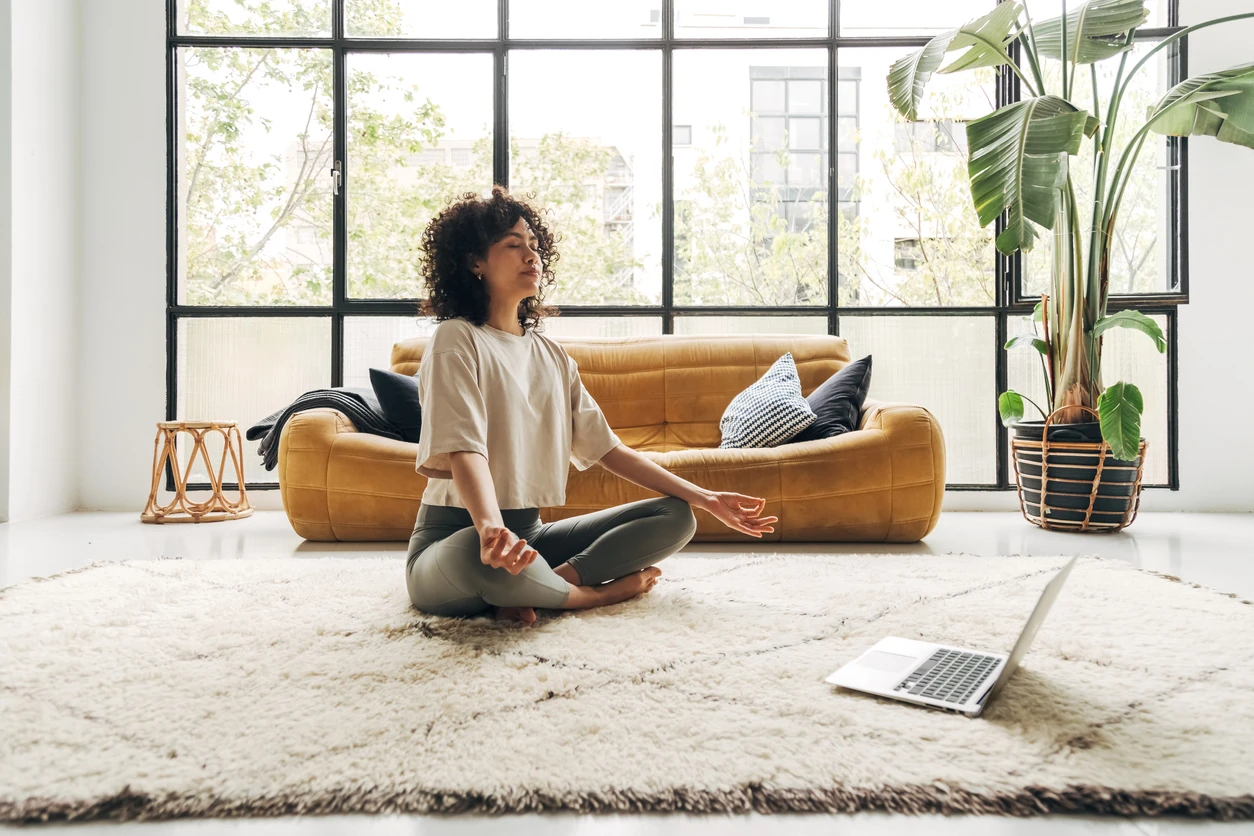
Start yoga at home with a simple setup, a 15-minute beginner routine, and easier options for stiff or uncertain days. Book a free live 1-on-1 session.

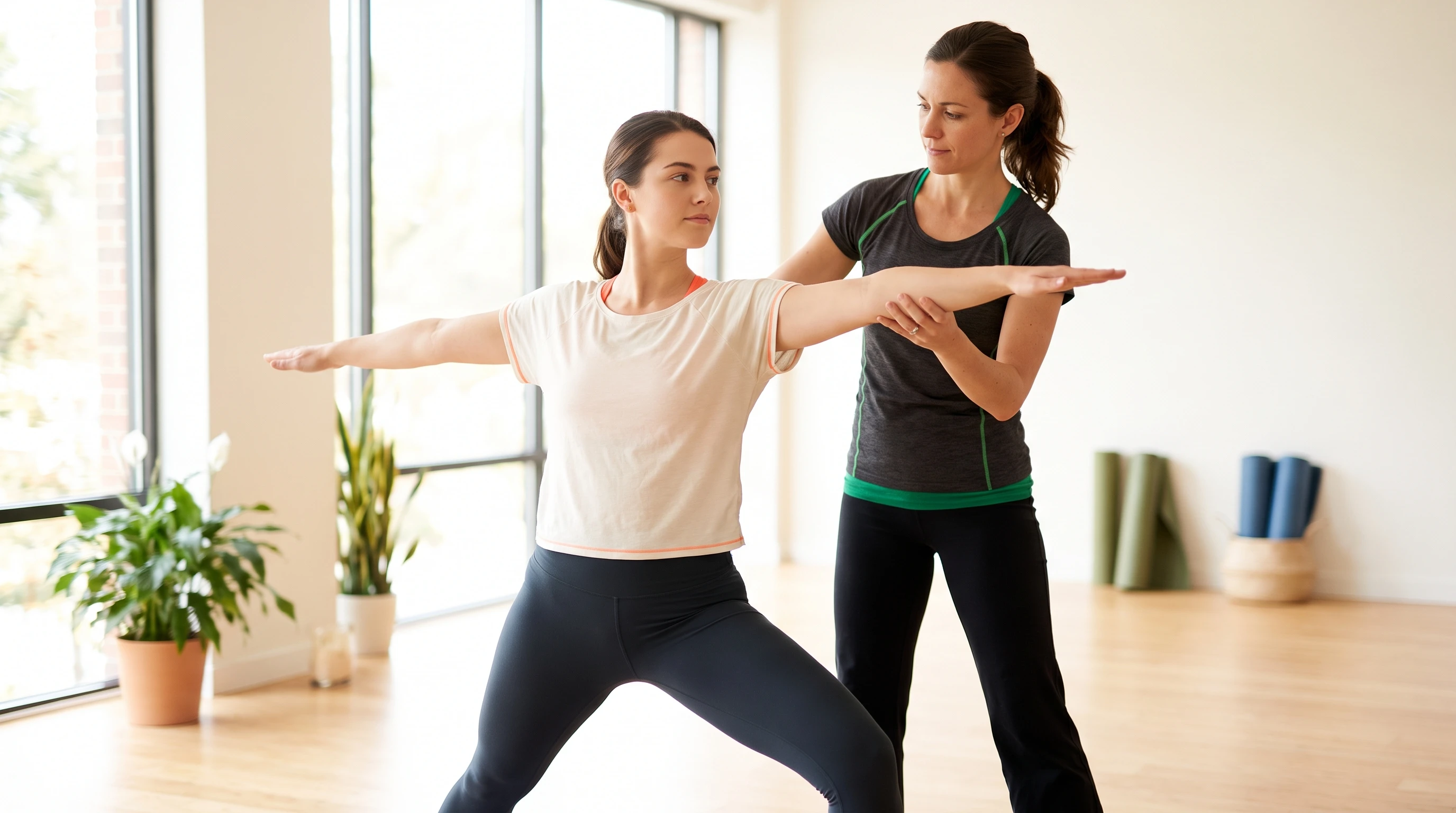
New to yoga? Learn how to start, what to expect in your first class, which style fits you, and why flexibility isn't a must. Try a free 1-on-1 session.
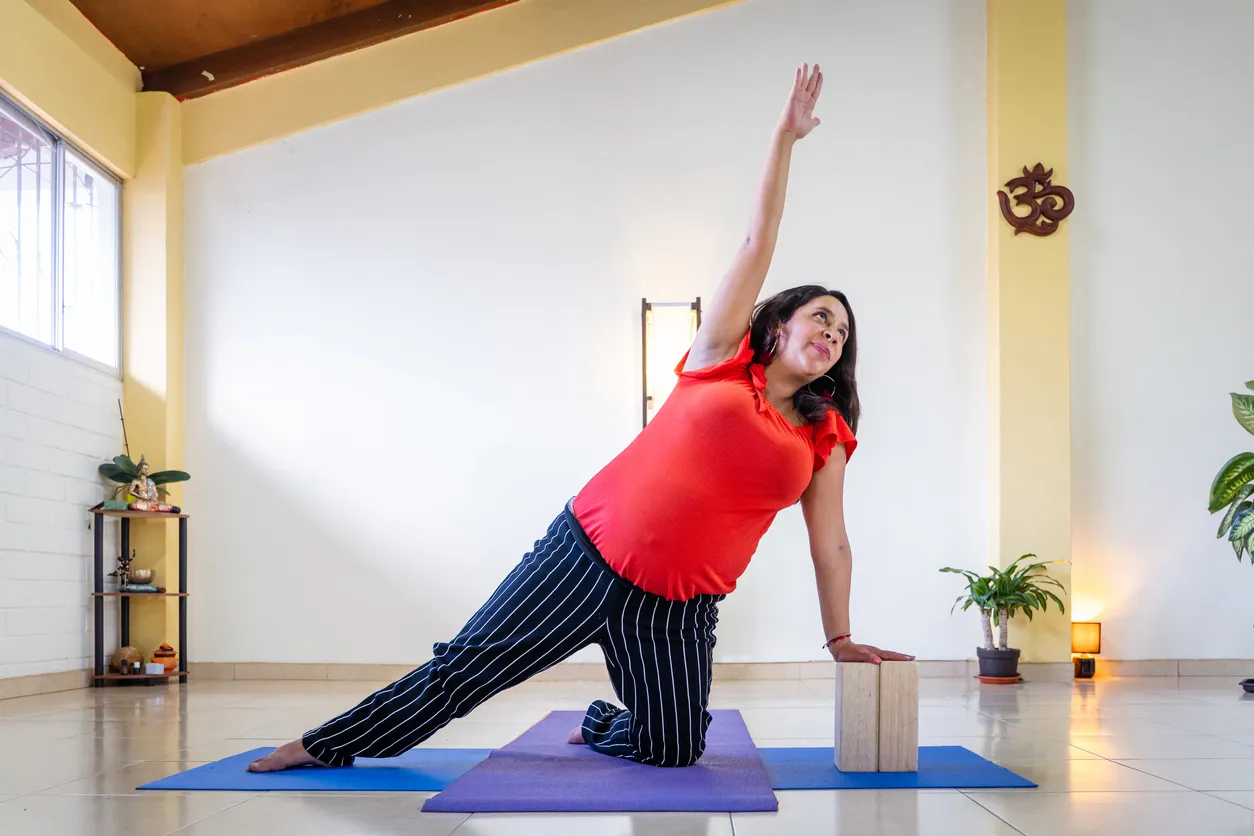
Use a yoga block to deepen 10 essential stretches for your back, hips, chest, and legs. Step-by-step poses for beginners and experienced yogis alike.


© Copyright 2025 MyYogaTeacher Inc


