


What is Restorative Yoga?
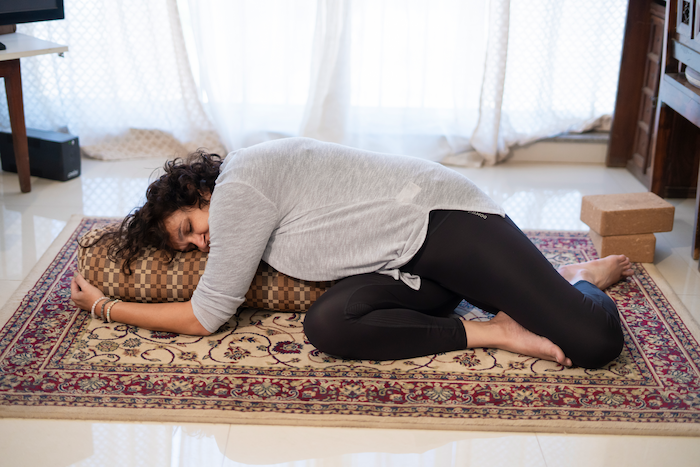
Restorative yoga is a deeply restful style of yoga that uses props to support the body in complete stillness. Rooted in the Iyengar tradition and popularized by Judith Hanson Lasater, it is designed to help the body relax without effort or strain. Unlike other yoga styles, Restorative asks for very little muscular work — bolsters, blankets, and blocks support you fully. It is a good fit for anyone looking for deep rest, stress relief, recovery, or a gentler way to practice yoga.
At a Glance
Key Benefits
Restorative yoga is less about fitness and more about deep rest. Its benefits come from stillness, support, and giving the body space to relax.
- Helps calm the nervous system and bring the body into a deeper state of rest.
- Supports recovery from stress, burnout, illness, or long periods of fatigue.
- Relieves built-up muscle tension without asking the body to work harder.
- May improve sleep by helping the body settle into relaxation more easily.
- Can reduce feelings of anxiety and overwhelm through quiet, supported stillness.
- Feels accessible even for people with limited mobility, pain, or low energy.
- Offers a rare kind of rest that many people do not get in daily life.
Yoga is complementary to, not a replacement for, medical treatment. Consult your doctor if you have a pre-existing condition.
Key Characteristics & Elements
Restorative yoga is different from other styles because the goal is not to stretch deeper or move more. It is designed to help the body let go completely through stillness, support, and rest.
- Complete Passive Stillness: In Restorative yoga, the body is not asked to work hard in the pose. Once you are set up, the aim is to release effort as fully as possible and let the body rest in stillness.
- Props as the Foundation: Bolsters, blankets, blocks, and straps are not optional extras in Restorative yoga — they are the practice itself. These props support the body so fully that you do not need strength, flexibility, or strain to stay in the pose. For more pose-level detail, see our guide to Restorative Yoga with Props.
- Nervous System Recovery: The long, fully supported holds in Restorative yoga help the body shift out of stress mode and into a calmer state. This is one reason the practice is often used to support rest, recovery, and emotional regulation.
- Therapeutic by Design: Restorative yoga is especially well-suited to people dealing with stress, fatigue, burnout, anxiety, or recovery from illness or injury. Rather than adapting an active style to feel gentler, Restorative is built from the ground up to support healing and rest.
What to Expect in a Class
A Restorative yoga class begins slowly, often with the teacher helping you set up the first pose using bolsters, blankets, blocks, or straps. The setup is an important part of the practice because the goal is to support the body so fully that you can rest without effort.
The room is usually quiet and calm, and some teachers may use dim lighting, soft music, or eye pillows to help you settle more deeply.
Once you are in a pose, you stay there for several minutes with very little movement. A full class usually includes only a small number of poses, with time in between to reset the props and transition gently.
Most classes end with a long Savasana, and afterward people often feel heavy, warm, and deeply rested. It is also completely normal to drift toward sleep during class.
Tell your teacher before class if you have:
- Severe acid reflux
- Late-stage pregnancy
- Recent abdominal surgery
Join a Live Restorative Yoga Group Class for Free
Restorative Yoga vs. Yin Yoga
If you need complete rest, full support, and a practice focused on recovery, Restorative is usually the better fit.
If you want a deeper stretch and longer holds that work into connective tissue, Yin may suit you better.
Read our full Yin vs Restorative comparison guide here.
Who it’s for
- Beginner/Intermediate/Advanced yogis
- Anyone recovering from illness or injury
- Anyone seeking relief from tension, stress, or anxiety
Who it’s not for
- Anyone looking for a fast-paced, athletic yoga routine
How it will help you
- Gently relieves muscle tension
- Relaxes the body and mind
- Relieves stress and pain
- Balances the nervous system
- Soothes aching joints and muscles
How it will not help you
- Anyone looking for a fast-paced, athletic yoga routine
Enjoy a Free 1-on-1 Session with a Coach!
Receive personalized guidance tailored to your unique fitness goals, live with a dedicated coach—no credit card required.
FAQs About Restorative Yoga

Yes! Restorative yoga is one of the gentlest yoga styles for people dealing with anxiety, overwhelm, or chronic stress. The long supported holds help the body slow down and settle into a calmer state.
A 1-on-1 session can be especially helpful if you want a quieter, more personalized starting point.
Both are slow and prop-supported, but they are not the same. Yin creates a mild, sustained stretch to work into connective tissue, while Restorative is designed for complete ease and support with little to no sensation.
Restorative is about rest first; Yin is about release through longer holds.
Ideally, yes! Props are a core part of Restorative yoga, not just an extra. Bolsters, blankets, and blocks help support the body so you can rest without effort.
If you are practicing at home, a teacher can also help you substitute with pillows, folded blankets, or books where needed.
Restorative yoga can be practiced several times a week, and even daily for some people, because it does not place much physical demand on the body. Even one session a week can make a noticeable difference in stress levels, sleep quality, and overall tension.
A typical Restorative class includes only a few poses, each held for several minutes with full prop support. The focus is not on doing more, but on helping the body settle more deeply with each shape.
Restorative Yoga Articles

Yin vs Restorative Yoga: What’s the Difference?
Yin vs Restorative Yoga explained. Compare intensity, hold times, props, and benefits. Learn the key differences and choose the right slow yoga style for you.

.webp)
Detox Yoga Sequence: Refresh and Renew After Holiday Indulgence
Refresh and renew after holiday indulgence with this 12-pose detox yoga sequence. Gentle twists and mindful stretches for digestion, circulation, and energy.
.webp)
Yoga for Period Cramps: 7 Gentle Poses for Natural Menstrual Pain Relief
Learn 7 gentle yoga poses for period cramps that ease pain naturally. Get step-by-step instructions and discover how yoga helps relieve menstrual discomfort.


