


You’re tired, but your mind won’t slow down. Maybe you fall asleep late, wake up in the middle of the night, or get eight hours of sleep and still feel unrested the next morning.
Gentle yoga for better sleep can help your body shift from alert mode into rest mode through slow breathing, supported stretches, and stillness. Instead of tiring you out, the right bedtime practice can help calm your nervous system naturally.
In this guide, you’ll learn eight yoga poses for sleep, one simple yoga mudra for relaxation, and a 10-minute bedtime yoga sequence you can start tonight.
Yoga for better sleep works by activating the parasympathetic nervous system — the body’s rest-and-digest state — which helps slow your breathing, release muscle tension, and signal the body that it is safe to rest. Research suggests that slow breathing practices are linked with increased vagal activity, a key marker of the body shifting toward calm rather than alertness.
When you move slowly through gentle poses, your body begins to shift out of stress and into a calmer, more relaxed state. Forward folds, hip openers, twists, and supported resting poses reduce physical tension while your breath gives your mind something steady to follow. This combination can help quiet the restlessness that often keeps people awake.
Research has also found that yoga ranked highly among exercise types for improving sleep efficiency, sleep duration, sleep disorders, and daytime dysfunction in middle-aged and older adults. While that doesn’t make yoga a cure for every sleep problem, it does make it a practical, natural tool to add to your bedtime routine.
[inline-CTA-1]
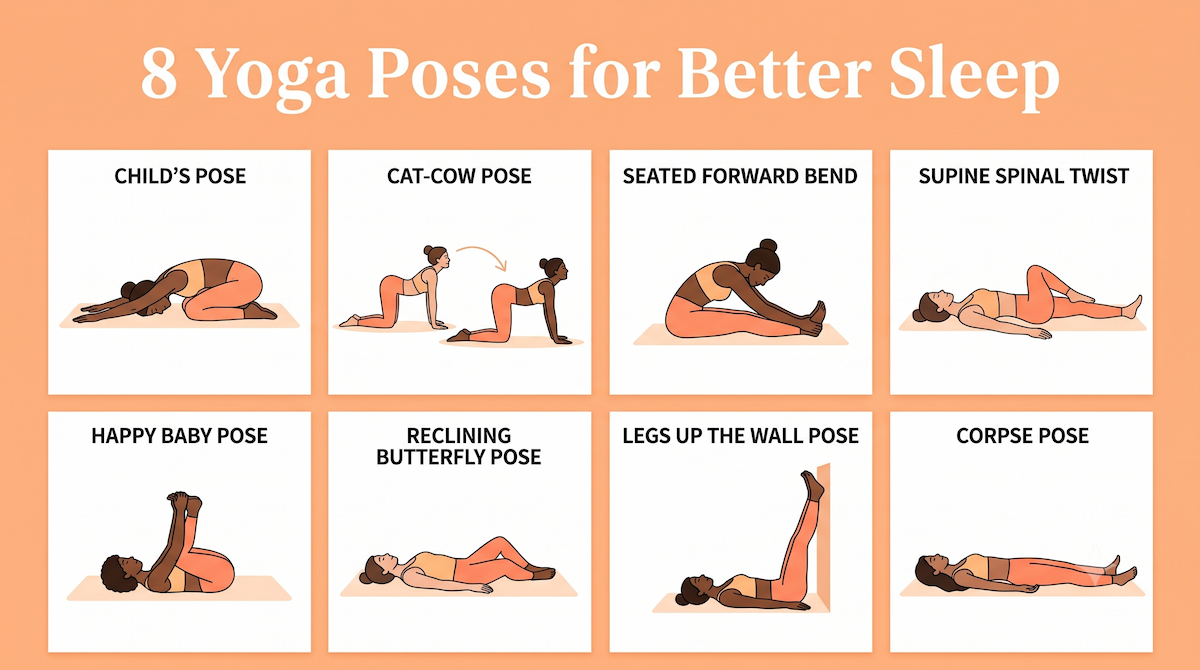
The best yoga poses for sleep are gentle, slow, and easy to hold without effort. Move through these poses with relaxed breathing, and avoid pushing your body into deep stretches before bed. These include:
_optimized.webp)
This pose helps release tension from the lower back, hips, and shoulders.
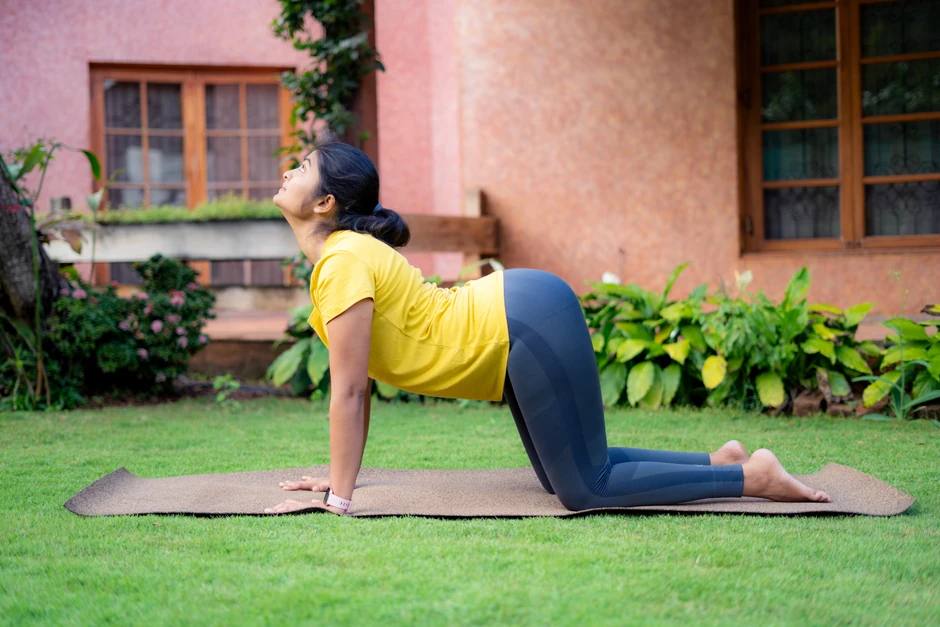
This pose gently loosens the spine and helps your breath slow down.
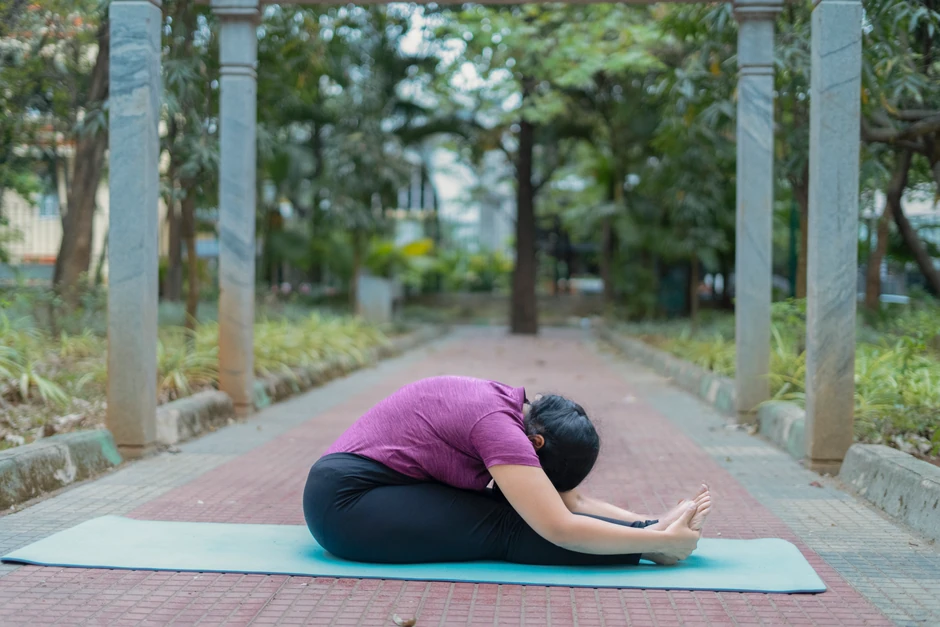
This pose helps calm the body while stretching the back and hamstrings.
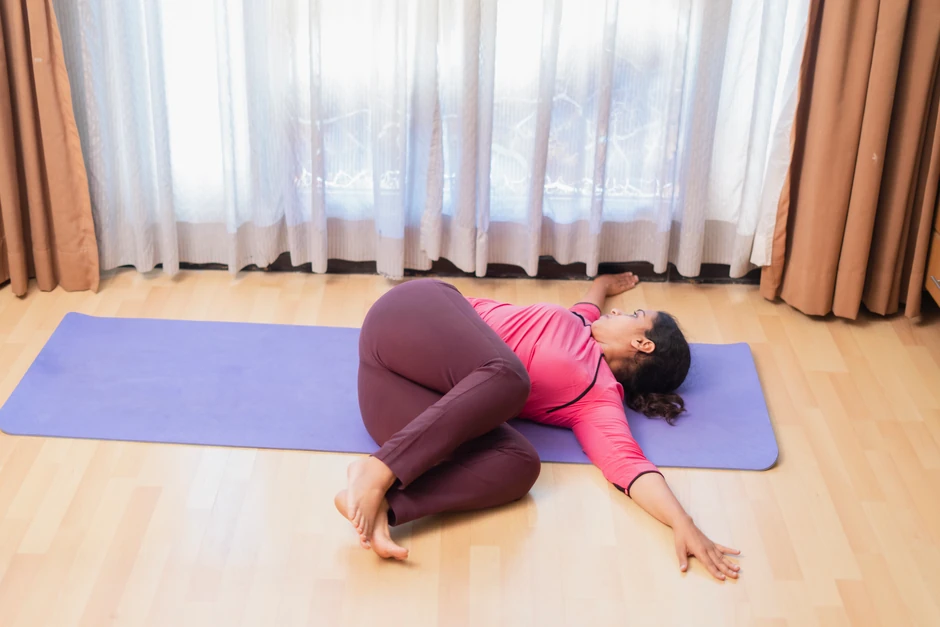
Benefit: This pose helps ease back stiffness that can build up from sitting or desk work.
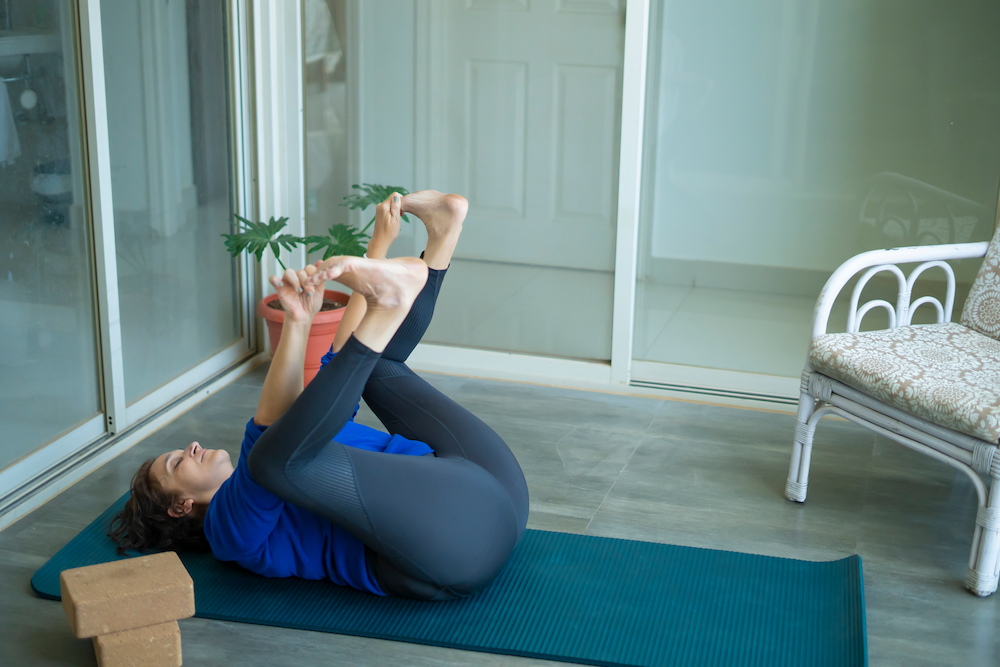
Benefit: This pose helps relax the hips and lower back without putting pressure on the body.
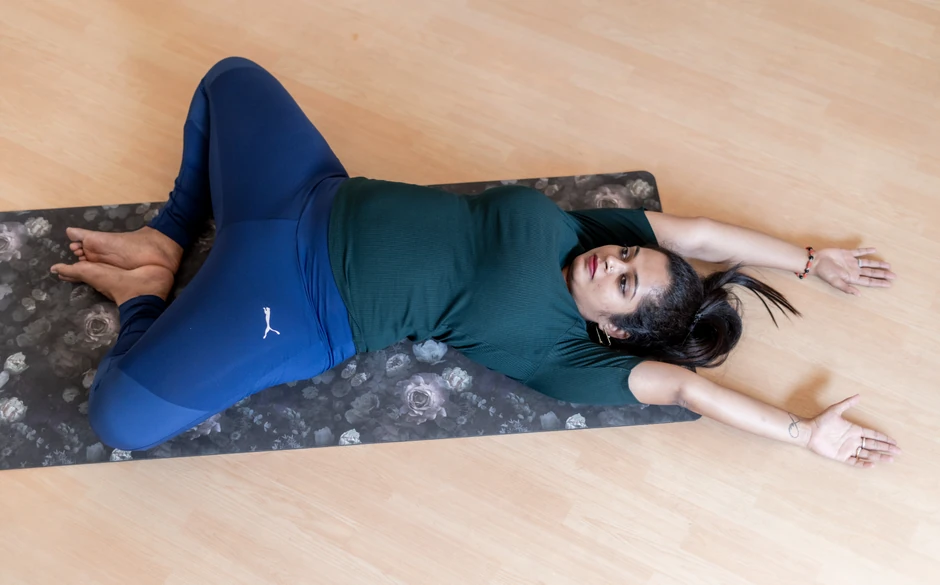
Benefit: This pose helps open the hips and encourages the body to settle into stillness.
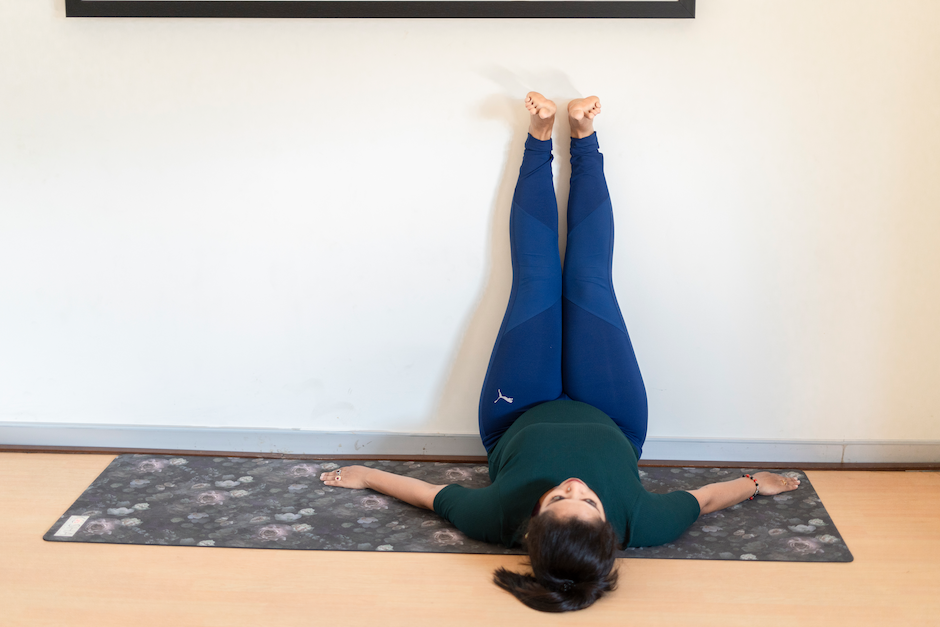
Benefit: This pose helps quiet the mind and reduce heaviness in the legs.
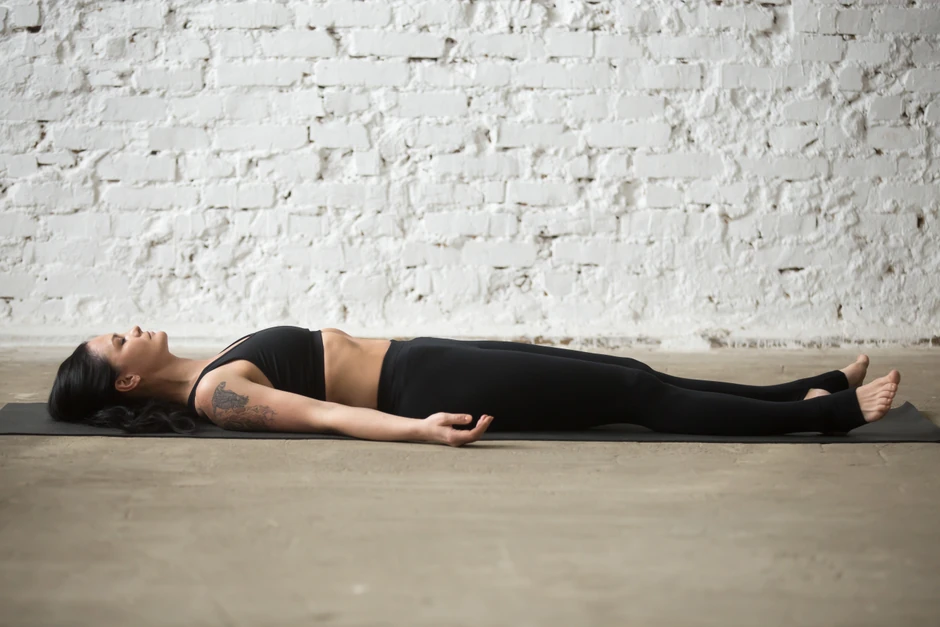
Benefit: This pose helps your body transition from yoga into sleep.
[GC]
A yoga mudra for sleep is a simple hand gesture used during relaxation or breathwork to give your mind a steady focus and help your body settle before bed.
In traditional yoga, mudras are used to direct awareness and support meditation. While modern clinical research on mudras is still limited, they can be a calming addition to gentle bedtime yoga poses like Savasana, Reclining Butterfly, or Legs Up the Wall.

This mudra helps steady a restless mind and makes it easier to stay present with your breath.
Use Gyan Mudra during Savasana or Reclining Butterfly when your thoughts feel active, but your body is ready to rest.
This mudra supports bedtime relaxation by encouraging slower breathing and a softer, more inward focus.
Use Shakti Mudra when you feel tense, overstimulated, or unable to mentally switch off before sleep.
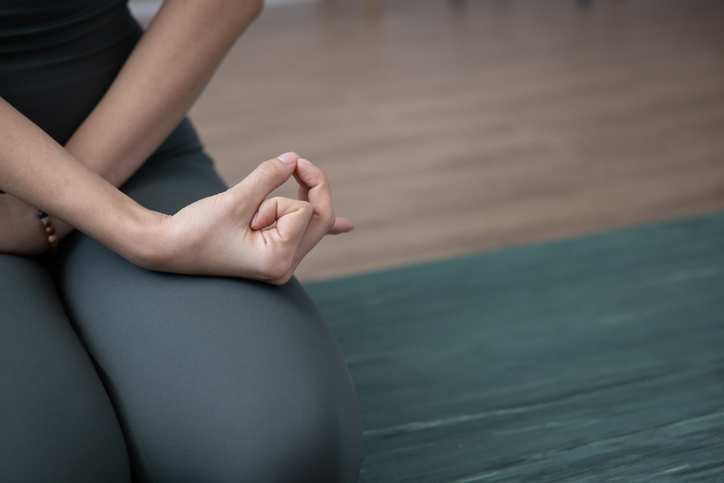
Benefit: This mudra may feel helpful when stress shows up as tightness in the chest or shallow breathing.
For best results, pair any sleep mudra with slow breathing rather than trying to “force” sleep. The goal is not instant sleep, but a calmer body and mind.
Related Read: 5 Yoga Mudras for Sleep to Calm the Mind at Night
This bedtime yoga sequence uses the poses above in a simple order: first to release physical tension, then to slow the breath, and finally to help your body settle into stillness. You can do the full routine on a mat, or modify it as bed yoga for sleep if you prefer staying close to your pillow.
For best results, practise this routine 20–30 minutes before your intended sleep time, not after you are already exhausted. The goal is to give your nervous system enough time to shift out of alert mode before you lie down for the night.
Yoga poses for sleep are better when your body feels tense, stiff, or restless before bed. Gentle poses like Child’s Pose, Reclining Butterfly, and Legs Up the Wall help release tight muscles, slow your breathing, and prepare your body for rest.
Yoga nidra for sleep may be better when your body is tired, but your mind will not switch off. Instead of moving through poses, you lie down and follow a guided relaxation practice that helps your attention move away from anxious thoughts and into a calmer state.
The best choice depends on what is keeping you awake. Choose gentle yoga poses when physical tension is the problem. Choose yoga nidra when racing thoughts, stress, or sleep anxiety feel more difficult to manage.
For many people, the most effective bedtime routine combines both: a few minutes of gentle yoga to relax the body, followed by yoga nidra to quiet the mind.
Yoga for better sleep is not about doing a perfect pose or exhausting yourself before bed. It is about helping your body feel safe, relaxed, and ready to rest.
Start with a few gentle yoga poses for sleep, add a simple sleep mudra, and use yoga nidra on nights when your mind feels too active. Even 10 minutes of consistent bedtime yoga can become a natural signal that your day is done.
Getting the sequence right matters more than doing every pose perfectly. A certified Indian yoga teacher can adapt these poses to your body, schedule, and sleep patterns in a single session.

Yoga can help support better sleep when insomnia is linked to stress, tension, or a racing mind. A short daily routine may help your body build a calmer bedtime rhythm, but ongoing insomnia should be discussed with a doctor or sleep specialist.
Practise yoga 20–30 minutes before your intended sleep time. This gives your nervous system enough time to shift out of alert mode before you lie down.
Yoga nidra is often a good choice for deep sleep because it guides your mind into a deeply relaxed state. For physical poses, Legs Up the Wall, Reclining Butterfly, Child’s Pose, and Savasana are simple options for calming the body before bed.
Yes, you can do bed yoga for sleep if you choose gentle poses. Child’s Pose, Happy Baby, Reclining Butterfly, Supine Spinal Twist, and Savasana can all be practised on your bed without a mat.
Yoga can be helpful when anxiety keeps your mind active at night. Slow breathing, gentle stretching, mudras, and yoga nidra give your attention something steady to follow, which can make it easier to settle.
Yoga may support relaxation and breathing awareness, but it should not replace medical care for sleep apnea. If you snore loudly, wake up gasping, or feel very tired during the day, speak with a doctor or sleep specialist.





Receive personalized guidance tailored to your unique fitness goals, live with a dedicated coach—no credit card required.

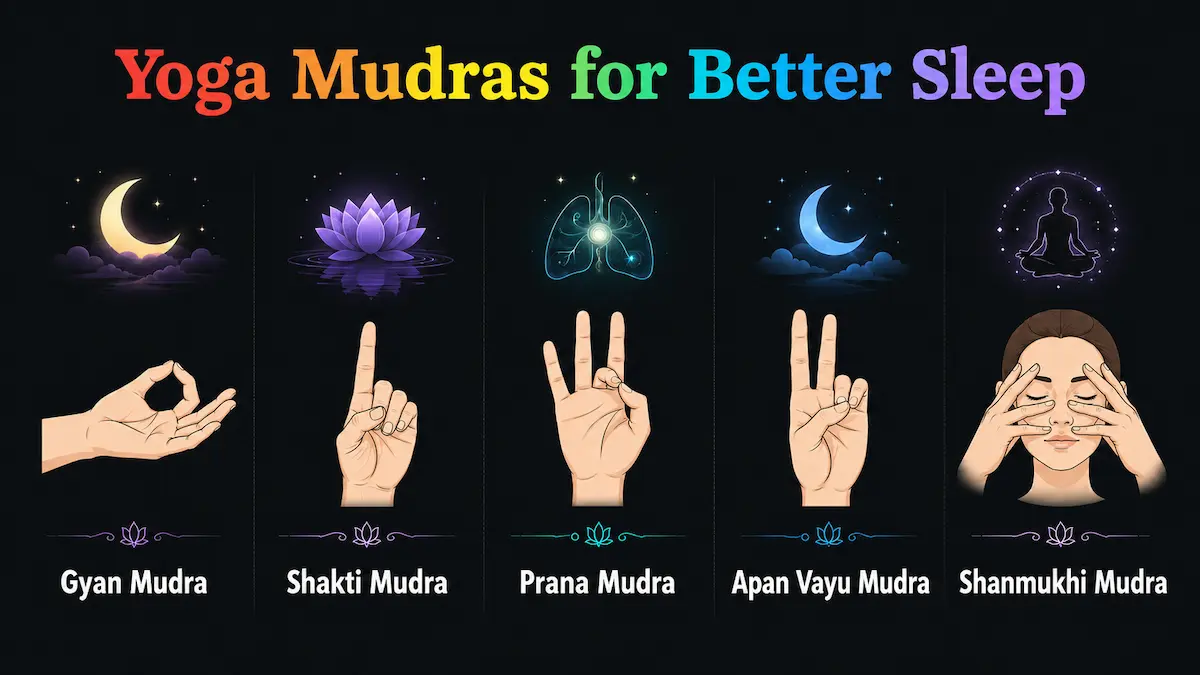
Yoga mudra for sleep: these 5 hand gestures calm the mind at night and support better rest when paired with Yoga Nidra or a bedtime yoga sequence.

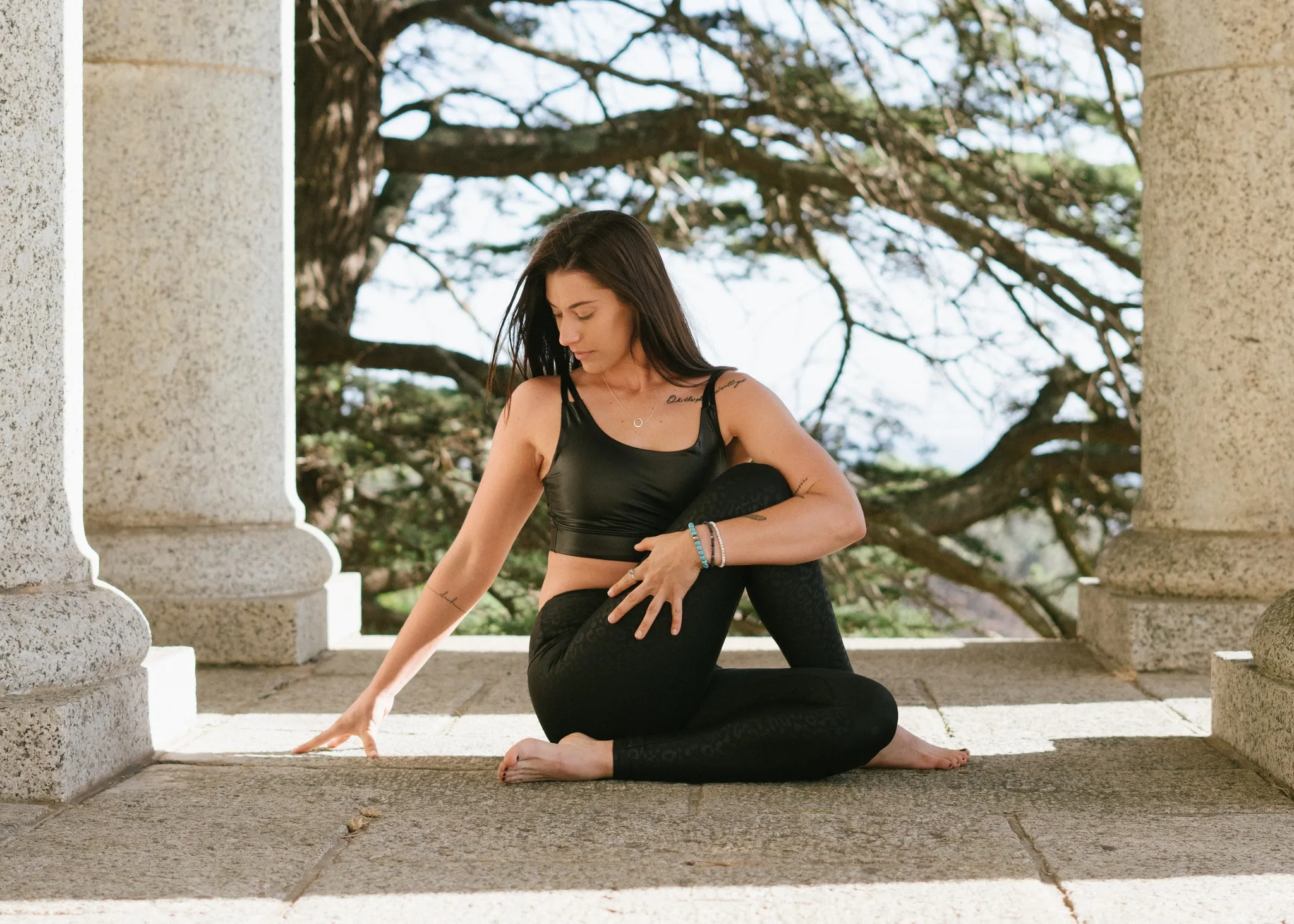
Yoga can help manage and reduce symptoms of fibromyalgia, such as pain, fatigue, depression, and sleep problems to improve your quality of life.


© Copyright 2025 MyYogaTeacher Inc


