


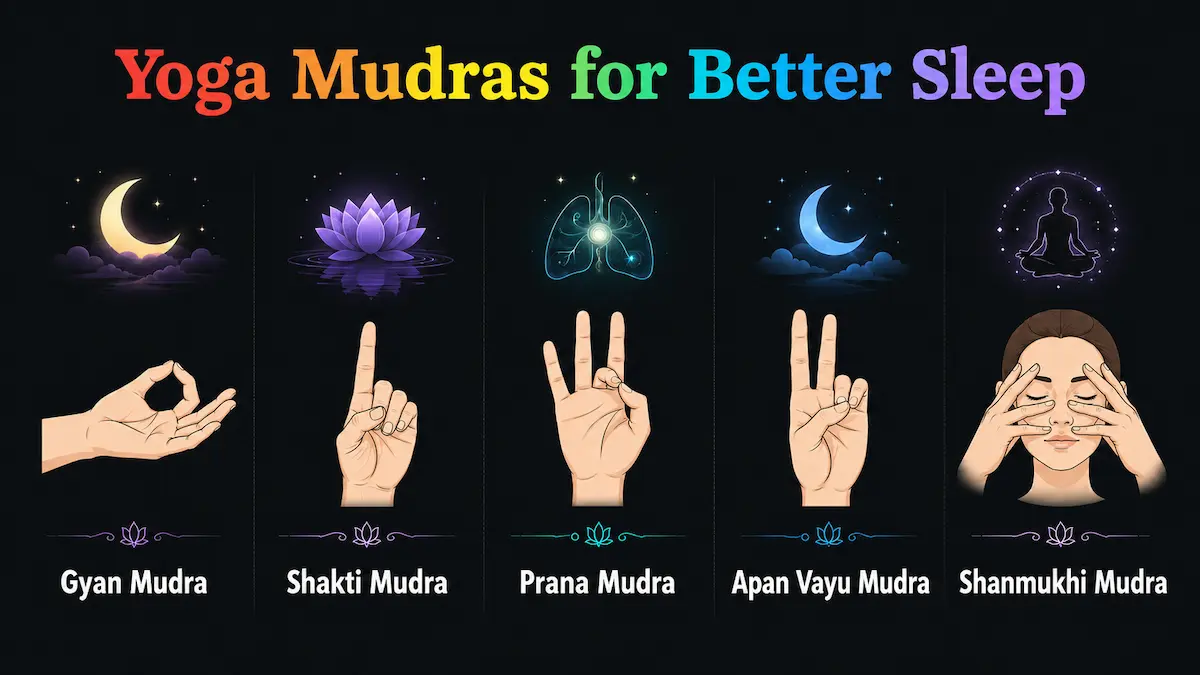
Most yoga-for-sleep guides focus on poses, stretches, and bedtime routines. But traditional Indian yoga offers another simple tool for nights when you do not want to move at all: mudras, or hand gestures used during stillness and breathwork.
Yoga mudras may help with sleep by combining gentle hand positioning, slow breathing, and focused attention — three cues that can help the mind settle before bed. In this guide, you’ll learn five yoga mudras for sleep, when to use each one, and how to pair them with Yoga Nidra or your bedtime yoga sequence.
A mudra is a hand gesture used in traditional yoga and Ayurveda to support breath awareness, meditation, and the flow of prana, or life energy, through the body. In a practical sense, a mudra gives your hands and mind one steady focus. When paired with slow breathing, this can make it easier to move away from racing thoughts and into a calmer bedtime rhythm.
For sleep, mudras work best when your body is already still. You can hold them for 5–15 minutes in Savasana, Legs Up the Wall, while lying in bed, or at the beginning of Yoga Nidra. They do not replace yoga poses or medical sleep support, but they can extend the relaxing effect of a bedtime practice into the moment you are ready to rest.
Related Read: 8 Yoga Poses for better sleep + a 10-Minute Bedtime Sequence
The best yoga mudra for sleep depends on what is keeping you awake. Some mudras are better for racing thoughts, while others are more useful for physical restlessness, chest tension, or sensory overload.

Gyan Mudra gives your mind one steady point of focus, which can be useful when thoughts feel scattered or repetitive at night.
Best used during: Savasana, seated meditation, or while lying in bed before sleep.
Variation: If your body feels restless, turn your palms down on your thighs. This grounding version is often taught as Chin Mudra.
Shakti Mudra encourages a softer, more inward focus, making it helpful when you feel tense, emotionally overstimulated, or unable to settle.
Best used during: Reclining Butterfly, Savasana, or a quiet moment before Yoga Nidra.

Prana Mudra is traditionally used to support steady energy flow, which may help when your body feels exhausted but your mind will not switch off.
Best used during: Reclining Butterfly, early Yoga Nidra, or while lying on your back in bed.
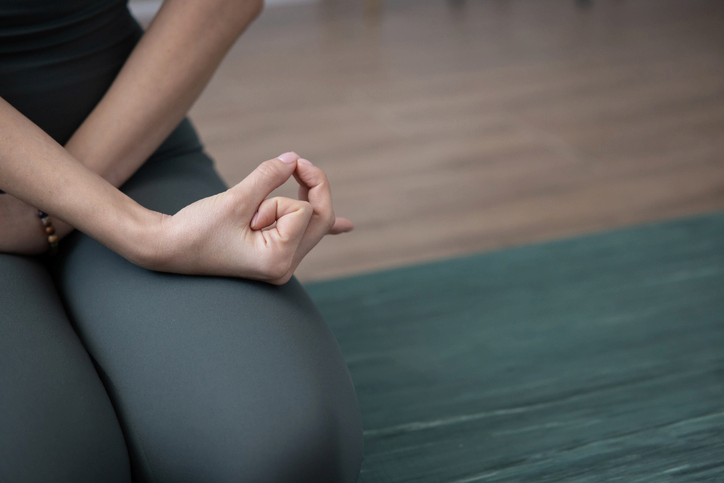
Apan Vayu Mudra is traditionally associated with calming the heart area, making it a useful choice when worry feels like tightness in the chest or shallow breathing.
Best used during: Legs Up the Wall, Savasana, or while lying in bed before sleep.
Shanmukhi Mudra gently reduces sensory input, which can be helpful when your mind feels overstimulated by screens, noise, or a long day.
Best used during: A seated practice before bedtime, at the start of Yoga Nidra, or before your bedtime yoga sequence.
Keep the touch very light, especially around the eyes and ears. Avoid this mudra if you have glaucoma, an ear infection, severe sinus discomfort, or if closing off the senses makes you uncomfortable.
[GC]
Not all sleep problems feel the same. Some nights, your mind is racing; other nights, your body feels restless, your chest feels tight, or your senses feel overstimulated from screens and noise.
Use this table to choose the best mudra for sleep based on what is keeping you awake.
[inline-CTA-2]
Yoga mudras for good sleep work best when they are added to a calm bedtime routine, not treated as one more task to finish before bed. You can use them with gentle poses, Yoga Nidra, or directly in bed.
Hold Shakti Mudra during Reclining Butterfly or Apan Vayu Mudra during Legs Up the Wall. Use the mudra for the last 2–3 minutes of the pose while keeping your breath slow and relaxed.
Use Shanmukhi Mudra for 3–5 minutes before the guided practice begins. This helps reduce sensory input and prepares your mind to follow the teacher’s voice more easily.
Hold Gyan Mudra or Prana Mudra while lying on your back. Let your hands rest naturally beside your body or on your belly, and continue until your breathing slows or sleep comes naturally.
The goal is not to force sleep. A mudra simply gives your body, breath, and attention one steady signal that it is time to rest.
A yoga mudra for sleep is a simple way to bring your hands, breath, and attention into one calm focus before bed. You do not need a mat, flexibility, or a long routine — just a few quiet minutes and the right mudra for what is keeping you awake.
Start with Gyan Mudra if your mind feels restless, Shakti Mudra if you need deeper relaxation, or Apan Vayu Mudra if worry shows up as chest tension. For better results, pair your mudra with Yoga Nidra or a gentle bedtime yoga sequence.

Most yoga mudras for sleep can be held for 5–15 minutes. If you are new to mudras, start with 5 minutes and increase the time only if it feels comfortable. Shanmukhi Mudra is the exception — 3–5 minutes is enough for beginners.
Yes, you can practise yoga mudras in bed. Gyan Mudra, Shakti Mudra, Prana Mudra, and Apan Vayu Mudra can all be done while lying on your back with your hands resting comfortably beside you or on your belly.
Shakti Mudra is often used for deep relaxation because it encourages a softer, more inward focus before bed. You can use it during Savasana, Reclining Butterfly, or a short Yoga Nidra practice.
Yoga mudras may help with sleep anxiety by giving your mind one steady focus while your breath slows down. Gyan Mudra, Shakti Mudra, and Apan Vayu Mudra are good options when anxious thoughts make it difficult to settle.
Yes, mudras can be practised on their own. You do not need to do a full yoga session first, but mudras often feel more effective when your body is already relaxed after gentle poses, breathing, or Yoga Nidra.
Most simple hand mudras are gentle and low effort. Avoid forcing your fingers into any position, and skip mudras that cause discomfort, pain, dizziness, or anxiety. If you have a medical sleep condition such as chronic insomnia or sleep apnea, use mudras as a relaxation support, not as a replacement for medical care.





Receive personalized guidance tailored to your unique fitness goals, live with a dedicated coach—no credit card required.

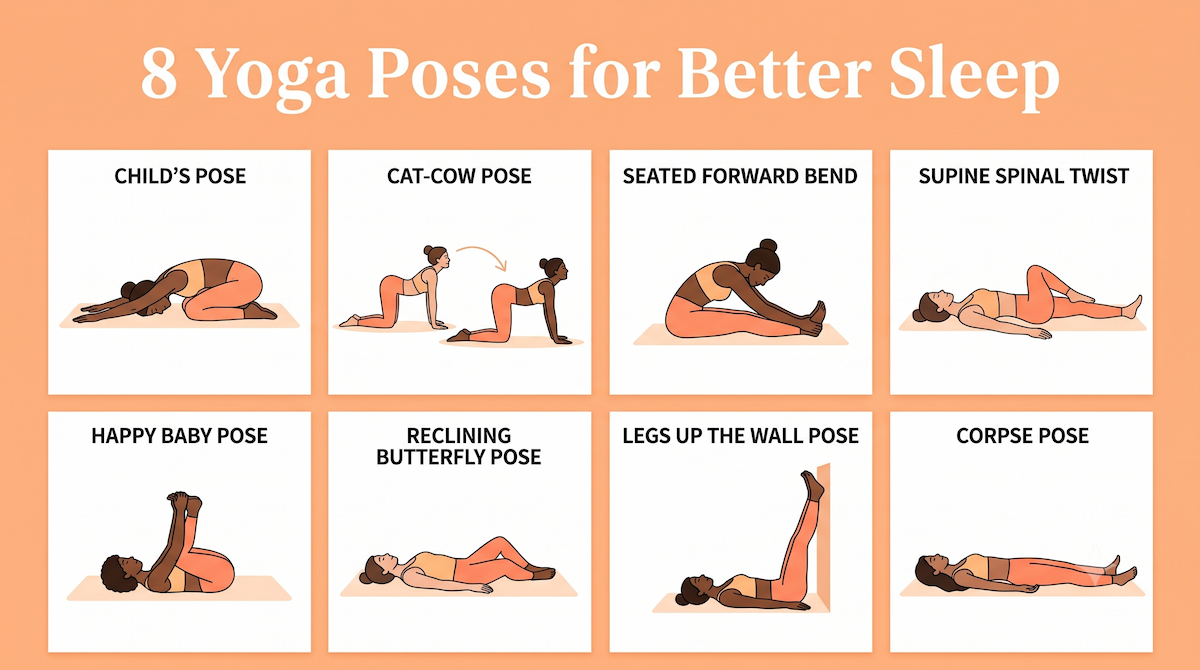
Yoga for better sleep: 8 gentle poses, a sleep mudra, and a 10-minute bedtime routine from certified Indian yoga teachers. Start tonight.

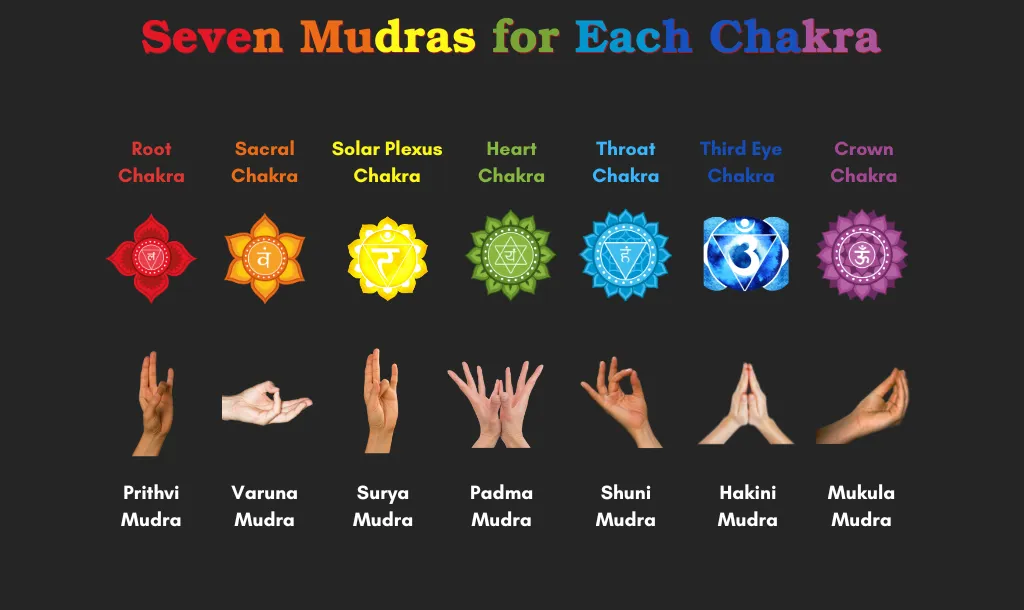
Explore 7 powerful mudras for each chakra with step-by-step instructions. Learn how to activate, balance, and heal your chakras through simple hand gestures.
Yoga can help manage and reduce symptoms of fibromyalgia, such as pain, fatigue, depression, and sleep problems to improve your quality of life.


© Copyright 2025 MyYogaTeacher Inc


