Yoga straps offer subtle adjustments that can turn simple stretches into deeper and more effective ones.
Why “pulling harder” with a yoga strap often works against flexibility instead of helping it.
Hip-opening stretches that feel awkward without a strap work beautifully once you set it up right.
The difference between holding a stretch for relief and holding it for real flexibility gains.
Table of contents
Overview | Yoga Strap Stretches: Guide to Deepen Flexibility
How to Use | What Is a Yoga Strap and How Do You Use One?
Yoga Strap Stretches | Yoga Strap Stretches by Body Part
Tips to Use | Tips for Getting the Most From Yoga Strap Stretches
Takeaway | Takeaway
Ever feel like flexibility is out of reach when you cannot touch your feet, hold your leg up, or stay in a stretch long enough to feel it working?
That is where yoga strap stretches can help. A strap is not just for beginners. In the Iyengar tradition, it is used as a practical tool to extend your reach, improve alignment, and help you stay in a pose without straining.
That is what makes stretches with a yoga strap so useful. They give you more space to work with, so you can stretch the back, hips, shoulders, and legs more effectively. Instead of forcing your body into position, the strap helps you create steady, controlled traction and move deeper over time.
Keep reading to learn how to use a yoga strap and which stretches can help improve flexibility safely and effectively.
What Is a Yoga Strap and How Do You Use One?
A yoga strap is a simple prop, usually made of cotton or nylon, that helps you reach farther and hold stretches with better alignment. Most straps are 6 to 8 feet long and come with a D-ring or buckle so you can adjust the length. In the Iyengar tradition, straps are used to make poses more accessible without forcing the body.
The main job of a strap is to extend your reach. Instead of straining to grab your foot, clasp your hands, or hold a position awkwardly, the strap fills the gap so you can stay steady and relaxed.
Here are two common ways to use it:
Loop around the foot or ankle: This is helpful in hamstring, hip, and leg stretches when you cannot comfortably reach your foot.
Hold it behind your back with both hands: This is useful in shoulder and chest openers when your hands do not naturally meet.
Use the strap to create a gentle stretch, not to pull yourself deeper. Adjust the length as needed for each pose, and as your flexibility improves, you may rely on the strap less.
[inline-CTA-1]
Yoga Strap Stretches by Body Part
Below are 8 effective yoga strap stretches for the lower back, hips, shoulders, and legs. Each one uses the strap to improve reach, support alignment, and help you hold the stretch without forcing it.
Lower Back Stretches
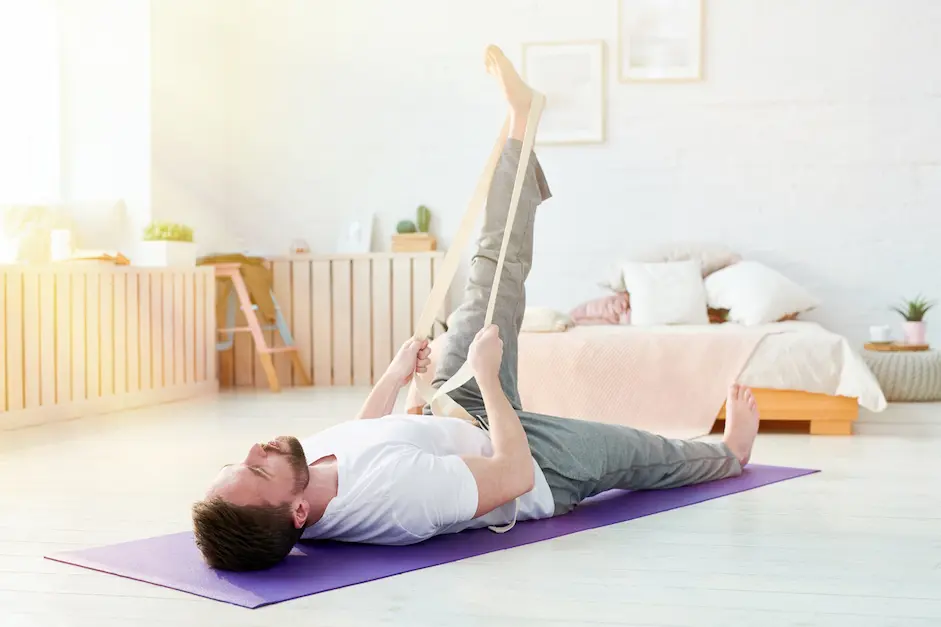
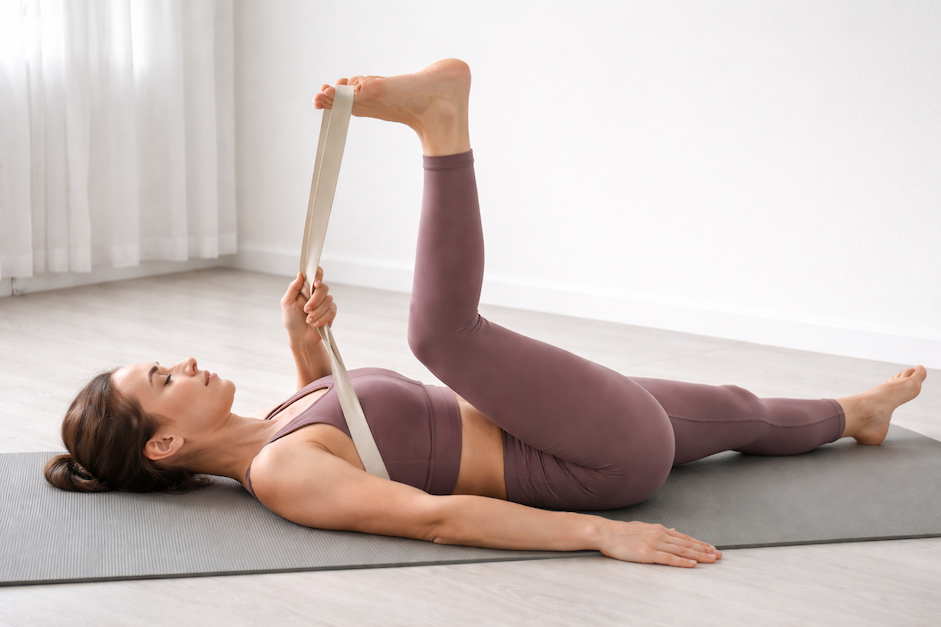
1. Supine Hamstring Stretch with Strap (Supta Padangusthasana Variation)
This is one of the most useful yoga strap stretches for lower back tension because tight hamstrings often pull on the pelvis and contribute to lower back strain.
Strap setup: Loop the strap around the arch of one foot and hold one end in each hand while lying on your back.
Hold: Start with 30 seconds and build to 60 seconds.
You should feel: A stretch thro\ugh the hamstrings, calves, and lower back.
Stop if: The raised hip lifts or the lower back starts to strain.
Steps:
Lie on your back with both legs extended.
Bend one knee into your chest and place the strap around the arch of that foot.
Straighten the raised leg toward the ceiling, keeping a slight bend in the knee if needed.
Hold the strap with both hands and gently draw the leg closer without lifting your head or shoulders.
Keep the other leg long and grounded on the floor.
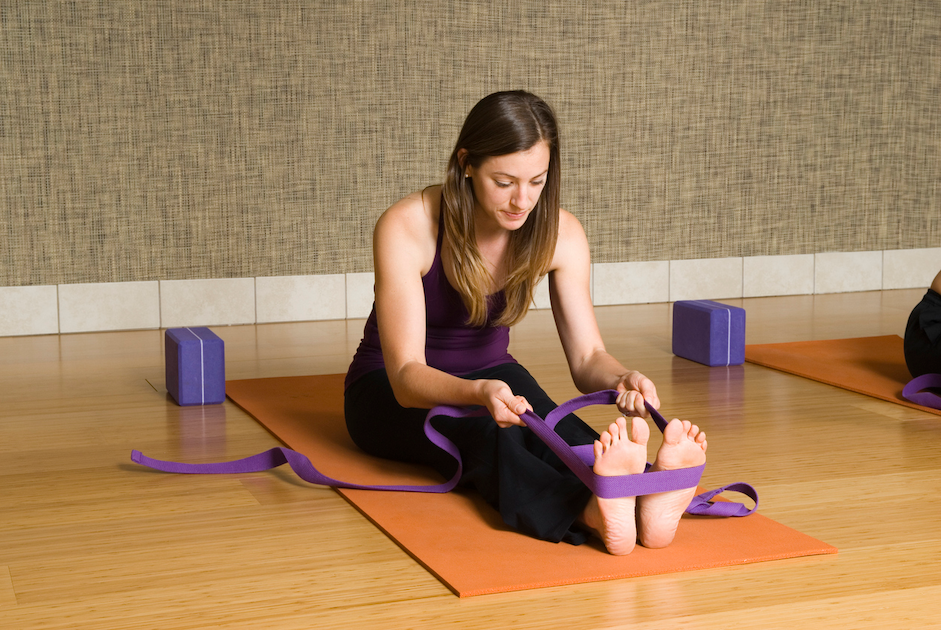
This stretch uses the strap to help you fold forward with a longer spine instead of rounding your back to reach your feet.
Strap setup: Loop the strap around the soles of both feet and hold it at a comfortable distance.
Hold: Start with 30 seconds and build to 60 seconds.
You should feel: A stretch in the hamstrings, spine, and lower back.
Stop if: The movement turns into pulling or rounding instead of lengthening.
Steps:
Sit with your legs extended straight in front of you and lengthen through your spine.
Hold the strap with both hands, hinge forward from the hips, and gently use the strap to maintain length in the spine.
Keep the chest broad and avoid collapsing through the upper back.
Hip Stretches
3. Reclined Figure-Four with Strap (Supta Kapotasana Variation)
This is one of the best yoga strap stretches for the hips because it lets you access the outer hip without needing to reach around the shin.
Strap setup: Loop the strap around the top foot of the crossed leg and hold both ends.
Hold: Stay for 45 to 90 seconds on each side.
You should feel: A deep stretch in the outer hip, glutes, and piriformis.
Stop if: You feel strain in the knee of the crossed leg.
Steps:
Lie on your back with both knees bent, then cross one ankle over the opposite thigh to make a figure-four shape.
Gently draw the legs toward your chest using the strap, while keeping the shoulders relaxed and the neck soft.
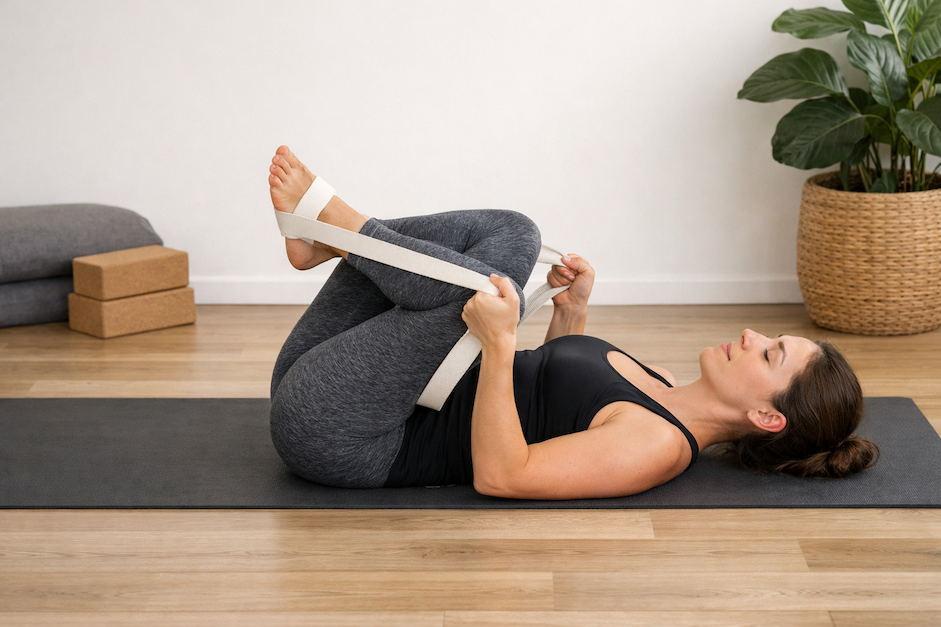
4. Half Happy Baby with Strap (Ardha Ananda Balasana with Strap)
This variation helps open the inner groin and hip without needing to grip the foot directly.
Strap setup: Loop the strap around the arch of one foot and hold it from the inside of the leg.
Hold: Stay for 30 to 60 seconds on each side.
You should feel: A stretch in the inner groin, hip, and lower pelvis.
Stop if: The sacrum lifts, or the knee feels compressed.
Steps:
Lie on your back and bend one knee toward your chest.
Place the strap around the arch of that foot, hold it with the hand on the inside of the leg, and gently guide the knee toward the same-side armpit while keeping the sacrum grounded.
Relax the opposite leg on the floor or keep it bent for support.
Shoulder Stretches
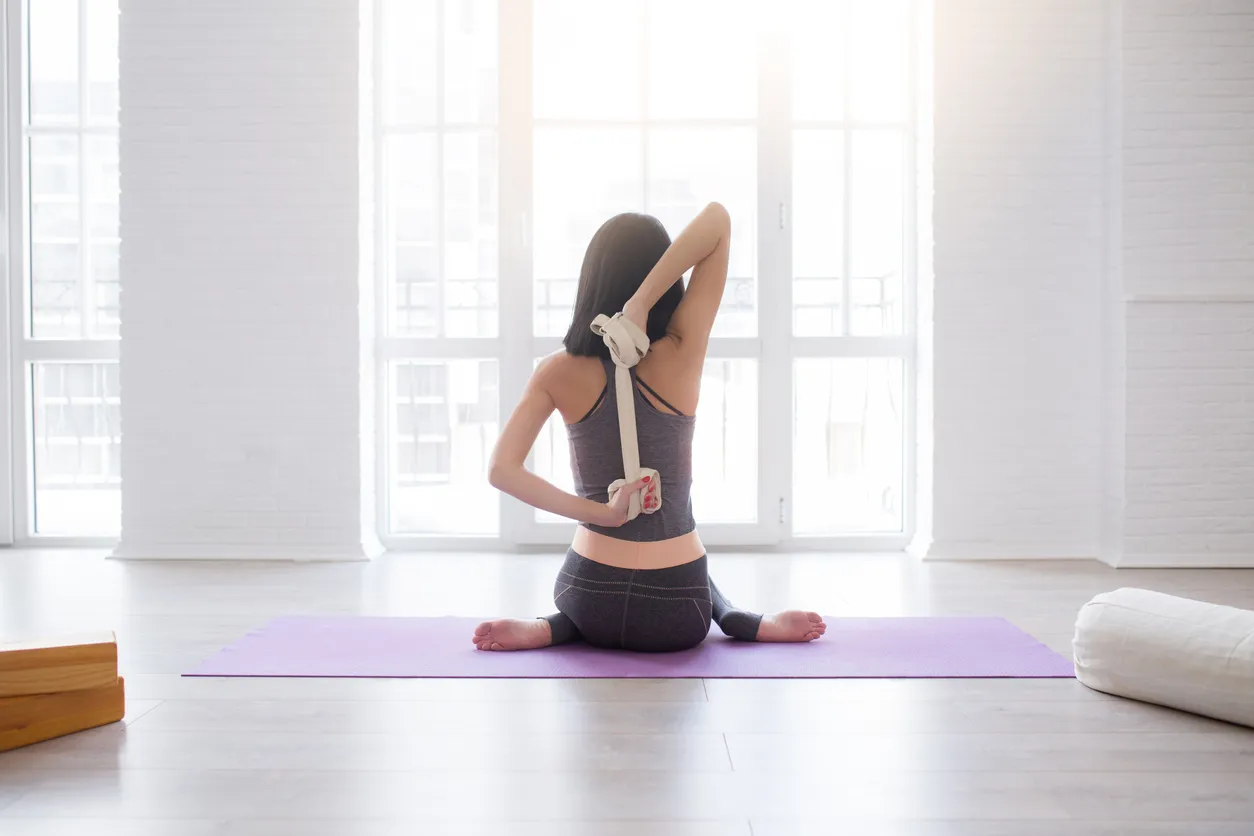
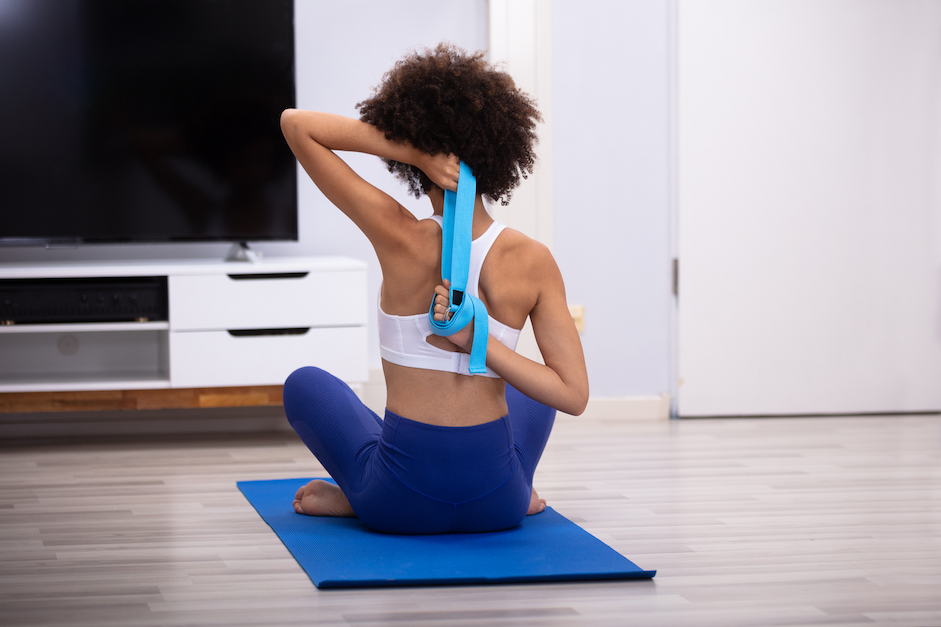
5. Cow Face Arms with Strap (Gomukhasana Arms with Strap)
This is one of the most effective yoga strap stretches for the shoulders because it bridges the gap between the hands without forcing the shoulder joint.
Strap setup: Hold the strap behind your back with one hand reaching down from above and the other reaching up from below.
Hold: Stay for 30 to 45 seconds on each side.
You should feel: A stretch in the shoulders, triceps, chest, and upper ribs.
Stop if: There is pinching in the shoulder joint.
Steps:
Lift one arm overhead and bend the elbow so the hand reaches down your back.
Bring the other arm behind you and reach upward.
Hold the strap with both hands and walk them closer together as mobility allows.
Keep the chest open and avoid shrugging the shoulders.
6. Overhead Shoulder Opener with Strap
This stretch helps open the chest and front shoulders while improving overhead mobility.
Strap setup: Hold the strap with both hands slightly wider than shoulder-width apart.
Hold: Stay for 20 to 30 seconds, or move slowly in and out 3 to 5 times.
You should feel: A stretch across the chest, shoulders, and biceps.
Stop if: You feel sharp pain or if this movement aggravates a rotator cuff injury.
Steps:
Stand tall and hold the strap in front of you with straight arms.
Inhale and slowly raise the strap overhead.
If it feels comfortable, continue moving it slightly behind you without bending the elbows.
Pause where you feel a stretch but can still breathe steadily, then return slowly to the front.
Leg Stretches
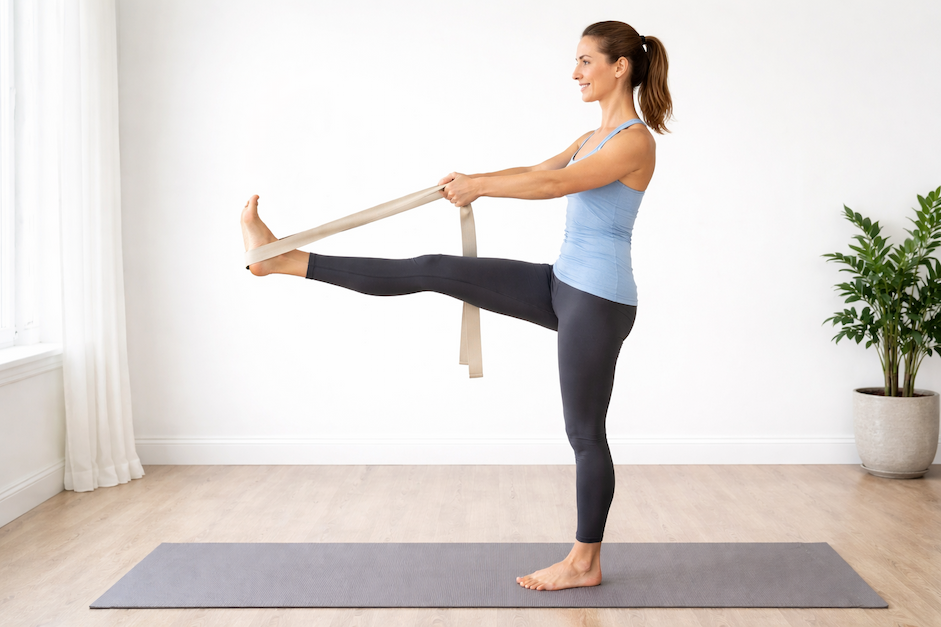
7. Standing Hamstring Stretch with Strap
This stretch adds balance work while helping you lengthen the hamstrings without collapsing the spine.
Strap setup: Loop the strap around one foot and hold both ends while standing.
Hold: Stay for 20 to 30 seconds on each side, building to 45 seconds.
You should feel: A stretch through the hamstrings, calves, and hip flexors.
Stop if: The lower back rounds or your balance becomes unstable.
Steps:
Stand tall and shift your weight into one foot.
Loop the strap around the other foot, lift the leg slightly in front of you, and hold the strap ends as you lengthen the raised leg as much as feels comfortable.
Keep the standing leg steady, and the chest lifted.
Use a wall or chair for support if balancing is difficult.
8. Reclined Leg Stretch with Side Variation (Supta Padangusthasana B Variation)
This variation targets the inner thighs and outer hip while keeping the pelvis stable.
Strap setup: Loop the strap around one foot and hold it as you take the leg out to the side.
Hold: Stay for 30 to 60 seconds on each side.
You should feel: A stretch in the inner thigh, side hip, and along the leg.
Stop if: The pelvis rolls, or the stretch becomes strained.
Steps:
Lie on your back with both legs extended, then place the strap around one foot and raise that leg toward the ceiling.
Hold the strap with the opposite hand or both hands, depending on comfort, and slowly open the leg out to the side while keeping both hips grounded.
Stop before the opposite hip lifts.
[inline-CTA-2]
Tips for Getting the Most From Yoga Strap Stretches
A yoga strap can make stretches more accessible, but how you use it matters. A few small adjustments in grip, hold time, and intensity can make each stretch feel more effective, comfortable, and controlled.
Use gentle traction, not force: The strap should help you create space in the stretch, not pull yourself aggressively deeper. If your grip feels tense, ease up.
Hold the stretch long enough: For flexibility, stay in most stretches for at least 30 to 45 seconds. If the goal is deeper release, you can build up to 60 to 90 seconds.
Use your breath to soften: Try to relax a little more on each exhale instead of pushing harder. Steady breathing helps the body release more naturally.
Focus on consistency over intensity: A few minutes of strap stretching several times a week is more effective than one long session now and then.
Adjust the strap as your flexibility changes: As your range of motion improves, you may be able to shorten the strap or rely on it less. The strap is there to support progress, not replace it.
Choose a non-stretchy strap: A yoga strap works best because it holds a fixed length. Elastic bands create resistance, which changes the stretch completely.
Takeaway
A yoga strap is not a shortcut or a sign that you are not flexible. It is a practical tool that helps you stretch with better alignment, more control, and less strain. When used well, it can help you stay in a pose long enough to actually benefit from the stretch, especially in tight areas like the hamstrings, hips, and shoulders.
Small changes in strap length, hand position, and alignment can completely change how a stretch feels. With guidance from a certified Indian yoga teacher, you can learn how to set up each strap stretch for your body, target the right muscles, and build flexibility more safely and effectively.
Frequently Asked Questions
What length yoga strap is best for stretching?
A 6-foot yoga strap works well for most people. An 8-foot strap can be more comfortable if you are tall, have tight hamstrings, or want more room to adjust your grip during stretches.
How long should you hold a strap stretch?
For general flexibility, hold a stretch for 30 to 45 seconds. For deeper release or recovery, you can stay for 60 to 90 seconds as long as the stretch feels steady and comfortable.
Which yoga strap stretches are best for lower back pain?
The Supine Hamstring Stretch and Seated Forward Fold with Strap are two of the best options. Both help lengthen the hamstrings and support better spinal alignment, which can ease lower back tension.
Can I use a belt or a towel instead of a yoga strap?
Yes. A belt or a firm cotton towel can work for many of these stretches. The key is to use something that does not stretch, so you can control the position safely.
No items found.
Online Yoga Classes with Expert Indian Teachers - Live!
1-on-1 & Group Classes - Available 24x7, Live via Zoom
Enjoy a Free 1-on-1 Session with a Coach!
Receive personalized guidance tailored to your unique fitness goals, live with a dedicated coach—no credit card required.
Rushali has 5 years of experience writing about yoga, mental health, and wellness trends. She specializes in writing research-backed, reader-friendly articles that help audiences make informed decisions about their health and well-being.
New to yoga? Learn how to start, what to expect in your first class, which style fits you, and why flexibility isn't a must. Try a free 1-on-1 session.
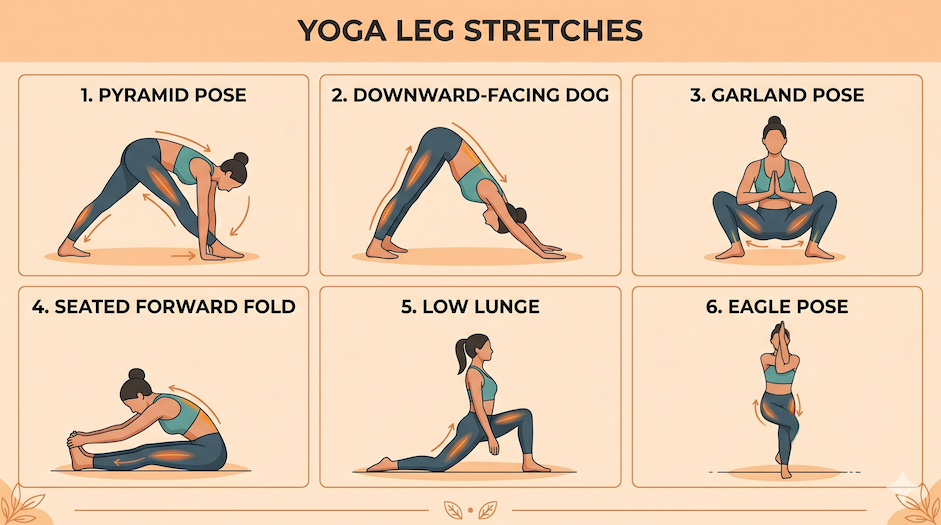
Tight legs from sitting, running, or training? These 10 yoga leg stretches target your hamstrings, calves, hip flexors, quads, and feet — step by step.