


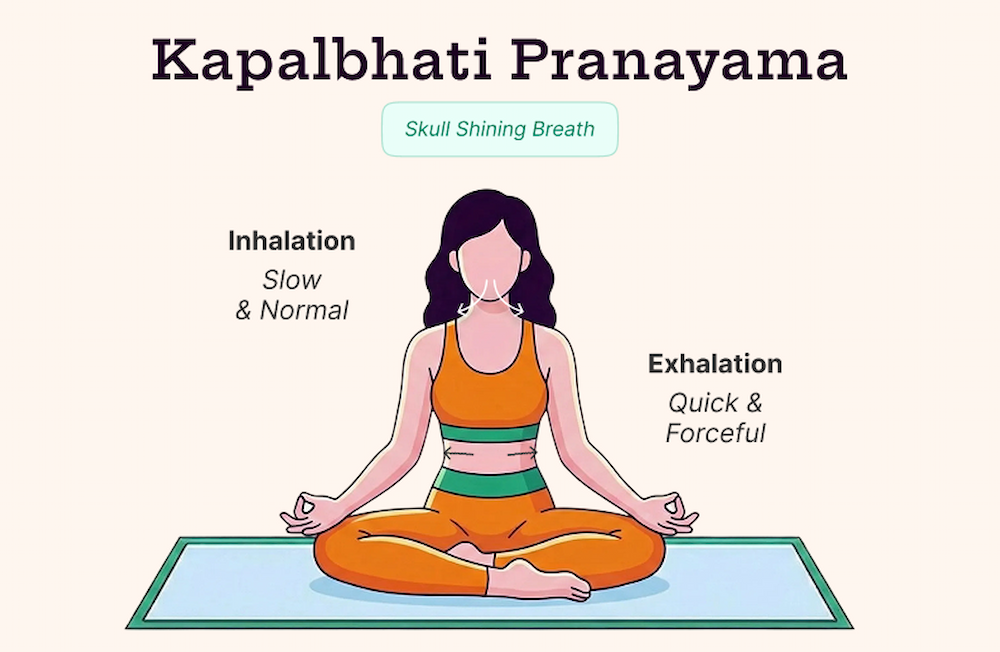
Kapalbhati is a yoga breathing technique that uses short, forceful exhalations followed by natural inhalations. It is often called Skull Shining Breath, drawing its name from Sanskrit words kapala, meaning skull, and bhati, meaning shining. Because it is active and energizing, Kapalbhati is often practiced to awaken the body and sharpen focus.
Traditionally, Kapalbhati was considered a cleansing practice in Hatha Yoga. Today, it is commonly taught as part of pranayama because of its strong effect on breath, energy, and mental alertness.
Kapalbhati is a yoga breathing technique that uses short, forceful exhalations followed by natural, passive inhalations. With each sharp exhale, the abdominal muscles contract to push the air out through the nose. As the abdomen releases, the inhale happens on its own, creating a quick, rhythmic pattern of breath.
What makes Kapalbhati different from many other breathing techniques is that the main effort is on the exhale. Rather than actively controlling both parts of the breath, you focus on a strong exhale and allow the inhale to happen naturally. This is what gives the practice its energizing, pumping quality.
The word Kapalbhati comes from two Sanskrit words: kapala, meaning skull or forehead, and bhati, meaning shining or illuminating. That is why the practice is often translated as Skull Shining Breath.
In classical Hatha Yoga, Kapalbhati was traditionally described as one of the Shatkarmas, or cleansing practices. Today, it is commonly taught as part of pranayama because of the strong effect it can have on energy, breath, and mental clarity.
Explore the complete guide to pranayama here.
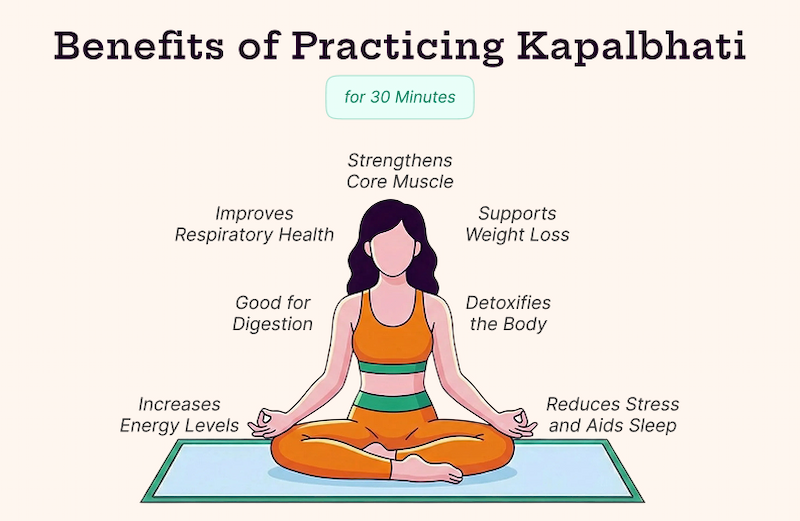
Kapalbhati’s benefits extend across the respiratory, digestive, mental, and metabolic systems. Because the practice uses rapid abdominal pumping and forceful exhalations, it works very differently from slower, more calming breathing techniques.
[GC]
Before you begin, sit in a comfortable cross-legged position such as Sukhasana, or sit on a chair with your spine tall and your shoulders relaxed. Rest your hands on your knees and soften the face, jaw, and chest.
In Kapalbhati, one stroke refers to one forceful exhalation followed by one passive inhalation. Always practice on an empty stomach, and if you are a beginner, start slowly with one round of 30 strokes.
If you are unsure about the abdominal movement, place one hand on your belly and practice a few forceful exhalations first. The belly should move sharply inward with each exhale.
You may notice warmth in the abdomen and chest, a sense of alertness, and a clearer feeling in the head. Mild abdominal fatigue is normal, but the face and shoulders should remain relaxed.
Stop immediately if you feel dizziness, nausea, chest tightness, strain in the face, or any sense of discomfort. Return to normal breathing and rest.
[inline-CTA-1]
Beginners should start with one round of 30 strokes, which takes about 30 seconds, and gradually build up over time.
For most practitioners, 3–5 minutes daily is a good starting range, while a more established practice may extend to 5–10 minutes as part of a broader pranayama routine.
Here is a simple progression guide:
What matters most is consistency, not intensity. A short daily practice is usually more beneficial than doing a long session only once in a while.
Since Kapalbhati is energizing, it is best practiced in the morning or earlier in the day, rather than right before sleep.
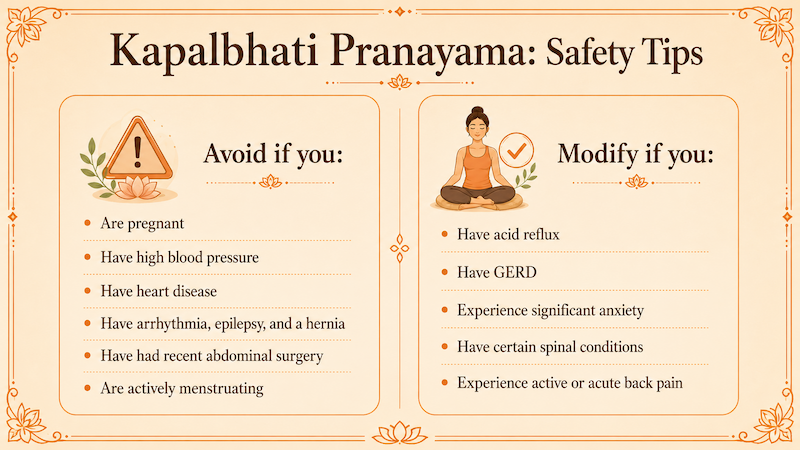
While Kapalbhati is generally safe, it should be avoided if you:
It is best to practice with caution and with medical guidance if you:
Kapalbhati is safe for many healthy adults, but because it involves rapid breathing and forceful abdominal contractions, it is not suitable for everyone. If you are unsure whether it is appropriate for you, it is best to learn with a qualified yoga teacher before practicing on your own.
[inline-CTA-2]
Kapalbhati is an energizing and cleansing breath practice that can help awaken the body, sharpen the mind, and bring greater awareness to the breath. When practiced correctly and consistently, it can become a powerful part of a daily yoga routine. The key is to begin gently, focus on proper technique, and let the benefits build over time.

Kapalbhati pranayama is a yogic breathing technique that uses short, forceful exhalations and passive inhalations. It is commonly practiced to energize the body, clear the respiratory passages, stimulate digestion, and improve mental clarity.
Beginners can start with one round of 30 strokes and gradually build up to 3–5 minutes daily. With regular practice and proper guidance, some practitioners extend their sessions to 5–10 minutes as part of a broader pranayama routine.
Kapalbhati alone is not a guaranteed way to reduce belly fat. However, because it engages the abdominal muscles and supports digestion and metabolism, it can be a helpful part of a broader routine that includes movement, nutrition, and healthy lifestyle habits.
Yes, Kapalbhati can be practiced daily, and morning is usually the best time for it. Since it is energizing, it is best done on an empty stomach and earlier in the day rather than before sleep.
Kapalbhati and Bhastrika are both energizing yogic breathing techniques, but the main difference is in how the breath is powered.
In Kapalbhati, only the exhale is forceful, and the inhale happens naturally. In Bhastrika, both the inhale and exhale are active and forceful, which makes it more intense.
Kapalbhati is usually the better starting point for beginners, while Bhastrika is better introduced once basic breath control is established.
Learn more about Bhastrika Pranayama in this detailed guide.





Receive personalized guidance tailored to your unique fitness goals, live with a dedicated coach—no credit card required.

.webp)
Bhastrika pranayama is yoga's most energizing breathing technique. Learn its benefits, the 3 types, a step-by-step practice guide, and who should avoid it.

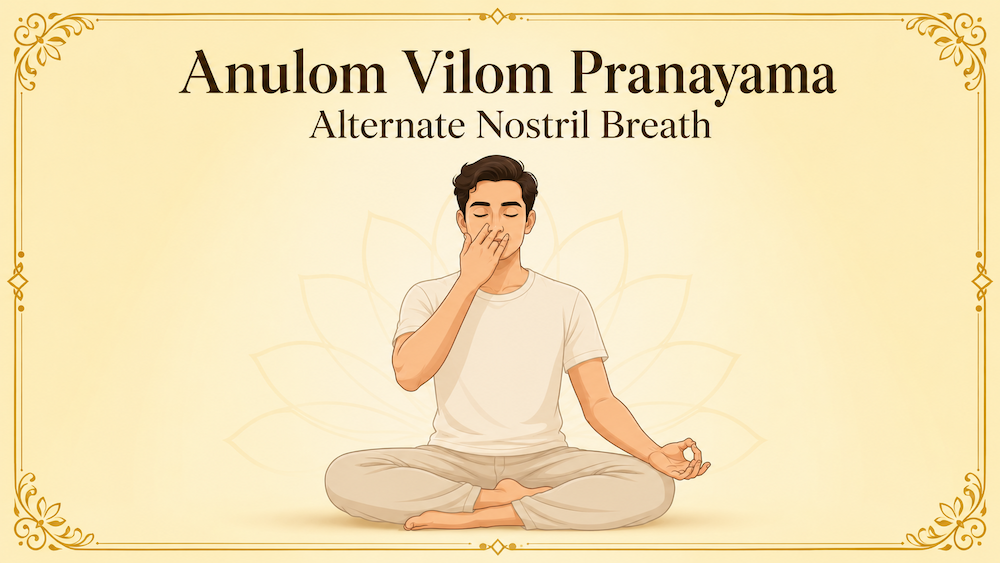
Anulom Vilom is yoga's most beginner-friendly breathing technique. Learn its benefits for stress, focus, and skin health with a clear step-by-step guide.
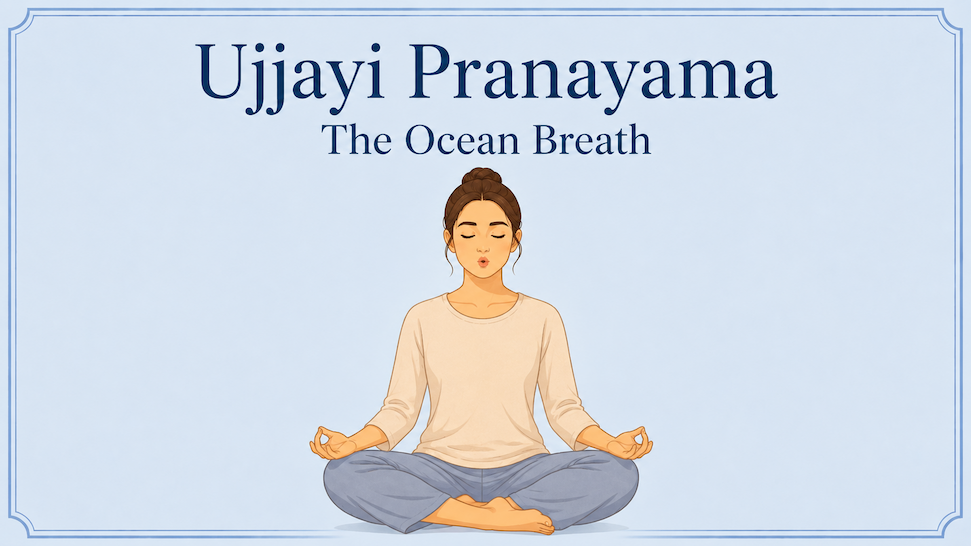
Learn how to do Ujjayi breathing (Ocean Breath) step by step. Discover its benefits for focus, stress relief, and thyroid health — guided by certified Indian yoga teachers.


© Copyright 2025 MyYogaTeacher Inc


