


%20(1).webp)
According to AAA, a record 119.3 million Americans are expected to travel this December, making it one of the busiest holiday seasons in years. With nearly 40 million passengers projected to pass through TSA checkpoints between December 19 and January 2, airports across the U.S. will be more crowded, louder, and more unpredictable than usual—adding to the stress and anxiety many travelers already feel.
Recent surveys suggest that 55% of Americans find air travel more stressful than going to the dentist, and more than 80% report at least moderate travel anxiety during the holidays.
But here’s the reassuring part: even on the most stressful travel day, you can feel calm and in control with just a few simple, airport-friendly yoga poses. These movements require no equipment or floor work, and can be done with or without a mat. All you need is a few minutes of breathing and gentle stretching—whether you’re waiting at the gate, standing in line, or settling into your seat.
Backed by research and completely TSA-friendly, airport yoga can lower tension, improve circulation, and help you stay grounded from check-in to takeoff.
[inline-CTA-1]
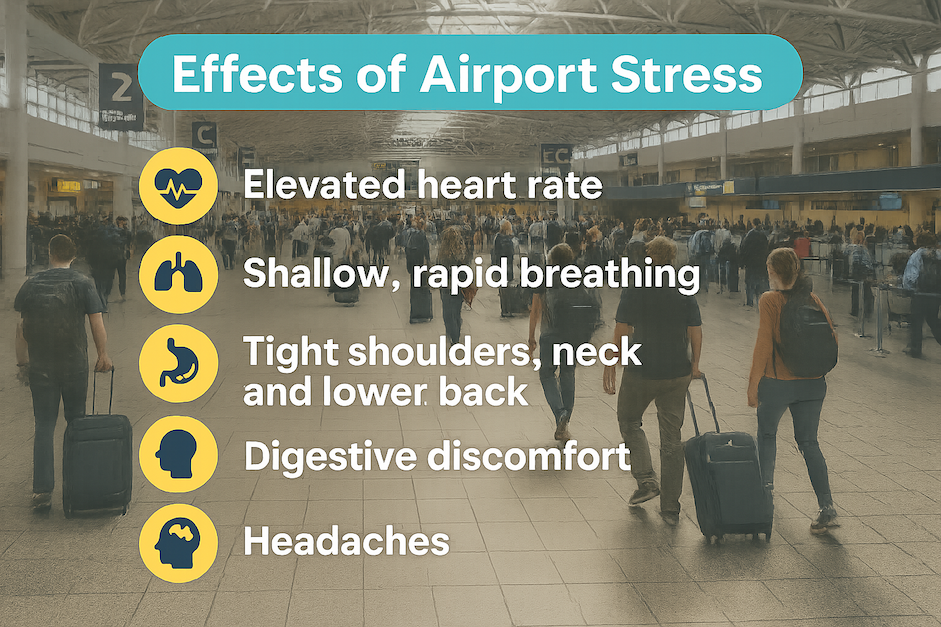
Airports activate almost every part of your stress response: noise, crowds, rushing, unpredictable delays, security procedures, and the loss of control that comes with flying. When all of this hits at once, your fight-or-flight mode switches on.
This can lead to:
Even the small moments, like standing in a slow security line or seeing yet another delay alert, can nudge your stress levels higher. And when you carry that tension into a crowded plane seat, it tends to build on itself quickly.
Another challenge during holiday travel is prolonged sitting. According to the CDC, flights over 4 hours can increase the risk of deep vein thrombosis (DVT)—a condition where blood clots form in the legs due to reduced circulation.
Risk increases with:
This doesn't mean flying is dangerous for most people—but movement matters. Even 5–10 minutes of gentle stretching and controlled breathing can:
This is exactly why airport yoga works so well: it addresses both the mental and physical symptoms of travel stress—quickly, discreetly, and anywhere in the terminal.
You can absolutely do yoga at the airport. There are no TSA rules against stretching, breathing exercises, or mindful movement once you’re past security. And if you prefer to bring a travel yoga mat, the TSA clearly states that yoga mats are allowed in both carry-on and checked luggage—so there’s nothing to worry about there.
Most travelers don’t realize this, but airports are actually full of great spots for quick stretching breaks:
These aren’t rules—just gentle guidelines to help you feel more at ease, especially if you’re new to practicing in public.
These five poses are simple, discreet, and designed for crowded spaces, tight seats, long lines, and pre-flight nerves. No mat, no floor work, and no complicated movements—just gentle stretches to help you feel calm and in control.
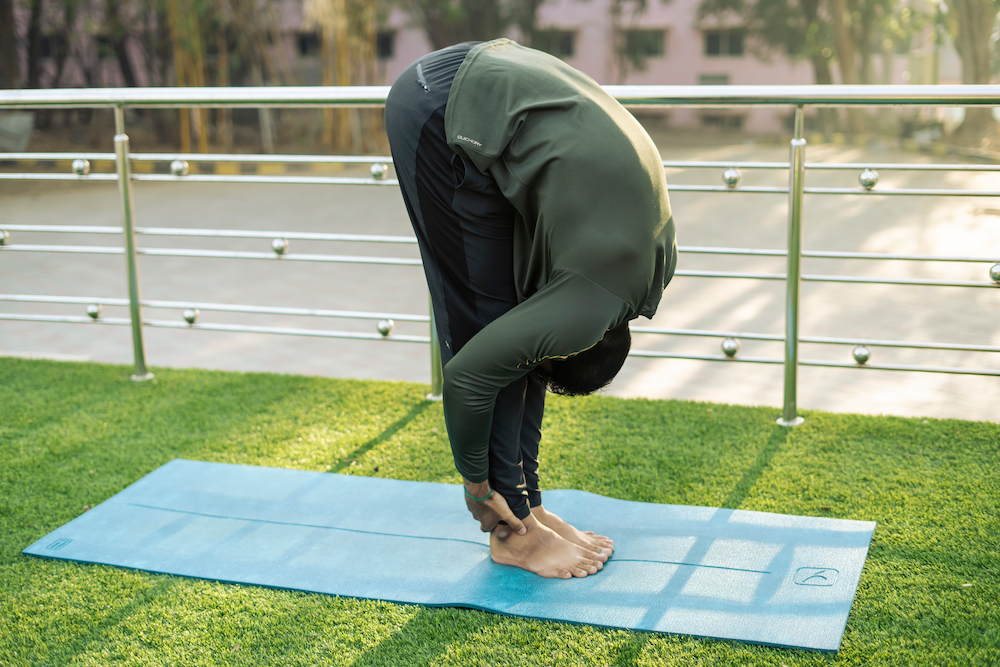
Forward folds release tension in your back, neck, and hamstrings—areas that tighten quickly during airport stress. They also encourage deeper breathing and increase blood flow to the brain, helping you reset mentally before boarding.
TSA-Friendly Tip: Do this near a wall or window for balance.
Best time to use it: After security, during delays, or any time you feel your shoulders creeping up toward your ears.
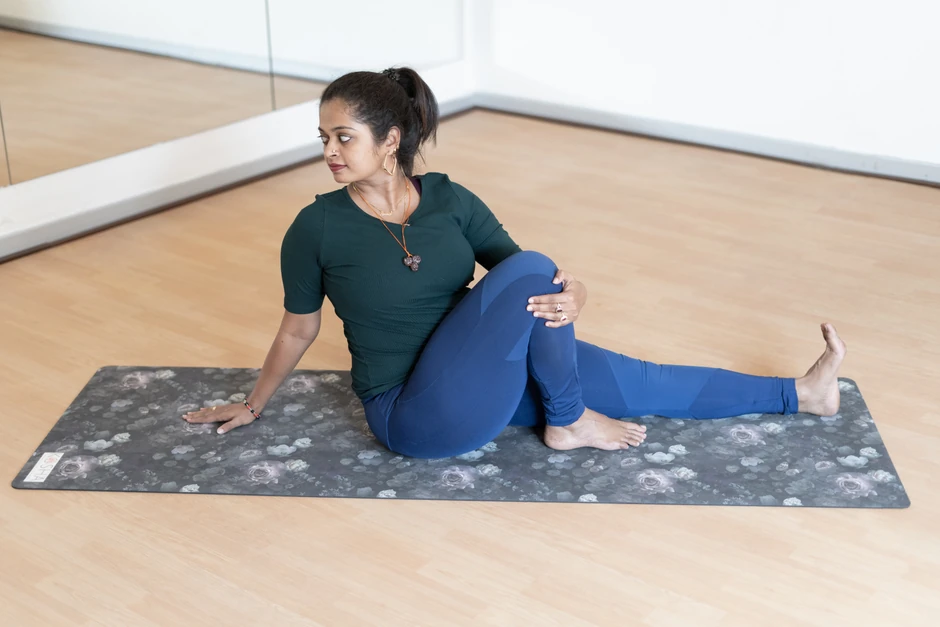
This gentle twist helps release your lower back, open your chest, and support digestion—especially helpful if airport food is involved.
Best time to use it: While sitting at your gate, during boarding delays, or once you’ve settled into your airplane seat.
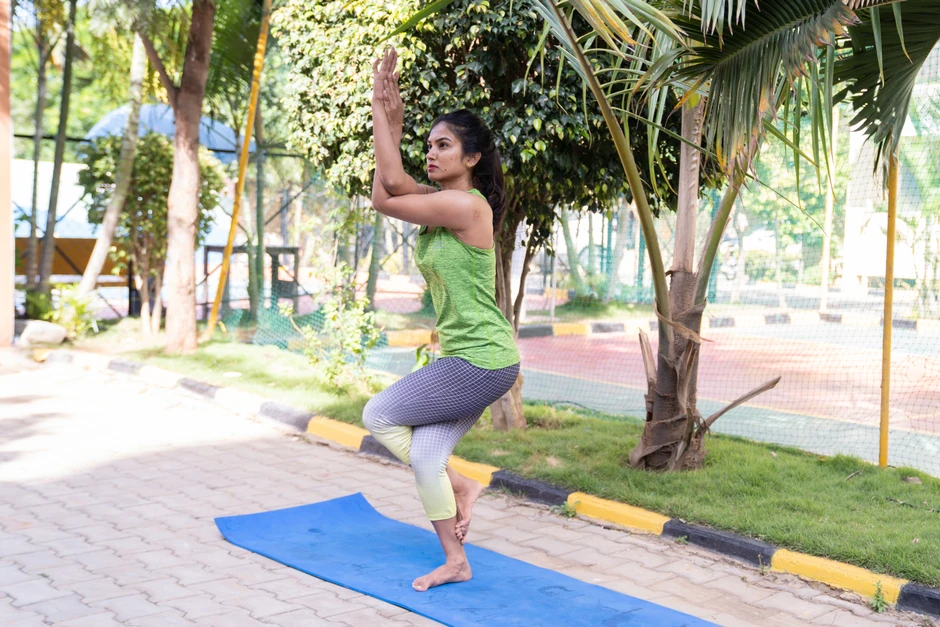
Airport stress lives in the shoulders. Eagle Arms stretches the upper back, loosens the neck, and opens the muscles that tighten from dragging luggage or hunching over travel apps.
Best time to use it: Standing in the security line, waiting to board, or sitting at the gate after carrying heavy bags.
Long periods of sitting (in terminals or on flights) reduce blood flow. Gentle ankle and calf movements support circulation and help reduce stiffness. They also keep your legs energized before boarding.
Ankle Circles:
Calf Raises:
Pro Tip: The CDC recommends moving your legs regularly during long travel days. These exercises are ideal for security lines, boarding queues, and even small gate areas.
Best time to use it: Any time you’re standing in line or sitting still for more than 60–90 minutes.
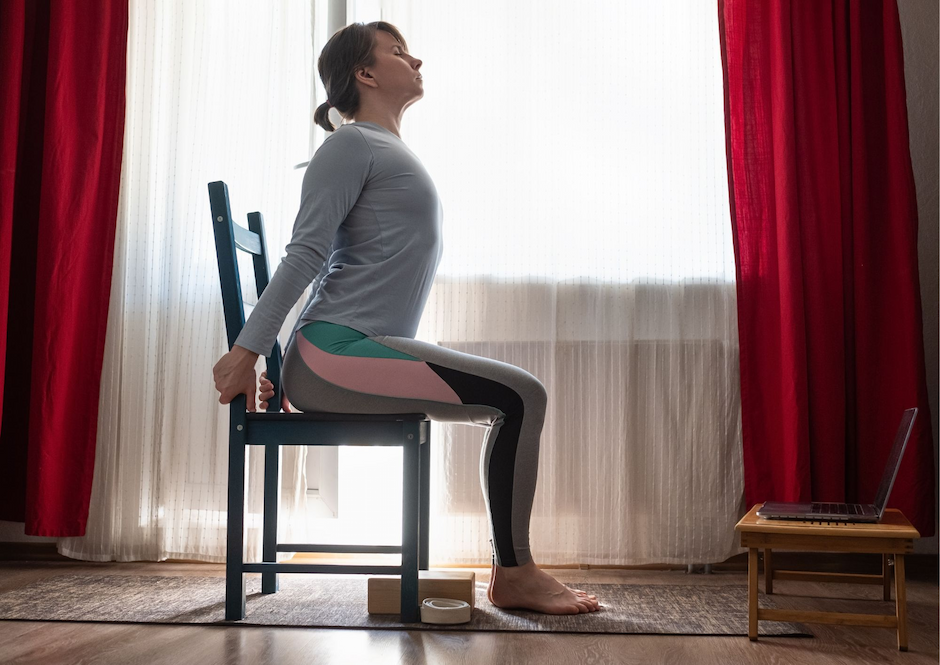
Seated Cat-Cow gently wakes up the spine, improves posture, and helps you breathe more deeply. It’s subtle enough to do on the plane without disturbing anyone.
In-Flight Friendly: Flight attendants won’t mind—this looks like a gentle stretch and helps keep your body comfortable.
Best time to use it: At the gate, after a long sit, or anytime during the flight when your back starts to feel tight.
This simple breathing pattern activates the parasympathetic nervous system and calms the body within a minute.
It’s quiet, discreet, and works beautifully for those first few minutes in the air.
[inline-CTA-2]
Travel days are unpredictable, but your practice doesn’t have to be. Use this table to choose the right pose at the right moment—so you stay calm, comfortable, and grounded from check-in to landing.
This simple timing guide makes airport yoga easy to remember, even on stressful travel days.
Airports don’t have to drain your energy or leave you feeling tense before your trip even begins. With just a few minutes of gentle movement and mindful breathing, you can create a sense of calm and control—right in the middle of the holiday rush.
Remember: taking care of yourself during travel isn’t selfish. It’s smart. It helps you stay grounded, comfortable, and clear-headed so you can actually enjoy the journey instead of just enduring it.
MyYogaTeacher’s certified instructors can create a custom pre-flight or in-flight practice that fits your body, your schedule, and your travel style.

Yes. There are no TSA rules against stretching, breathing exercises, or gentle yoga poses in terminal areas. As long as you’re not blocking walkways or boarding lanes, you’re free to practice anywhere.
Yes. Yoga mats are allowed in both carry-on and checked luggage. Many travelers simply attach a lightweight mat to their backpack or place it inside a carry-on suitcase.
The most travel-friendly poses are:
These require no equipment, minimal space, and are completely gate-safe.
Movement is key. Every 1–2 hours, do ankle circles, calf raises, or gentle leg stretches—either at the gate or during the flight.
Stay hydrated, avoid crossing your legs for long periods, and stand up when it’s safe.
Yes. These poses are gentle, beginner-friendly, and easy to adjust. If something feels uncomfortable, simply soften the movement, modify your posture, or try a different pose.
Absolutely. Slow breathing techniques like 4-7-8 breathing help calm the nervous system, lower heart rate, and reduce that “pre-takeoff tension” many travelers experience.


Receive personalized guidance tailored to your unique fitness goals, live with a dedicated coach—no credit card required.

.webp)
Holiday stress is real. These 5-minute yoga poses and routines provide instant relief - no mat or equipment needed. Science-backed methods for a busy December.

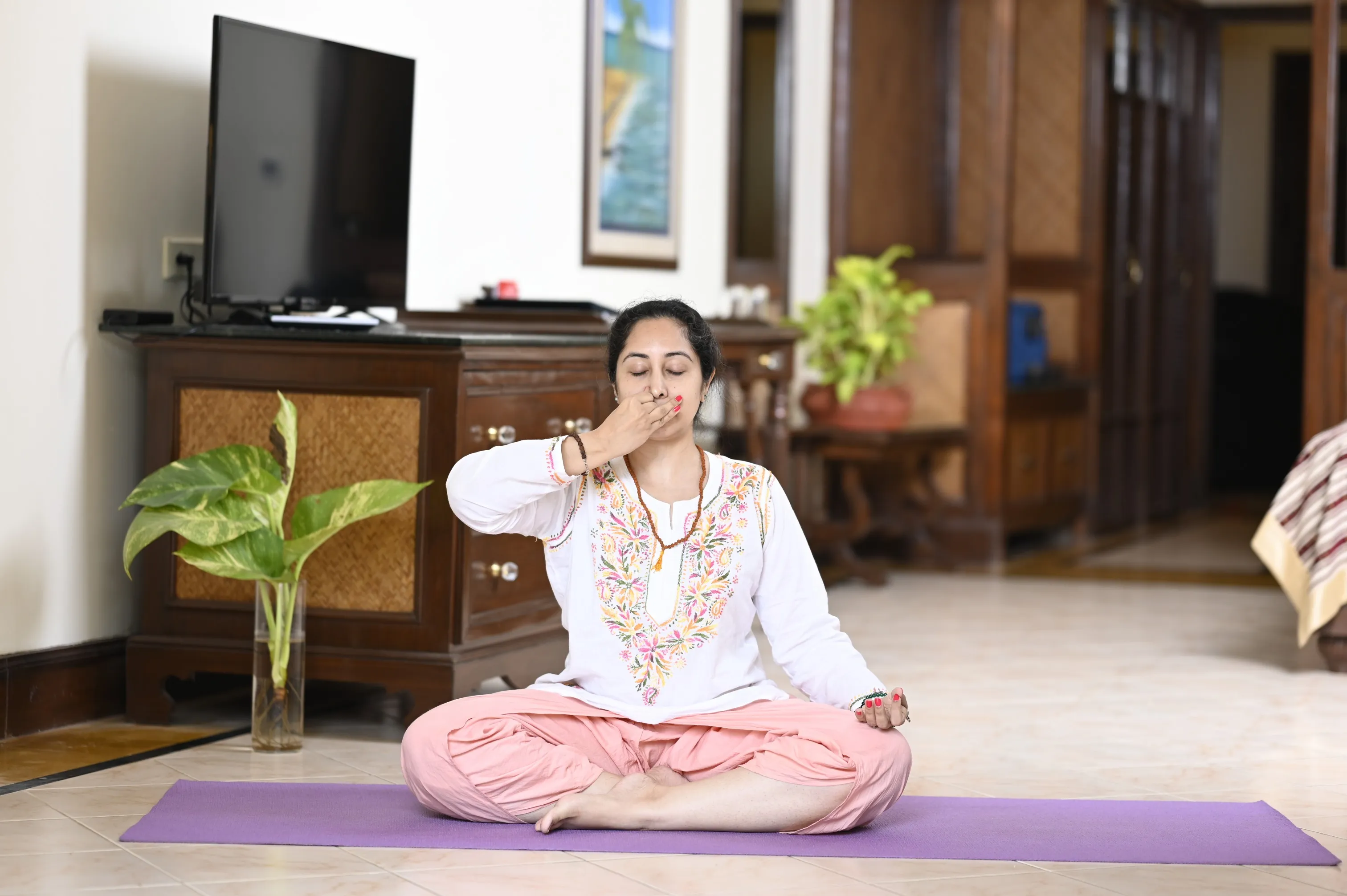
Master 9 powerful yoga breathing techniques for stress relief, better health, and mindfulness. Learn more in this step-by-step guide for beginners.

Discover how yoga can naturally help depression. Learn 8 proven poses, breathing techniques, and meditation practices from certified coaches. Start today!


© Copyright 2025 MyYogaTeacher Inc


