


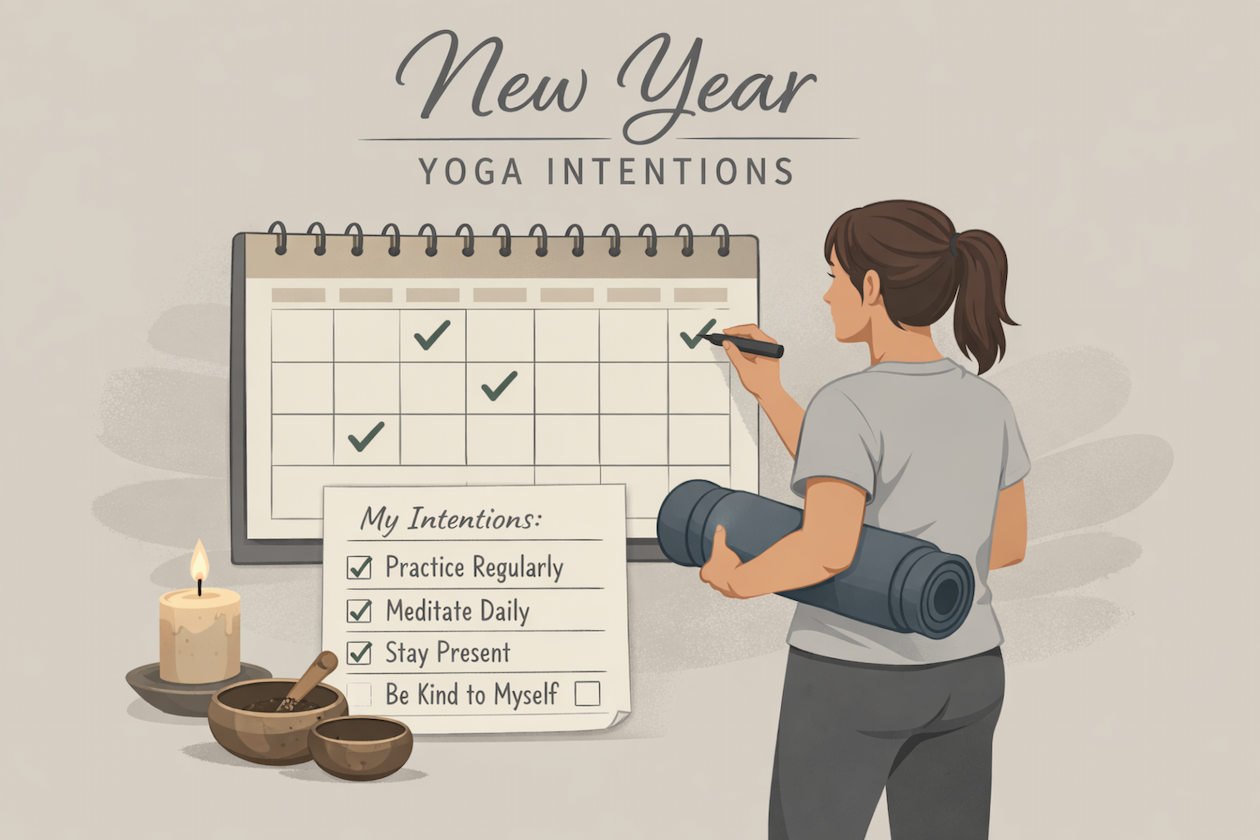
January motivation is high, but so is the pressure to “do it all.” But what if your yoga practice in 2026 didn’t depend on discipline, but on intention?
While the New Year often brings a fresh sense of hope, it also comes with pressure — to set resolutions and stick to them. As January begins, many people commit to improving their health, exercising more, and being more consistent. But if you’ve set big New Year goals before, you may also know how quickly they can fade once work, family, and everyday stress take over.
Research shows that many people give up on New Year wellness goals within the first few weeks, not because they lack motivation, but because those goals become hard to sustain alongside real life.
That’s where setting yoga intentions can help.
Instead of focusing on how often or how long you practice, a yoga intention focuses on why you practice. It gives your yoga practice a clear purpose — whether that’s feeling calmer, moving with more ease, or taking better care of your body in 2026.
In this guide, you’ll learn how to set gentle yoga goals for the New Year, understand the difference between intentions and resolutions, and build a practice that feels realistic, supportive, and sustainable.
Most New Year fitness resolutions are made with good intentions. You want to feel healthier, stronger, more flexible, or more consistent. But these goals often rely on perfect conditions — extra time, high energy, and fewer demands.
Real life doesn’t usually work that way.
Studies indicate that resolutions often fail because they focus on outcomes instead of habits. Goals like “lose 10 pounds in a month” or “never miss a class” leave little room for busy schedules, travel, low-energy days, or unexpected stress. When life interrupts the plan, many people feel discouraged and give up altogether.
Another common issue is treating yoga like a task to complete rather than a tool for support. When practice becomes something you have to do instead of something that helps you feel better, consistency becomes much harder.
Scientific evidence suggests that sustainable habits are built through flexibility, self-compassion, and realistic expectations. This is exactly where intention-setting creates a shift. Instead of asking, “Did I do enough?” you begin to ask, “Did my practice support me today?”
And that change makes all the difference.
[inline-CTA-1]
At the start of the year, the words resolutions and intentions are often used interchangeably. But in practice, they lead to very different experiences.
A resolution is usually focused on an outcome. It sounds like:
These goals are specific and motivating at first, but they leave very little room for real life. When a busy week or low-energy day gets in the way, it’s easy to feel like you’ve failed — even if you’ve been doing your best.
A yoga intention, on the other hand, is focused on purpose rather than performance.
Instead of asking how much you practice, an intention asks why you practice. It might sound like:
According to yoga philosophy, this type of intention is sometimes called a sankalpa — a simple, heartfelt commitment that guides your actions without pressure or perfection.
Intention-based goals are easier to maintain over time because they allow flexibility. You can honor your intention with a full class, a short stretch, or even a few deep breaths — and it still counts.
That’s what makes intentions especially helpful for busy professionals. They turn yoga into a support system, not another task on your to-do list.
If you’re not sure where to start, these simple yoga intentions can help. You don’t need to use all of them — even one is enough to guide your practice through 2026.
Think of these as ideas you can adapt, rather than rules you have to follow.
This intention works well if stress, anxiety, or mental overload show up often in your day.
Some days, this might mean a longer class. On other days, it could be a few slow breaths or a short stretch before bed. If it helps you feel calmer, it counts.
This is one of the most common and most helpful intentions people set.
It removes pressure and guilt. A five-minute practice, a short stretch between meetings, or a single pose at home still supports your body and mind.
This intention is helpful if you tend to be hard on yourself.
Instead of aiming for the “perfect” practice, you focus on showing up in small, realistic ways. Over time, that consistency adds up far more than occasional bursts of effort.
Your energy, stress levels, and physical needs will change throughout the year.
This intention reminds you that it’s okay for your practice to change too — gentle on some days, more active on others — without judgment.
Yoga works best when it fits into your life instead of competing with it.
This intention encourages flexibility. It allows you to adapt your practice around work, family, travel, and rest — while still staying connected to yoga in a meaningful way.
You can write your intention down, keep it in your calendar, or simply return to it when you feel off track. There’s no right way to do this, except the one that feels supportive for you.
At some point in the year, your yoga routine will likely get interrupted. Work will get busy. Travel will happen. Motivation will dip. That’s normal.
What matters isn’t staying perfectly consistent — it’s how you respond when things fall apart.
Many people abandon their yoga practice because they believe missing a few days means they’ve failed. A yoga intention helps with this because it gives you something steady to return to — without guilt.
You don’t need a perfect plan for 2026. You don’t need to practice every day or do it “right.” You just need an intention that feels supportive and realistic.
A gentle yoga intention can help your practice grow with your life — not compete with it. Start small. Stay flexible. And let your yoga practice meet you exactly where you are this year.





Receive personalized guidance tailored to your unique fitness goals, live with a dedicated coach—no credit card required.


Discover the third eye chakra (Ajna) meaning, opening, and balancing practices with authentic Indian yoga teachers. Learn symbols, poses, mudras & affirmations.

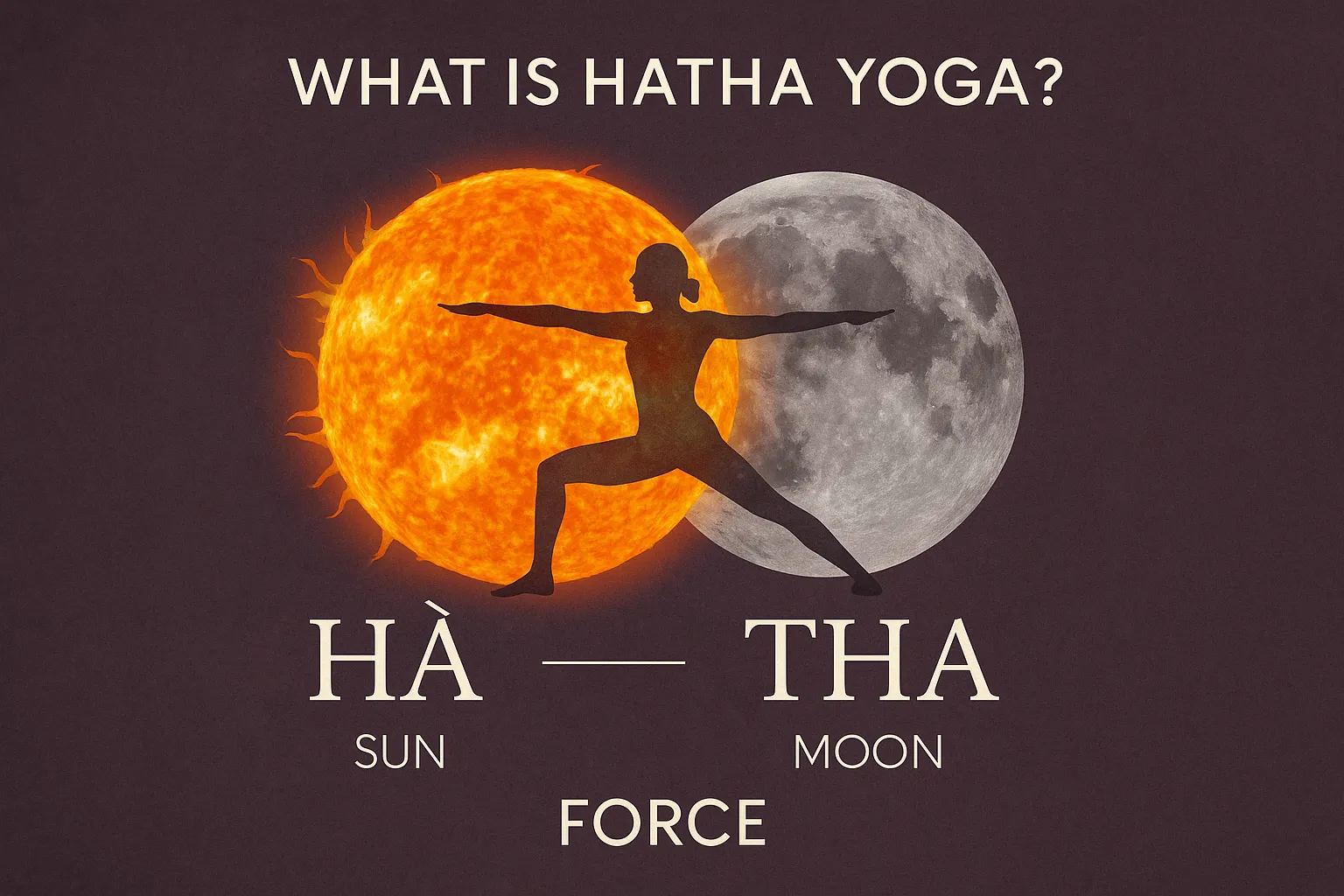
Discover the meaning of Hatha yoga, its ancient origins in India, and how this traditional practice balances opposing energies for holistic well-being.
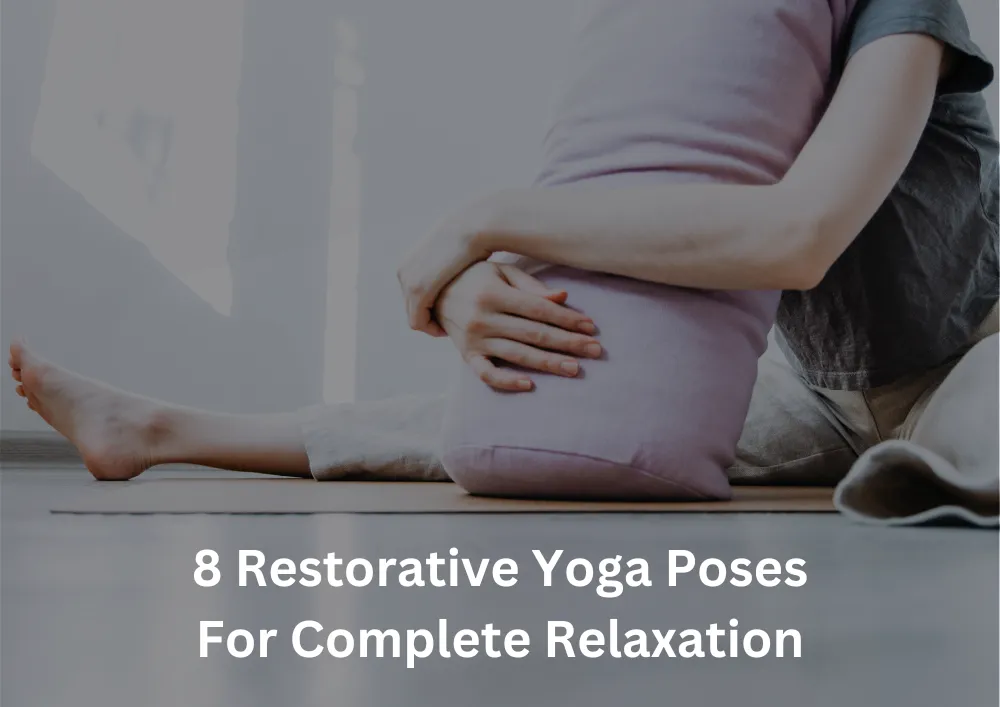
Master 8 restorative yoga poses with props in this step-by-step guide. Learn to use blocks, bolsters, blankets, and straps for a deeper stretch and relaxation!


© Copyright 2025 MyYogaTeacher Inc


