


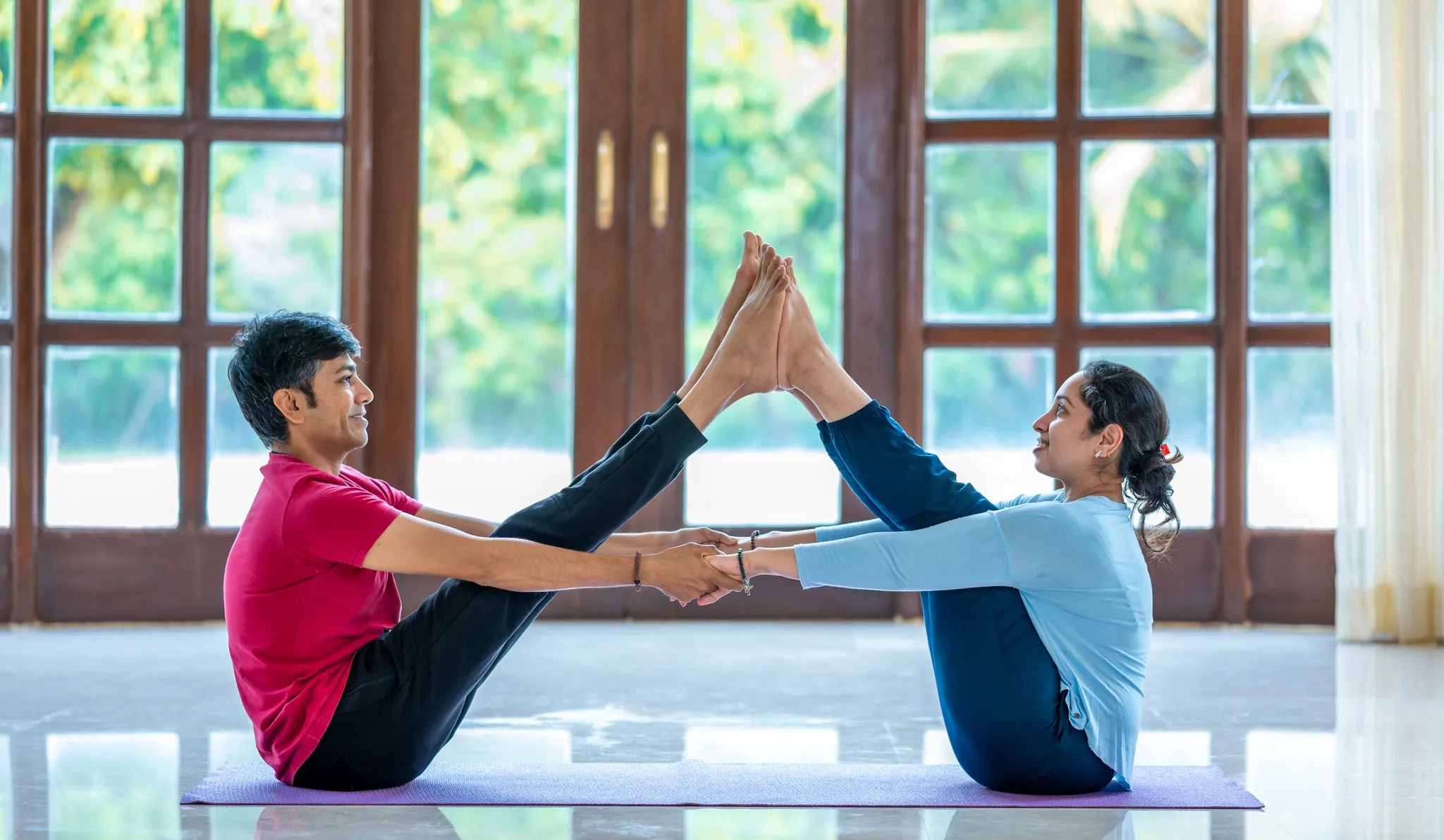
Yoga poses for 2 work with any pairing—you do not need a romantic partner, just someone willing to try. Practise with a friend, sibling, coworker, parent, child, or partner.
Yoga is commonly translated from Sanskrit as “union,” which makes practising together feel especially fitting. Two-person yoga encourages you to communicate, cooperate, and pay attention to how the other person is moving.
It can also bring plenty of laughter. You may wobble, lose track of which side you are using, or discover that your flexibility levels are completely different. That is part of the experience. The goal is not to make every pose look perfect; it is to move, connect, and enjoy doing something active together.
Practising yoga with another person changes the experience in three simple ways:
You do not need equal strength, flexibility, or yoga experience. You do need to listen, communicate, and choose a version that feels manageable for both people.
Before trying these yoga poses for two people, agree on how you will move and communicate.
Keep these two safety rules in mind:
[inline-CTA-1]
These two-person yoga poses begin with quiet seated movements before progressing to standing balances, backbends, and strength work. Start with the beginner section, even when one person already has yoga experience.
Back-to-Back Breathing is a seated exercise in which two people use gentle contact to notice posture and breathing rhythm.
Targets: Breath awareness, posture, and upper-back relaxation
How to do it:
Tip: You do not need to force your breathing into the same rhythm.
Modification: Sit on cushions or use two back-to-back chairs when sitting on the floor is uncomfortable.
Partner Neck Release is a synchronized seated stretch that gently releases tension around the sides of the neck and shoulders.
Targets: Upper trapezius muscles, neck, and shoulders
How to do it:
Tip: Keep your chin level and never pull on the other person’s head.
Modification: Sit in chairs and make the tilt smaller.

Seated Spinal Twist for Two is a gentle back-to-back rotation that can feel especially welcome after a long day at a desk.
Targets: Spinal rotators, obliques, and shoulders
How to do it:
Tip: Let the twist begin around your ribs rather than forcing your neck farther around.
Modification: Practise in chairs with both feet supported.
Partner Butterfly Stretch is a seated hip opener in which one person provides gentle counterbalance while the other folds forward.
Targets: Inner thighs, hips, and lower back
How to do it:
Tip: The person leaning back should guide the movement without pulling.
Modification: Sit on folded blankets or move your feet farther away from your hips.

Two-Person Standing Forward Fold is a wide-legged stretch that does not require either person to touch the floor.
Targets: Hamstrings, calves, and lower back
How to do it:
Tip: Use the arm connection for stability, not to pull each other deeper.
Modification: Keep your knees generously bent or practise without holding hands.
[GC]

Image courtesy of The Yoga Nomad
Double Temple Pose is a standing stretch in which two people use connected palms to lengthen the spine and open the shoulders.
Targets: Shoulders, upper back, hamstrings, and chest
How to do it:
Tip: Keep your ears between your upper arms rather than dropping your head.
Modification: Connect at the forearms or place your hands on each other’s shoulders.
Partner Side Stretch uses a light side-by-side connection to lengthen the waist and shoulders.
Targets: Obliques, latissimus dorsi, and shoulders
How to do it:
Tip: Avoid pulling through the arm around the other person’s waist.
Modification: Practise while seated or leave the inside arms unlinked.
Seated Shoulder Opener for Two provides a gentle chest-and-shoulder stretch that can help you reset after prolonged desk work.
Targets: Chest, shoulders, and upper back
How to do it:
Tip: Keep your shoulders down instead of letting them rise toward your ears.
Modification: Bend your elbows or hold opposite ends of a yoga strap.

Double Tree Pose is a standing balance in which two people use a hand connection while each balances on one leg.
Targets: Ankles, glutes, hips, and balance
How to do it:
Tip: Never press your raised foot directly against the standing knee.
Modification: Keep your raised toes on the floor. If you are different heights, connect hands lower rather than reaching overhead.

Couples Backbend is a supported standing chest opener in which two people counterbalance through a steady hand or forearm connection.
Targets: Chest, shoulders, hip flexors, and upper back
How to do it:
Tip: Think about lifting your chest rather than dropping your head backwards.
Modification: Remain almost upright and create a smaller opening across the chest.
High-Five Squat is a playful strength pose in which two people squat while maintaining light palm-to-palm contact.
Targets: Quadriceps, glutes, core, and coordination
How to do it:
Tip: Count aloud so neither person lowers unexpectedly. The high five is part of the pose.
Modification: Make the squat shallower or place a chair behind each person.

Partner Camel Pose is a kneeling chest opener in which two people use a hand connection to maintain steadiness.
Targets: Chest, shoulders, quadriceps, and hip flexors
How to do it:
Tip: Keep your hips above your knees instead of pushing them backwards.
Modification: Keep your hands on your own hips and practise the movement side by side.

Royal Dancer for Two adapts a one-legged balance by giving each person a steady hand connection.
Targets: Quadriceps, hip flexors, glutes, and balance
How to do it:
Tip: Use the connected hand for stability, not to pull your body farther forward.
Modification: Keep the lifted knee pointing downward or use a strap around your ankle.
Supported Partner Pyramid is a standing hamstring stretch in which two people use their forearms for balance.
Targets: Hamstrings, calves, hips, and balance
How to do it:
Tip: Keep a small bend in the front knee when the hamstrings feel tight.
Modification: Shorten your stance or rest your hands on two sturdy chairs instead.

Double Plank is an advanced weight-bearing pose in which one person holds a stable plank while the other forms a second plank above them.
Targets: Core, shoulders, arms, and full-body coordination
How to do it:
Tip: Be prepared to laugh, but end the pose immediately if the base’s hips drop or shoulders become unstable.
Modification: Practise side-by-side planks and tap opposite hands instead of stacking.
[inline-CTA-2]
Yoga poses for 2 can turn an ordinary practice into a shared experience built around movement, communication, and support. Whether you practise with a friend, family member, coworker, or romantic partner, begin with simple seated and supported poses before progressing to balances or weight-bearing movements. Move at the pace of the less experienced person, use modifications when needed, and remember that enjoying the practice together matters more than making every pose look perfect. For advanced poses such as Double Plank, practise with an experienced teacher and a spotter.

No. Any willing second person can practise with you, including a friend, sibling, coworker, family member, or romantic partner. Choose someone who will communicate clearly and respect your comfort level.
Yoga for two people is commonly called partner yoga or couples yoga. When it includes acrobatic balances or lifts in which one person supports the other, it may be called acro yoga.
Yes. Beginners should start with seated poses, back-to-back breathing, and simple hand-held balances. Avoid lifts and stacked poses until both people can perform the foundational movements independently.
Most yoga poses for 2 people can be adjusted by changing the hand position, stance length, or range of movement. Connect hands at a comfortable height and use a strap when reaching is difficult. For weight-bearing poses, choose similarly sized partners and practise with an experienced teacher and spotter.



Receive personalized guidance tailored to your unique fitness goals, live with a dedicated coach—no credit card required.


Low on energy? Learn how yoga for fatigue helps restore energy, reduce tension, and fight burnout with gentle, effective poses.


15 partner yoga poses for couples, from beginner-friendly stretches to acro-style lifts—with modifications, safety tips, and the science behind why it works.
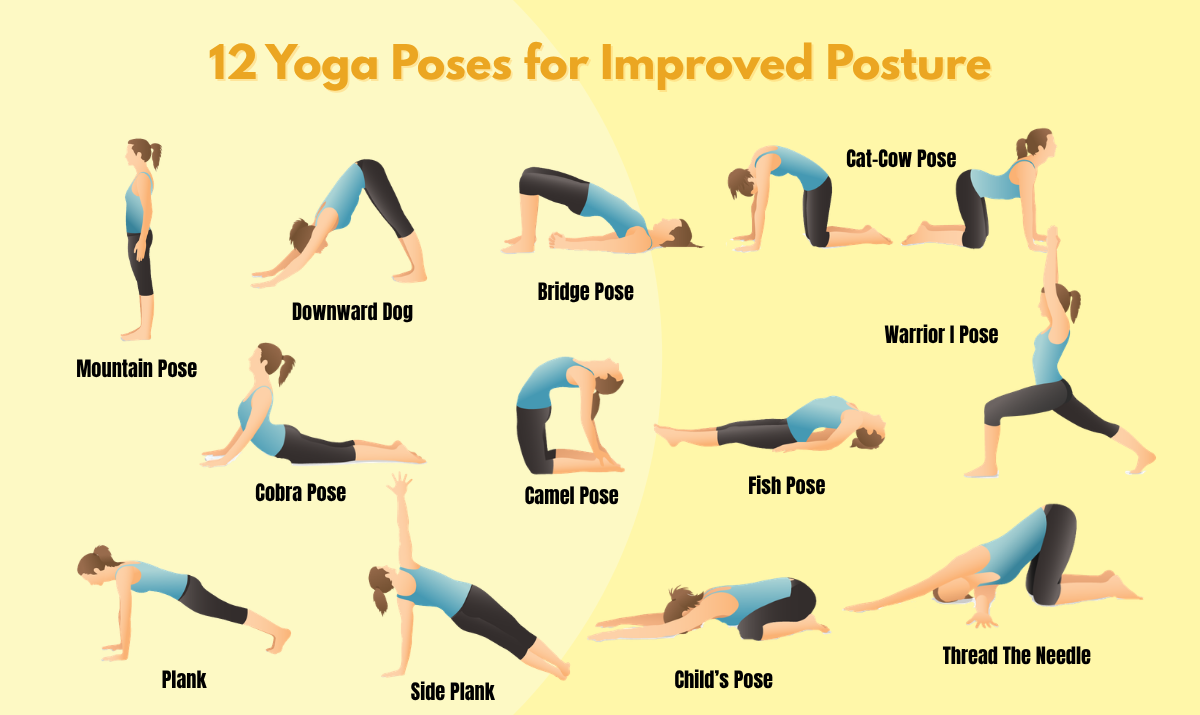
Discover how yoga improves posture with 12 expert-backed poses. Fix forward head, rounded shoulders & back pain. Find beginner modifications & routines.


© Copyright 2025 MyYogaTeacher Inc


